

More news on this day
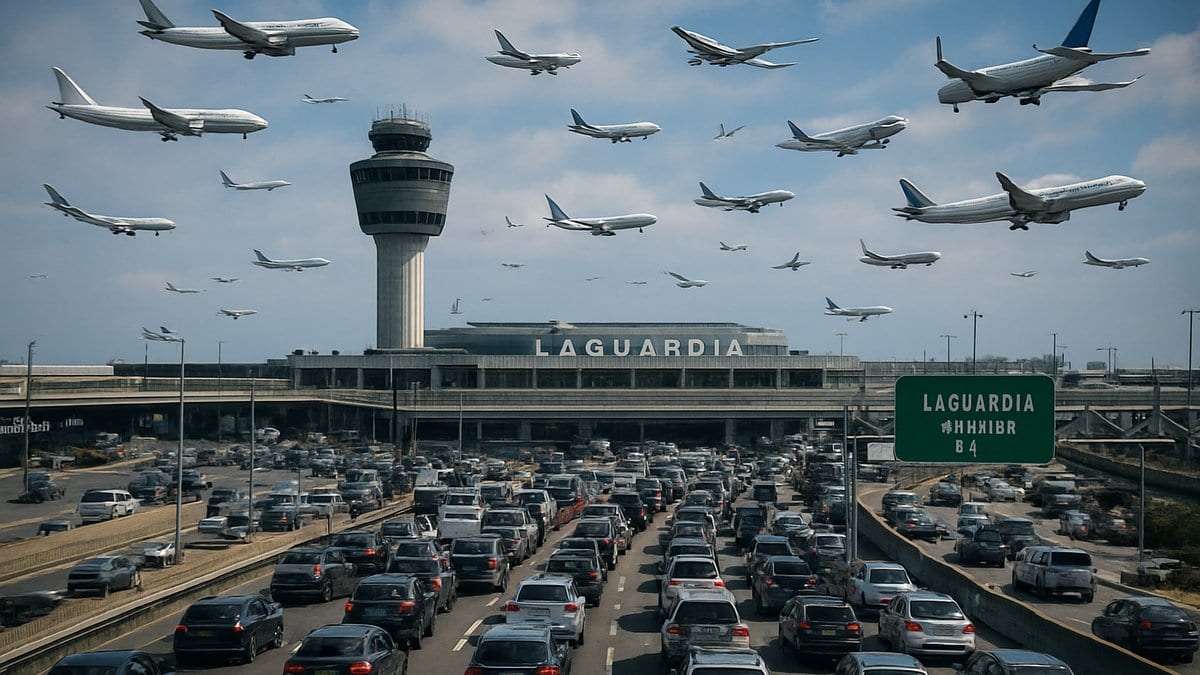
New York’s LaGuardia Airport staggered through another day of chaos on April 3, as publicly available flight-tracking data showed more than 245 departures and arrivals delayed, snarling one of the United States’ most important urban air gateways.
Get the latest news straight to your inbox!
A fragile hub hit by a fresh wave of disruption
The latest wave of delays comes less than two weeks after a runway collision temporarily shut LaGuardia on March 23, forcing airlines to cancel and divert flights while regulators and investigators examined the scene. In the days that followed, partial runway closures and revised operating patterns compressed capacity, increasing the likelihood that even minor disruptions would cascade across tightly packed schedules.
Airport-level summaries and airline bulletins for late March into early April indicate that LaGuardia has been operating with limited slack in its daily timetable. When operations are running near the system’s ceiling, modest slowdowns linked to ramp congestion, air-traffic initiatives or ground handling bottlenecks can quickly trigger rolling delays for both arrivals and departures.
On April 3, that fragility was on full display. Flight-status dashboards tracking LaGuardia showed a thick band of yellow and orange across the departures and arrivals boards, with dozens of services pushed back by 30 minutes, an hour or more. By evening, compiled data pointed to more than 245 delayed flights touching the Queens airport, affecting a cross-section of domestic routes and regional links.
The disruption unfolded against a backdrop of ongoing strain across New York’s three main airports. Recent regional weather systems, intermittent ground delay programs and the lingering effects of last month’s blizzard-scale winter storm have all contributed to a pattern of stop-start operations, with LaGuardia frequently at the center of the turbulence.
Ground delay programs and a compressed airspace squeeze
Traffic-management advisories for the New York region in recent days highlight a recurring theme: LaGuardia’s limited runway configuration and crowded terminal environment leave little room to absorb shocks. When the Federal Aviation Administration imposes a ground delay program for LaGuardia or neighboring Newark and Kennedy, carriers are required to hold or slow departures across their networks, slanting schedules out of alignment.
Recent discussions in aviation forums and operational notices point to a series of such programs affecting LaGuardia at the end of March and into early April. These measures, often triggered by a combination of high demand, airspace congestion and reduced runway availability, can reduce the number of arrivals allowed per hour. That, in turn, forces airlines to juggle departure times, aircraft rotations and crew schedules, creating a knock-on effect that stretches well beyond New York.
With LaGuardia already designated as a slot-controlled airport, carriers have limited flexibility to add backup flights or build in longer recovery times without sacrificing valuable takeoff and landing permissions. Instead, many rely on finely tuned turnarounds and back-to-back aircraft assignments. When a plane arrives late from one city, its subsequent departure to another is pushed back, intensifying the chain reaction of delays.
Analysts studying delay patterns across the U.S. aviation network have long flagged LaGuardia as a high-risk node where congestion and schedule density amplify problems that might be manageable elsewhere. The events of April 3, layered on top of March’s shutdown and winter disruptions, provide another stark illustration of how quickly gridlock can form when conditions deteriorate.
Ripple effects for airlines and passengers across the region
The 245-plus delays at LaGuardia did not occur in isolation. Flight-tracking summaries for April 3 show disruptions rippling through routes linking New York with key business and leisure markets, including Chicago, Boston, Atlanta, Toronto and Montreal. As aircraft missed their scheduled slots in Queens, knock-on delays appeared on subsequent legs across airline networks.
Publicly available data indicates that the impact was spread across multiple carriers, including large U.S. airlines and their regional affiliates, as well as select low-cost operators. When several airlines are affected at once, pressure mounts on shared resources such as gates, jet bridges and ramp crews. That can slow aircraft turnarounds even further, prolonging the gridlock.
Travelers connecting through LaGuardia faced some of the most acute challenges. Misaligned arrival and departure banks increased the risk of missed connections, especially for passengers with tight layovers. While some airlines offered rebooking and waiver options following March’s closure and runway constraints, the scale of April 3’s delays meant that alternative flights were limited on popular routes.
Beyond LaGuardia itself, the disruption added strain to the broader New York air system. Newark Liberty and John F. Kennedy International were already dealing with their own weather and traffic-management constraints in recent days, narrowing the options for rerouting affected passengers. For some travelers, the most viable alternatives involved shifting to secondary airports in the region or adjusting travel plans by rail or road.
From winter storms to runway collision: a month of mounting strain
The April 3 delay surge capped a tumultuous six-week period for air travel along the U.S. East Coast. In late February, a powerful winter storm swept across the region, grounding thousands of flights and generating more than 16,000 delays nationwide, including significant disruptions at New York-area airports. Recovery from that event ran directly into the busy spring travel build-up.
Then, on March 23, LaGuardia experienced a serious runway collision between an Air Canada Express regional jet and an airport fire vehicle, prompting a temporary airport closure. Published coverage indicates that flights were halted for several hours and that partial runway closures and diversions continued as investigators and airport operators worked to stabilize operations.
Airlines responded with a patchwork of travel waivers covering trips to, from and through LaGuardia for several days, allowing some customers to rebook without change fees. However, for those whose travel could not easily be rescheduled, the event added another layer of uncertainty to an already unsettled season of flying through New York.
By early April, LaGuardia’s daily operations were still contending with the aftereffects of these shocks. Aircraft and crew positioning remained finely balanced, and schedules were tightly wound around peak demand hours. Within that context, the 245-plus delays recorded on April 3 appear less as a one-off anomaly and more as the latest flare-up in a prolonged period of operational stress.
What travelers can expect in the days ahead
As of April 4, federal status boards listed LaGuardia as open with no broad, airport-wide ground stops in place, yet recent experience suggests that conditions can change quickly. Weather systems moving along the Eastern Seaboard, combined with ongoing runway and airspace constraints, mean that periods of heightened delay risk are likely to persist through the spring travel rush.
Travel guidance from airlines and airport information pages consistently emphasizes the importance of checking flight status frequently, arriving early for departures and allowing extra time for tight connections, especially when traveling through congestion-prone hubs such as LaGuardia. Given the recent pattern, travelers heading through New York in the near term may want to build additional buffer into their itineraries.
Industry observers note that some schedule adjustments and incremental capacity changes may help ease pressure later in the season, as carriers refine their operations in response to March’s closure and the April delay spike. However, structural factors, including limited runway infrastructure and dense airspace, will continue to shape LaGuardia’s vulnerability to disruption.
For now, the April 3 meltdown serves as a vivid reminder of how swiftly a localized operational challenge can escalate into a full-blown transit crisis for New York, rippling across airline networks and altering the travel plans of thousands of passengers in a single day.