

More news on this day
A fresh wave of disruption at New York’s LaGuardia Airport has triggered hundreds of delays and cancellations across U.S. and Canadian networks, tangling Easter-period travel plans and underscoring how little slack remains in the nation’s air system.
Get the latest news straight to your inbox!
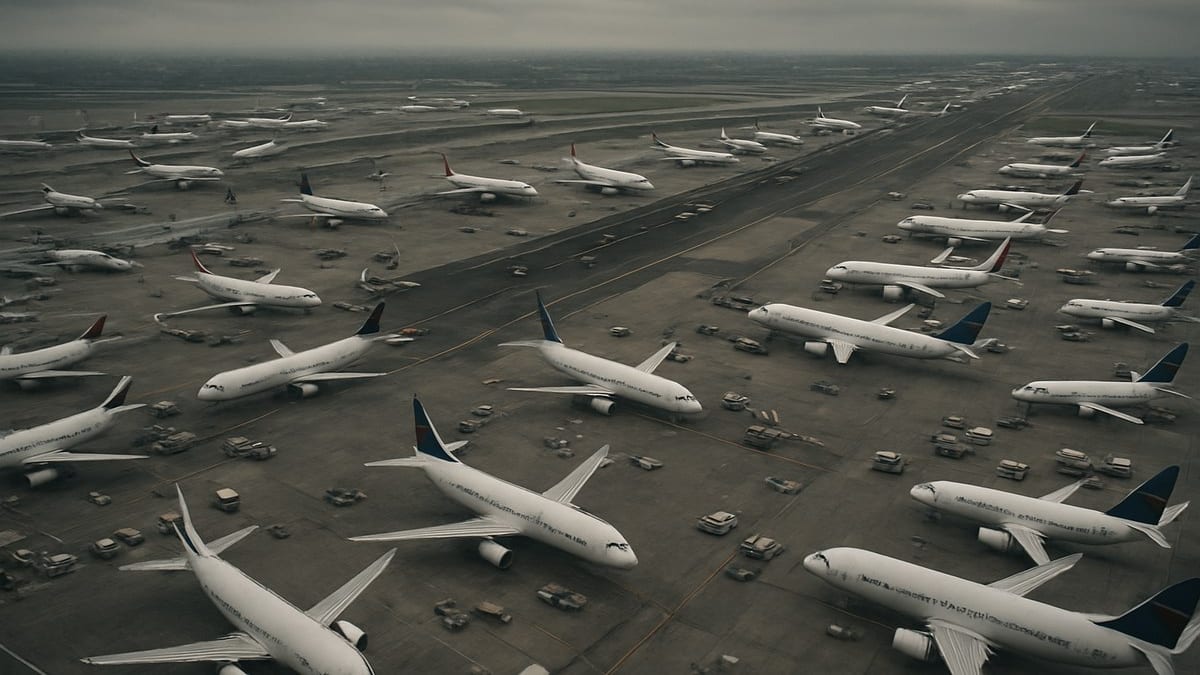
Ground Stops and Ripple Effects Across Key Hubs
Operational data and aviation tracking services for April 3 to 6 indicate that LaGuardia repeatedly topped national delay charts, with rolling ground stops and flow-control measures turning routine spring congestion into a network-wide bottleneck. On April 5, low visibility and stormy conditions prompted an early-morning ground stop that extended from LaGuardia to nearby airports and first tier connections in Canada, compounding existing schedule pressures.
Published coverage of the Easter travel weekend shows that the Federal Aviation Administration relied on a series of delay programs to meter arrivals into New York while also managing weather disruptions at San Francisco, Atlanta, Chicago and Dallas. As LaGuardia’s departure queues lengthened, knock-on delays spread to Boston, Raleigh, Miami and Midwestern hubs, forcing airlines to juggle aircraft and crews across multiple time zones.
LaGuardia’s compact layout and slot-controlled operations mean that even modest capacity reductions can quickly snowball into gridlock. When arrival rates are cut, departures back up, gates fill, and aircraft arriving from other cities are left waiting for a place to park, creating a feedback loop that travelers then experience as cascading delays throughout the day.
Industry analysts note that these conditions are emerging during a period of near record passenger volumes. With demand back at or above pre-pandemic levels at many major hubs, there is limited room to absorb weather, equipment or staffing shocks without visible disruption for passengers trying to move through the system.
Airlines Contend With Cancellations and Rolling Delays
Schedule data compiled over the first week of April shows that LaGuardia has endured repeated rounds of cancellations layered on top of substantial delay volumes. One recent day logged around 80 cancellations and nearly 600 delayed departures and arrivals tied to the airport, affecting flights operated by regional affiliates such as Endeavor, Republic and Jazz as well as major brands including Delta, American Airlines and JetBlue.
These LaGuardia-specific problems have been unfolding against a broader backdrop of nationwide disruption. Tracking services and transportation coverage for early April record roughly 460 cancellations and about 5,500 delays across the United States on one representative day, with coastal hubs and major interior connectors bearing much of the strain. Within that tally, LaGuardia consistently appears among the hardest-hit airports, despite handling fewer flights than some larger peers.
Airline bulletins and publicly posted travel waivers continue to reference the lingering impact of a late March runway shutdown, ongoing rerouting of aircraft and the challenge of rebuilding buffers into already tight schedules. Some carriers have been encouraging travelers booked through LaGuardia to consider nearby alternatives such as Newark, John F. Kennedy or regional airports in Westchester and Connecticut when seats are available.
For passengers, the operational details often translate into the same outcome: longer lines at check-in, crowded gate areas and missed connections when downline flights cannot be held. Travel advisories repeatedly emphasize the importance of checking flight status frequently, enabling alerts in airline apps and arriving at the airport earlier than usual during this unstable period.
Safety Overhang After March Runway Crash
The current meltdown at LaGuardia is unfolding just weeks after a deadly crash on one of the airport’s runways, an incident that continues to shape operations. On March 22, an Air Canada Express regional jet collided with an airport fire truck while landing, resulting in fatalities among emergency responders and prompting a temporary closure of the field. Publicly available information from aviation regulators and news outlets notes that runway access procedures and ground movements at LaGuardia have been under close scrutiny since that night.
Following the crash, airlines introduced flexible rebooking policies as LaGuardia shut down for several hours and then operated on a constrained basis during the recovery period. Some carriers extended travel waivers into the final days of March to accommodate passengers whose itineraries depended on the airport’s busiest banks of morning and evening flights.
While the early April weather disruptions are distinct from the March 22 accident, the two events are intersecting in practical ways. With one of the airport’s runways recently affected and air traffic management more conservative than usual, LaGuardia has had fewer tools to quickly recover from each new round of storms, low visibility and traffic management initiatives.
Aviation observers point out that such layered disruptions can have lingering effects, as aircraft and crews end up out of position for days after a major incident or shutdown. In that environment, subsequent bouts of bad weather or ground delays can trigger disproportionately large impacts for passengers.
Wider Network Strain During Peak Spring Travel
LaGuardia’s difficulties are also magnified by the timing. The Easter and spring break window is one of the busiest periods on the U.S. travel calendar, drawing both leisure travelers and business flyers back into the skies after winter. Reports from multiple travel and aviation outlets describe a nationwide pattern in which storms over the East Coast and Midwest intersected with already full planes and tightly packed timetables.
Across the April 2 to 5 period, large hubs such as Atlanta, Chicago O’Hare, Dallas Fort Worth and Houston George Bush reported hundreds of combined delays and cancellations. LaGuardia’s role as a key connector for short-haul business routes and Canada transborder flights meant that problems there quickly spilled into secondary cities including Toronto, Montreal, Raleigh and smaller Midwestern markets.
That wider network strain is visible in diversion data as well. On April 5, diversion recovery programs were activated for LaGuardia, Newark and several surrounding airports after low runway visual range forced inbound aircraft to divert or hold. Once those flights eventually reached the New York area, they arrived into an environment where gates and crew duty limits were already stretched, further complicating the recovery.
As the spring travel surge continues, transportation analysts suggest that New York’s three-airport system will remain particularly vulnerable to compounding disruptions. With LaGuardia operating near capacity and balancing both safety reviews and seasonal weather, even modest operational hiccups risk setting off the kind of meltdown that has marked the opening days of April.
What Travelers Can Expect in the Coming Days
Looking ahead, forecasts point to a mix of improving conditions and lingering volatility rather than a clean reset. Construction and maintenance windows, periodic thunderstorms and ongoing air traffic management measures are all likely to continue shaping how many flights LaGuardia can handle in peak periods, even if headline delay numbers ease from the worst days of the recent meltdown.
Public travel guidance from airlines and airport information services advises passengers to build extra time into any itinerary touching the New York area over the next several weeks. Early-day departures, longer connection windows and flexible routing through alternate airports are among the strategies being highlighted for minimizing the risk of missed flights or extended airport stays.
For carriers, LaGuardia’s recent disruption will feed into broader debates over staffing, runway usage and slot management at congested U.S. airports. Industry and regulatory discussions are expected to focus on how to add resilience to networks that are increasingly exposed to weather extremes and infrastructure constraints.
In the near term, though, the experience for travelers remains straightforward. Those passing through LaGuardia should expect continued pockets of congestion, remain alert to changing flight information and be prepared for itineraries that may shift on short notice as airlines and controllers work to keep traffic moving through one of the country’s most constrained airfields.