

More news on this day
A fresh wave of disruption at New York’s LaGuardia Airport is triggering what observers describe as a systemwide meltdown, with hundreds of delays and cancellations rippling through airline networks and stranding travelers across the United States.
Get the latest news straight to your inbox!
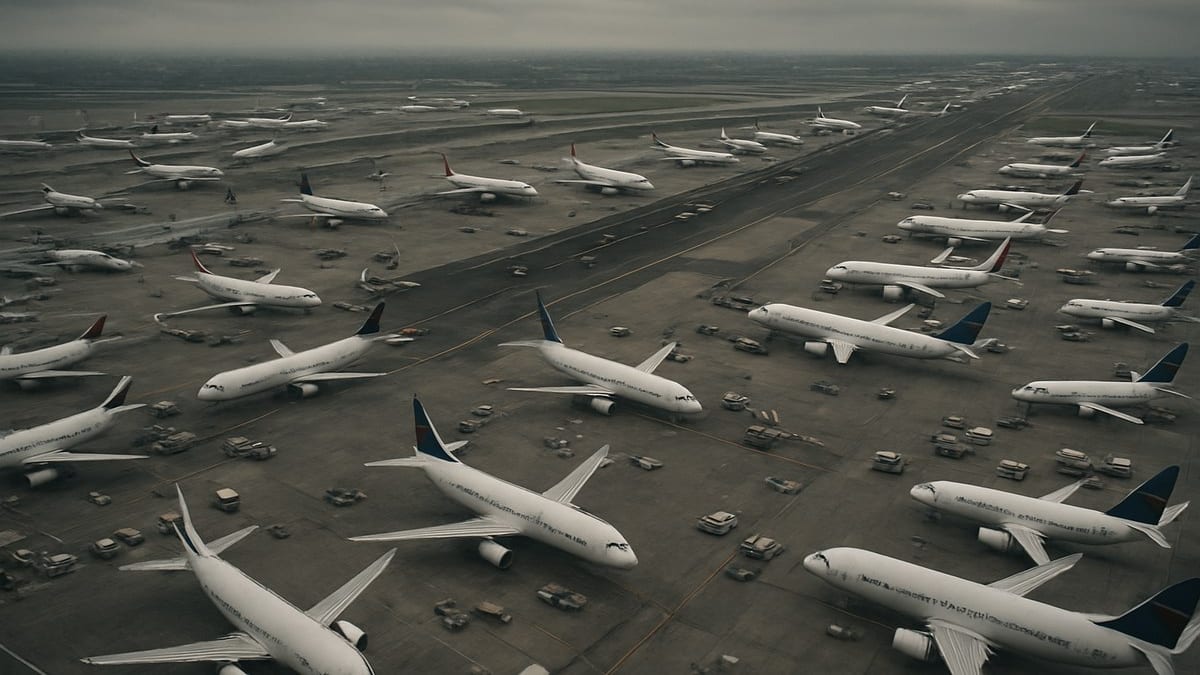
LaGuardia Turns Into a Flashpoint for U.S. Air Travel
New data from flight-tracking services and aviation industry coverage shows LaGuardia once again emerging as one of the country’s most disrupted airports, with high volumes of delayed and canceled flights concentrated in a single day. Published coverage on April 7 indicates that LaGuardia recorded around 20 or more cancellations and well over 100 delays in a single operational window, placing it among the most heavily affected hubs in the national system.
Separate reporting focused solely on LaGuardia describes an even more acute "travel nightmare," with roughly 22 cancellations and close to 250 delays impacting a mix of domestic and transborder routes. Those figures reflect both outgoing and incoming flights, underscoring how quickly local problems can cascade into broader network snarls when they occur at a high-density airport serving one of the world’s largest metropolitan areas.
The latest turbulence follows an already difficult stretch for the New York region, where LaGuardia, John F. Kennedy International and Newark Liberty have repeatedly ranked among the country’s leaders in cancellations and delays. Analysts note that when one of these airports experiences concentrated disruption, the effect is rarely contained to the New York market and typically spreads along major airline corridors.
While precise causes for the current wave of disruption vary by carrier and route, the numbers at LaGuardia place additional pressure on an infrastructure that has long been identified in federal analyses as a chronic choke point for U.S. aviation. Even modest schedule upsets at the airport often tip quickly into wider gridlock.
Collision Aftermath and a System Under Strain
The immediate context for LaGuardia’s latest meltdown includes the recent deadly collision between an Air Canada Express jet and an airport vehicle on March 22, 2026. Publicly available information shows that the incident temporarily halted operations and prompted a multi-agency safety investigation, with the airport only fully resuming normal activity later that weekend.
Coverage in national outlets describes investigators focusing on air traffic control factors and coordination on the airfield in the minutes before the collision. The event has intensified scrutiny of how much operational margin exists at one of the country’s most congested airports, particularly at peak times when runways, taxiways and ramp areas are under heavy load.
LaGuardia has a history of operational stress, and the collision has become a symbolic flashpoint in a broader conversation about the resilience of the U.S. aviation system. Analysts point out that when a major incident forces even a temporary shutdown at such a tightly scheduled airport, airlines face difficult choices about what to cancel or delay and how to re-accommodate passengers, often leading to rolling disruptions that last for days.
Recent commentary on the so-called "Great Airport Meltdown" of 2026 links the LaGuardia crash and subsequent flight chaos to longer-running pressures on aviation staffing, technology and infrastructure. The collision did not cause those systemic issues, but it has sharply illustrated how little slack exists when an already strained network encounters a serious shock.
Ripple Effects Across Airlines and Routes
The disruption at LaGuardia is impacting a cross-section of carriers, with reports highlighting Delta Air Lines, American Airlines, JetBlue and Air Canada among those facing elevated delay and cancellation rates. Regional and low-cost operators are also being swept up as gate space, crews and aircraft rotations fall out of sync.
According to sector-focused travel coverage, flights linking LaGuardia to major domestic cities such as Chicago, Boston and Miami, as well as international gateways including Toronto and Nassau, have been particularly affected. These routes function as critical feeders into broader networks, so disruptions at LaGuardia quickly translate into missed connections and irregular operations across North America and beyond.
Travel-industry outlets tracking performance across multiple U.S. airports on April 7 report that LaGuardia’s high delay and cancellation totals are contributing to a national picture of thousands of disrupted flights. Hubs such as Atlanta, Orlando, Chicago O’Hare and Los Angeles are simultaneously wrestling with their own operational challenges, compounding the impact for travelers attempting to connect through multiple affected cities.
Airlines have been attempting to absorb the shock by issuing rolling schedule adjustments, waiving some change fees and repositioning aircraft where possible. Even so, the combination of crew duty limits, tight turnaround times and crowded airspace means recovery from a single intense disruption period at LaGuardia can take more than a day to fully work through carrier networks.
Structural Vulnerabilities at a Chronic Bottleneck
Aviation analyses and government testimony over the years have repeatedly cited LaGuardia as a prime example of how concentrated demand can overwhelm limited airspace and runway capacity. The airport operates within one of the most complex air traffic environments in the world, with tightly spaced runways and overlapping arrival and departure streams with nearby Newark and JFK.
Previous federal reviews have described the airport as a case study in how unrestricted scheduling can lead to persistent congestion and nationwide delays. Attempts to control volume through slot systems and schedule caps have reduced some of the worst bottlenecks, but the latest meltdown suggests that structural vulnerabilities remain, particularly under stress from weather, incidents or staffing constraints.
Travel data from recent months shows LaGuardia repeatedly appearing near the top of national rankings for cancellation rates, especially during weather events and periods of heightened operational stress. Industry observers argue that this chronic pattern turns any local disruption into a national problem, as airlines struggle to maintain on-time performance while still serving one of the country’s most important business and leisure markets.
Some experts have called for renewed scrutiny of schedule levels, runway management and airspace procedures in the New York region, pointing to the current episode as further evidence that incremental fixes may be insufficient. At the same time, airlines are under pressure to preserve access to a lucrative market, limiting their willingness to reduce flying unless required by regulators or structural changes.
Traveler Impact and What Passengers Are Experiencing
For travelers on the ground, the LaGuardia meltdown is translating into long lines, crowded gate areas and mounting uncertainty about when flights will depart. Travel-focused publications describe passengers facing hours-long waits, abrupt gate changes and limited access to rebooking options as airline call centers and digital platforms become overwhelmed at peak disruption moments.
Business travelers are reporting missed meetings and canceled events, while leisure passengers face lost vacation time and additional out-of-pocket costs for hotel stays, meals and alternative transport. Coverage notes that disruptions at LaGuardia are particularly punishing for same-day shuttle-style routes along the East Coast, where frequent flyers often rely on tight schedules and multiple daily frequencies that can evaporate quickly when cancellations mount.
Consumer advocates are using the latest chaos to renew attention on passenger rights, including compensation policies, hotel and meal vouchers, and transparency around delay causes. The episode is being compared in some coverage to past airline and airport meltdowns that prompted regulatory reviews and, in some cases, enforcement actions focused on how carriers communicate with and care for stranded travelers.
With flight schedules still in flux, travel publications and airport advisories are urging passengers to monitor airline apps and official airport information channels closely, avoid arriving at the terminal too early for severely delayed flights, and prepare contingency plans in case same-day rebooking is not possible. For many travelers, the disruption at LaGuardia is becoming another reminder of how fragile modern air travel can be when a key hub falters.