

More news on this day
New York’s LaGuardia Airport experienced a fresh wave of disruption as 249 delays and 22 cancellations rippled through its schedule, snarling travel for passengers flying on Delta Air Lines, American Airlines, JetBlue, Air Canada and other carriers on key routes across the United States, Canada and the Bahamas.
Get the latest news straight to your inbox!
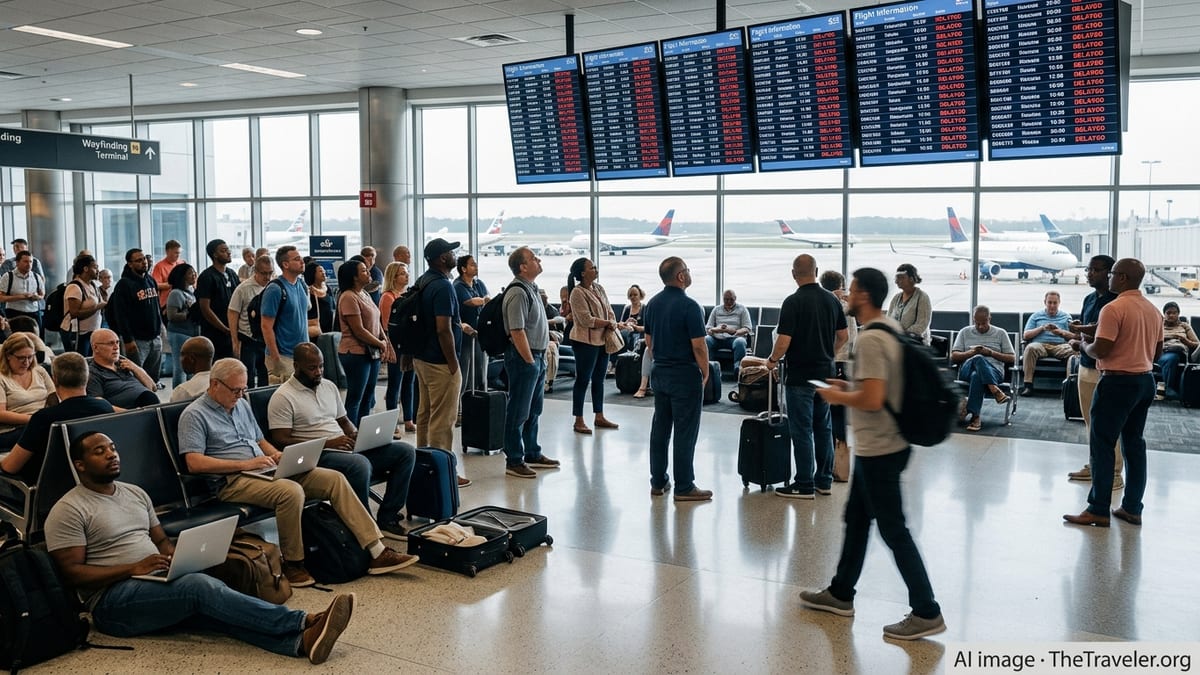
Ground Delays Ripple Across North American Routes
Publicly available tracking data show that on one of the busiest spring travel days, LaGuardia’s operation was heavily constrained, with nearly 250 delayed flights and more than 20 cancellations concentrated in a single day. The disruption affected both departures and arrivals, effectively choking one of the country’s most important domestic and transborder hubs at a critical time for leisure and business travelers.
Major U.S. routes were particularly affected, with services between LaGuardia and cities such as Chicago and Miami experiencing significant knock-on impacts. Delays stretched from well over half an hour to multiple hours on some services, according to aviation data dashboards, leaving many passengers facing missed connections and extended waits inside crowded terminals.
The problems were not confined to U.S. domestic traffic. Flights linking LaGuardia to Canadian gateways, including Toronto, and to popular leisure destinations in the Bahamas such as Nassau, were also hit. These routes play a central role in connecting travelers to onward long haul services, meaning the local disruption created wider scheduling headaches across airline networks.
Industry observers note that LaGuardia’s tightly scheduled operations leave little margin when conditions deteriorate. Once delays begin to stack up, the airport’s slot-controlled environment and limited runway capacity can quickly transform localized incidents or operational constraints into systemwide issues.
Delta, American, JetBlue and Air Canada Among Most Affected
Among the hardest hit carriers were Delta Air Lines, American Airlines, JetBlue and Air Canada, all of which maintain dense schedules at LaGuardia. Data compiled from flight status platforms indicate that Delta and its regional partners absorbed a large share of the delays and cancellations, particularly on high frequency business routes to hubs such as Chicago and smaller regional destinations.
American Airlines flights into and out of LaGuardia also showed elevated delay levels, with several departures to Miami and other East Coast cities held on the ground or arriving late. For travelers bound for connecting flights in Florida or the Midwest, those delays often cascaded into missed onward journeys, forcing rebookings onto later services where seats were available.
JetBlue, a key player on leisure and visiting-friends-and-relatives traffic from New York, reported a concentration of delayed services rather than outright cancellations, including on flights linking LaGuardia with Florida. This pattern, where aircraft depart but significantly behind schedule, has become familiar to frequent flyers during recent periods of operational stress across the U.S. system.
Transborder operations also came under pressure. Air Canada and its regional affiliates, which operate the busy New York–Toronto corridor and links into other Canadian cities, faced both cancellations and extensive delays. That disruption spilled over into connections at Toronto Pearson for long haul flights to Europe and Asia, forcing some passengers into overnight stays or complex rebooking arrangements.
Operational Constraints and Recent Safety Concerns Weigh on Capacity
Aviation analysts point to a mix of operational and safety-related constraints behind LaGuardia’s latest meltdown. The airport has recently spent extended periods on single-runway operations after a high profile collision involving an Air Canada Express aircraft and airport emergency equipment, prompting tighter safety margins and a more conservative flow of traffic through already congested airspace.
Reports indicate that the Federal Aviation Administration has implemented recurring ground delay programs at LaGuardia in response to staffing challenges in the air traffic control system and to ensure separation standards can be safely maintained. These measures, while designed to reduce risk, effectively cap the number of arrivals and departures per hour, particularly during peak periods.
When LaGuardia is forced to meter traffic more aggressively, airlines frequently must hold aircraft on the ground at origin airports or keep them in extended arrival queues. That produces rolling delays which can last for much of the day, particularly when aircraft are scheduled for multiple short segments such as LaGuardia to Chicago or Toronto and back.
Compounding the issue, carriers are operating near peak utilization of both aircraft and crews. Once delays reach several hours on early morning rotations, crews can time out under duty rules, triggering further cancellations in the late afternoon and evening and reducing the flexibility airlines have to recover their schedules.
Passengers Face Missed Connections, Long Waits and Uncertain Plans
For travelers, the statistics translated into a difficult day on the ground. Social media posts and traveler accounts described long lines at customer service desks, congested gate areas and uncertainty over whether flights to destinations such as Miami, Chicago, Toronto and Nassau would operate as scheduled or be further delayed.
With so many flights departing behind schedule, options for same day rebooking quickly narrowed. Passengers who missed connections in Chicago or Miami often found remaining seats on later services already taken by others whose trips had been disrupted earlier in the day. In some cases, travelers reported being offered alternative routings that added extra stops or required overnight stays.
Disruptions on cross-border routes compounded planning challenges. Those flying between LaGuardia and Canada or the Bahamas must often navigate additional requirements such as immigration processing, documentation checks and minimum connection times, all of which can become harder to meet when inbound flights arrive significantly late.
Airlines encouraged passengers to monitor mobile apps and online tools for real-time updates, but frequent schedule changes meant information sometimes lagged behind actual conditions. Travel advisers note that on days when LaGuardia’s operations are severely constrained, even seemingly minor delays can quickly escalate into full-day disruptions for those with tight itineraries.
Broader Questions About Resilience at New York’s Airports
The severe disruption at LaGuardia adds to a growing debate about the resilience of New York’s air travel infrastructure. Data published by government transportation agencies and independent trackers in recent years have consistently placed New York area airports among the U.S. leaders in both delays and cancellations, reflecting chronic congestion, weather volatility and complex airspace design.
LaGuardia’s location close to dense urban neighborhoods limits its ability to expand runway capacity or significantly increase aircraft movements. Even with extensive terminal redevelopment and modernized facilities, the airport remains vulnerable when weather conditions deteriorate or when air traffic control constraints reduce the usable runway configuration.
Industry commentators suggest that managing demand may need to play a larger role in easing future meltdowns of the kind seen with the 249 delays and 22 cancellations. That could involve tightening slot controls, smoothing schedules across peak and off-peak periods, or encouraging greater use of alternative airports such as Newark and JFK for certain types of traffic.
For now, travelers using LaGuardia are being urged by travel advisers to build greater flexibility into their plans, particularly on busy holiday weekends and during seasons prone to storms. Longer connection times, early day departures and awareness of backup options from nearby airports can help mitigate the impact when another day of heavy delays hits one of North America’s most delay-prone hubs.