

More news on this day
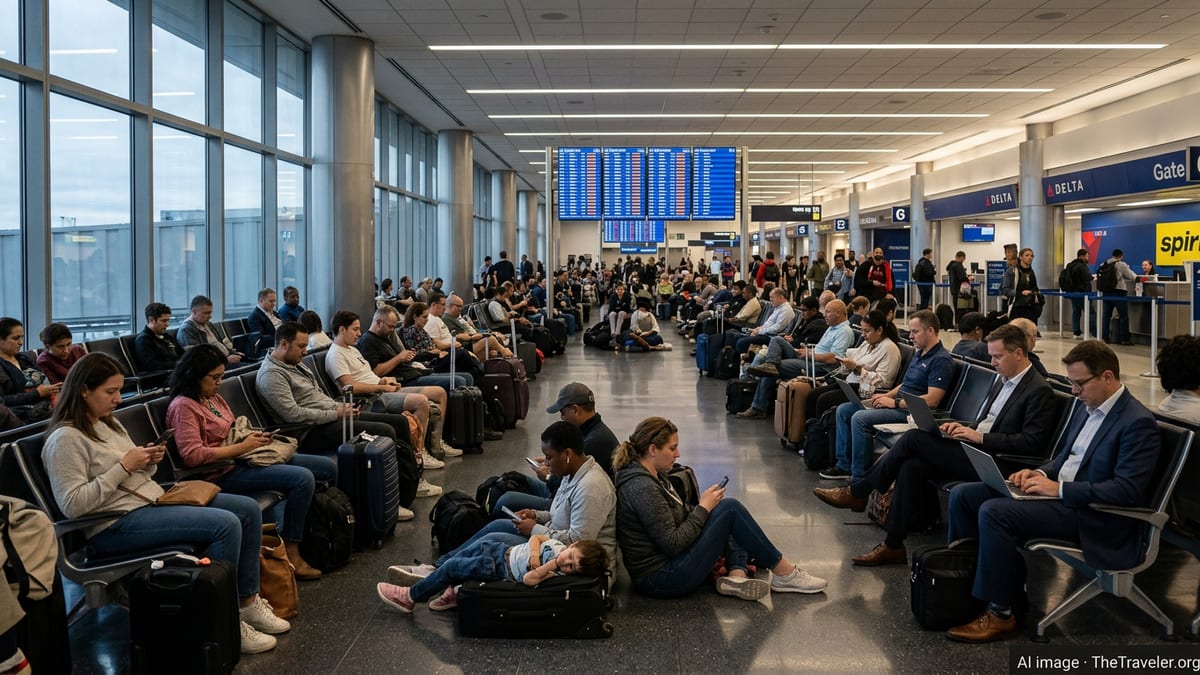
Travelers at New York’s LaGuardia Airport faced hours-long disruptions after a fresh wave of delays and cancellations rippled through Endeavor Air, Spirit, Delta and other carriers, leaving passengers stranded across New York, Washington D.C., Boston and several other major U.S. cities.
Get the latest news straight to your inbox!
Chain Reaction of Disruptions at LaGuardia
Operations at LaGuardia slowed sharply as morning traffic built and a combination of weather, congestion and knock-on crew issues pushed the airport’s already tight schedule past breaking point. By midafternoon, flight trackers were showing more than 220 departures and arrivals delayed and nearly 40 outright cancellations, affecting both domestic and regional services.
Regional operator Endeavor Air, which flies many of Delta’s shorter routes, was among the hardest hit, with cascading delays quickly spilling into the carrier’s afternoon bank of flights. Spirit Airlines, which has been battling reliability and staffing challenges in recent months, also saw multiple services scrubbed or rescheduled, while mainline Delta and other major airlines struggled to recover aircraft and crews out of position.
The disruption was particularly acute for travelers using LaGuardia as a connection point. With gate space limited and turnaround times tightly scheduled, even short ground holds early in the day quickly translated into rolling delays, missed connections and a shrinking number of available seats on later departures.
Impact Across New York, Washington D.C. and Boston
The operational squeeze at LaGuardia spread quickly along the busy Northeast Corridor, where short-haul flights are scheduled in dense waves between New York, Washington D.C. and Boston. As LaGuardia-bound aircraft departed late or failed to depart at all, downline airports began posting their own growing boards of delays.
Flights between New York and Washington National experienced a series of schedule changes as airlines attempted to re-time departures to match available aircraft and rested crews. Passengers reported multiple gate changes and rolling delay announcements, with some short-haul services pushed back several hours before eventually departing.
Boston Logan saw similar knock-on effects, particularly on regional jets and low-cost services that rely on tight aircraft rotations. With aircraft arriving late from New York, some Boston departures were unable to meet their scheduled turnaround, creating gaps in afternoon and evening schedules and forcing airlines to consolidate or cancel lightly booked flights.
Beyond the Northeast, the disruption hampered connections to major hubs including Atlanta, Detroit, Chicago and Dallas, as passengers missed onward flights or were rebooked onto later services that were already close to full. The result was a spillover of stranded travelers far from New York, many of them beginning or ending their journeys at LaGuardia.
Travelers Confront Long Lines and Limited Options
Inside LaGuardia’s terminals, the operational challenges quickly became visible. Lines at airline customer service counters stretched through concourses as travelers sought rebooking options, hotel vouchers and information about checked bags that had not traveled with them. Self-service kiosks and mobile apps eased some of the pressure, but many passengers said they needed to speak directly with agents to sort out complex itineraries.
With hotels across Queens and neighboring boroughs filling up, some travelers reported being offered accommodations miles from the airport or choosing to sleep in terminals rather than risk missing early-morning rebooked flights. Others opted to abandon flights altogether and turn to rail and long-distance buses along the Northeast Corridor, especially on routes between New York, Washington and Boston where ground options are frequent.
Families traveling with young children and international visitors unfamiliar with the region were among the most affected, often facing language barriers, limited budget flexibility and difficulty navigating last-minute alternative transport. For business travelers, the delays meant missed meetings and events, adding to growing frustration over the fragility of tight same-day itineraries involving LaGuardia.
Operational Strains at Endeavor, Spirit, Delta and Others
The day’s problems highlighted just how sensitive U.S. airline operations remain to disruptions at key choke points such as LaGuardia. Regional carriers like Endeavor Air operate on thin margins of slack, with aircraft and crew schedules built around rapid turns and precise timing. When weather, air traffic restrictions or maintenance checks intervene, those margins can evaporate within hours.
Spirit Airlines has been working to stabilize its performance after a series of high-profile holiday and winter disruptions tied to staffing shortages and tight scheduling. Additional delays and cancellations on a busy weekday underscore the operational challenges for ultra-low-cost carriers that rely on high aircraft utilization and minimal spare capacity.
Mainline Delta and other large airlines faced a different but related problem: when regional partners and feeder flights are delayed, connecting passengers and crews fail to make it to mainline departures on time. That can force last-minute crew swaps, equipment changes and, in some cases, outright cancellations to avoid running afoul of duty-time regulations.
Industry analysts note that while airlines have invested in technology and schedule planning to smooth out irregular operations, the combination of busy airspace, constrained airport infrastructure and volatile weather in the Northeast continues to test even well-prepared carriers.
What Travelers Can Expect in the Coming Days
Airlines were working through the afternoon and evening to clear the backlog of delayed flights and position aircraft for the following day’s schedule. However, with crews reaching duty limits and some aircraft ending up overnight in unscheduled locations, passengers were warned that residual delays could persist into the next morning, particularly on early departures.
Frequent flyers and travel agents advised affected travelers to monitor airline apps closely, opt in to text or email alerts and check flight status repeatedly rather than assuming that a posted departure time would remain accurate. They also suggested that anyone with flexibility in their plans consider rebooking away from peak hours or, where possible, choosing larger airports with more alternative flights.
For those still set to travel through LaGuardia, Washington or Boston in the near term, the episode served as a reminder of how vulnerable tight, multi-segment itineraries can be in the current operating environment. With airlines working to rebuild resilience but still facing staffing, weather and infrastructure constraints, even a single day of heavy disruption at a key airport can echo across the national network.