

More news on this day
New York’s LaGuardia Airport is again at the center of a severe operational meltdown, with hundreds of flights disrupted over several days and ripple effects spreading across already strained U.S. airline networks.
Get the latest news straight to your inbox!
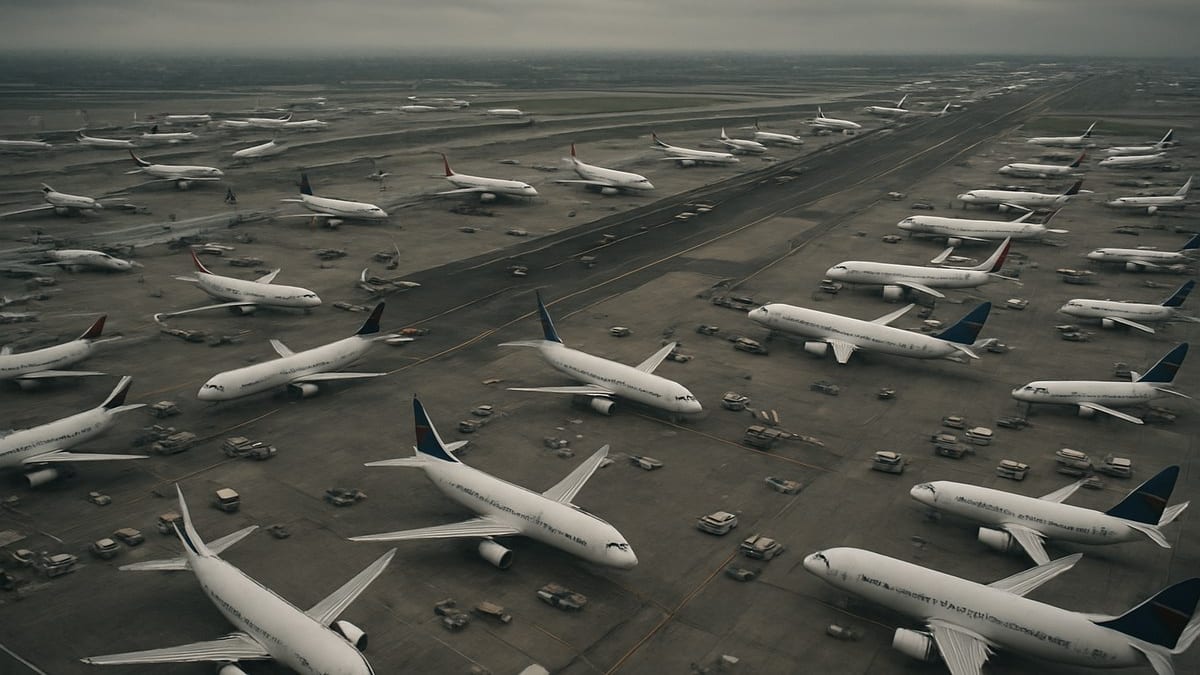
Days of Disruption After a Deadly Runway Crash
The latest turmoil at LaGuardia unfolded against the backdrop of a deadly collision on March 23 between an Air Canada Express regional jet and an airport fire vehicle, an incident that prompted a temporary shutdown of the airport and sharply reduced runway capacity afterward. Publicly available information on the crash and subsequent investigation shows that the airport operated with constrained infrastructure in the days that followed, leaving little margin for routine delays or weather issues.
Flight-tracking data and media coverage indicate that the closure and partial reopening at the end of March forced widespread cancellations, created a backlog of displaced passengers and aircraft, and pushed airlines to implement broad travel waivers for New York–area itineraries. As traffic volumes ramped back up for the Easter and early April travel period, LaGuardia’s fragile operating environment struggled to absorb fresh shocks.
Reports from passenger forums and aviation trackers describe an airport still adjusting to altered runway configurations, gate pressures, and tighter sequencing for arrivals and departures. These conditions, layered on top of peak travel demand, contributed to a wave of rolling delays that built into a full-scale network disruption in the first week of April.
Single-Airport Chaos Becomes a Network Problem
By April 3, the strain at LaGuardia had escalated into what some coverage characterized as a meltdown, with more than 245 flights delayed in a single day and knock-on disruptions radiating through New York’s wider air system. The concentration of delays at one of the country’s busiest domestic hubs quickly affected schedules at airports across the Northeast and beyond as airlines repositioned aircraft and crews.
Subsequent tallies compiled by flight-tracking services for April 5 and April 6 show LaGuardia repeatedly ranking among the most disrupted U.S. airports. On April 5, publicly available figures pointed to dozens of delays and several cancellations centered on key carriers serving the airport. By April 6, a separate set of data highlighted an even more severe scenario, with LaGuardia linked to 79 cancellations and nearly 600 delays as regional operators and major brands struggled to stabilize their timetables.
Because LaGuardia functions as a critical node for short-haul routes along the East Coast and into Canada, even modest schedule deviations can quickly cascade. Aircraft that depart late from New York often arrive late at downline airports, compressing turn times, disrupting crew duty limits, and forcing additional cancellations as airlines attempt to reset their networks.
Fresh Wave of Cancellations and Delays Hits April Travelers
The disruption did not end with the first weekend of April. On April 6, travel industry reporting described “hundreds of travelers” effectively marooned at LaGuardia as cancellations and delays piled up through the day. Regional partners such as Endeavor, Republic, and Jazz, operating flights on behalf of larger mainline brands, were among those most heavily affected, underscoring how franchise and feeder operations are often on the front line of schedule cuts.
Early data for April 7 pointed to continuing volatility. One travel news outlet tracking national statistics reported thousands of delays and more than 200 cancellations across the United States, with New York’s airports again featuring prominently. A separate breakdown specifically for LaGuardia cited roughly 249 delays and 22 cancellations, describing conditions there as a “travel nightmare” for passengers bound for major cities including Chicago, Miami, Toronto, and Nassau.
This sequence of daily disruptions has coincided with strong spring and post-holiday demand, meaning that alternate seats are often scarce when flights are scrubbed. Travelers attempting to rebook through LaGuardia or shift to nearby Newark and John F. Kennedy International frequently confront long hold times, limited inventory on later departures, and, in some cases, overnight stays.
Airlines Struggle to Protect Schedules and Customers
Publicly available airline advisories and media coverage show that carriers have responded with a mix of preemptive schedule adjustments and after-the-fact recovery measures. Several major U.S. airlines issued or extended travel waivers tied to the March 23 crash and its aftermath, allowing passengers to change LaGuardia itineraries without additional fees within specified date windows.
Despite those waivers, the scale of the disruption has made it difficult to keep customers moving. When aircraft and crew rotations are thrown off at a hub like LaGuardia, regional feeders often bear the brunt of cancellations, particularly on shorter flights that can be consolidated. That, in turn, disproportionately affects business travelers and regional communities dependent on high-frequency service into New York for connections and day trips.
Analysts tracking operations note that the LaGuardia meltdown has unfolded alongside broader strain in the U.S. system. Nationally, flight-tracking platforms logged hundreds of cancellations and thousands of delays during the early April period, driven by a mix of weather, air traffic management initiatives, and residual operational challenges from the holiday rush. Within that context, LaGuardia’s technical and infrastructure constraints have amplified the impact of each new disruption.
Advice for Passengers Navigating the LaGuardia Meltdown
Travel guidance drawn from airline notices, airport advisories, and consumer advocates converges on several practical steps for anyone scheduled to pass through LaGuardia in the coming days. First, passengers are urged to monitor their flight status closely via airline apps and flight-tracking tools, even after checking in, since changes are often made within hours of departure as carriers rebalance their networks.
Many airlines are encouraging customers with flexible plans to move to earlier flights in the day, which tend to be less affected by rolling delays. When cancellations are likely, travelers are advised to explore nearby alternatives such as Newark or Westchester County Airport, or to consider rail options for regional journeys where practical, in order to bypass the most congested portions of the network.
Coverage from travel industry outlets also highlights the importance of understanding passenger rights and airline policies, particularly around hotel vouchers, meal credits, and rebooking options when disruptions are not weather-related. With LaGuardia-based operations under sustained pressure, passengers may find it useful to document expenses and keep a clear record of communications with carriers as they navigate what has become one of the most challenging periods for New York air travel in recent memory.