

More news on this day
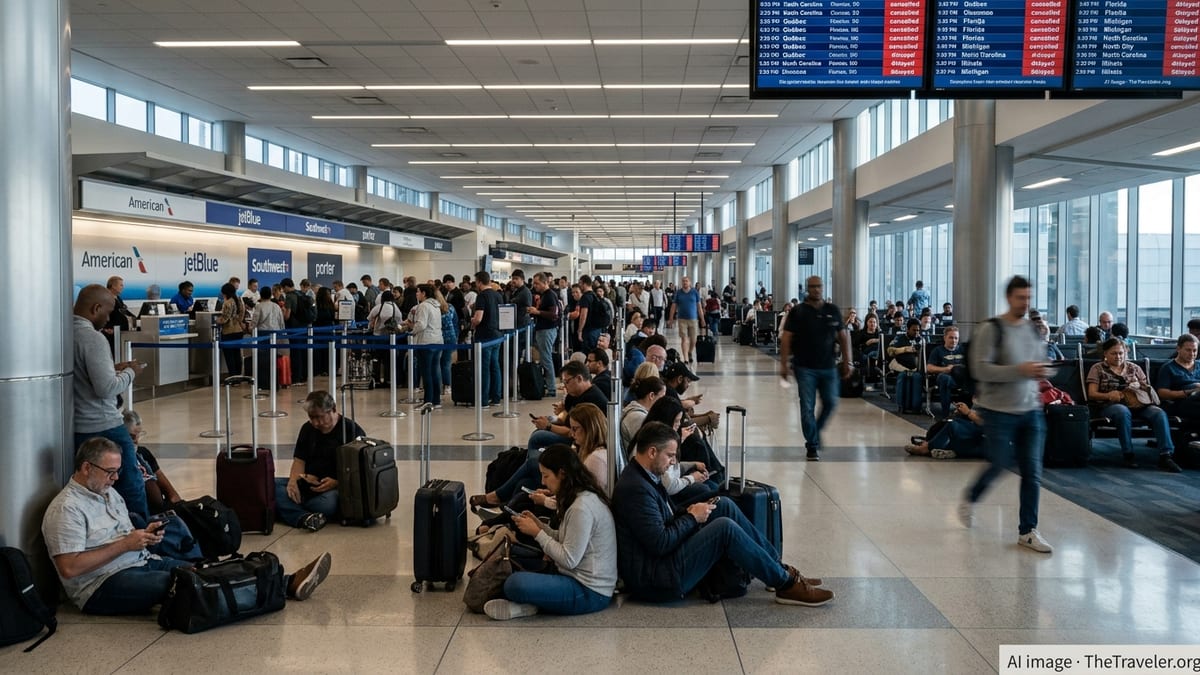
A sudden shutdown at New York’s LaGuardia Airport has stranded thousands of passengers and unleashed a wave of disruptions stretching from Québec to Michigan, Florida, North Carolina, Illinois, Massachusetts and other key air corridors across the United States and Canada, snarling operations for Republic, American, Southwest, JetBlue and Porter Airlines.
Get the latest news straight to your inbox!
Ground Stop at a Key Northeast Hub Triggers Systemwide Shock
LaGuardia Airport’s role as a dense short-haul hub made the shutdown especially disruptive, with a ground stop halting departures and severely limiting arrivals during peak travel hours. Publicly available flight-tracking data and airline status boards showed banks of regional and narrow-body flights canceled or pushed back for hours as crews and aircraft fell out of position.
The outage hit a route network heavy with shuttle-style services to business and political centers such as Boston, Washington, Chicago, Charlotte, Detroit and Toronto, turning what are normally routine hops into daylong odysseys. The knock-on effects were felt well beyond New York, as connecting passengers missed onward flights and overnight aircraft rotations were disrupted.
Operational notices and airport updates indicated that, even after the initial shutdown lifted, congestion in the New York airspace and a backlog of displaced aircraft limited how quickly schedules could be restored. Airlines shifted into irregular-operations mode, prioritizing crew duty limits and aircraft availability over published timetables, leaving many travelers with limited options.
Canadian Travelers from Québec Among the Hardest Hit
Québec-origin passengers were among those hardest affected, particularly travelers routing through LaGuardia from Montreal and Quebec City to US destinations. Many itineraries relied on tight connections via New York, and the loss of multiple LaGuardia departure waves left passengers stranded on both sides of the border.
Public airport dashboards in Montreal and Quebec City showed clusters of delays and cancellations on transborder services tied to the New York area, including flights operated or marketed by Porter and American alongside their regional partners. Travelers attempting to reach US cities such as Boston, Raleigh, Chicago and Orlando via LaGuardia found themselves rebooked through alternative hubs or facing overnight stays.
Reports from Canadian media and social platforms described long lines at check-in counters and customer service desks as travelers tried to salvage vacation plans or business trips. Some airlines offered rerouting via Toronto Pearson or other US hubs where space allowed, but heavily booked summer schedules limited same-day alternatives for many itineraries originating in Québec.
Ripple Effects Across Michigan, Florida, North Carolina and the Midwest
In the United States, the most visible fallout appeared along LaGuardia’s dense network of domestic spokes, particularly to states such as Michigan, Florida, North Carolina, Illinois and Massachusetts. According to publicly available data from airline schedules and federal on-time performance reports, LaGuardia links these regions with some of the country’s highest-frequency short-haul routes, amplifying the impact of any prolonged disruption.
In Michigan and Illinois, passengers on popular business routes to Detroit and Chicago faced cascading delays as aircraft remained stuck in New York or arrived too late to complete planned turns. Regional jets operated under the Republic umbrella were especially exposed, given their role in feeding larger carriers’ networks with frequent shuttle-style services.
Florida-bound leisure travelers from New York and New England also felt the crunch. Cancellations and extended delays on LaGuardia flights to destinations such as Miami, Fort Myers and Tampa left holidaymakers stranded in terminals or forced to accept arrivals a full day or more behind schedule. Published aviation performance data has consistently highlighted the vulnerability of Florida routes during periods of weather or airspace congestion, and the latest shutdown followed a similar pattern.
North Carolina and Massachusetts, home to key business and technology corridors, saw knock-on effects as LaGuardia’s shuttle-style links to Charlotte, Raleigh and Boston backed up. Travelers reported misconnected flights and last-minute changes as carriers tried to move passengers through alternative airports including Newark, Philadelphia and Washington.
Multiple Airlines Struggle to Restore Normal Operations
The shutdown exposed systemwide fragility across several major and regional airlines. Republic’s operation, which provides regional flying for large US carriers, was significantly affected as its LaGuardia-based aircraft and crews were grounded, leading to cancellations not only in New York but across its broader network as rotations broke down.
American and JetBlue, both with substantial LaGuardia footprints, experienced widespread schedule disruptions as aircraft and crews ended up out of place for subsequent legs. Publicly available information from airline status tools indicated waves of cancellations on short-haul routes along the East Coast and into the Midwest, extending well beyond the initial shutdown window.
Southwest, with a national point-to-point model, felt the impact in a different way. While its LaGuardia presence is smaller than some rivals, the interruption at a key Northeast gateway created gaps and delays in connecting patterns, complicating efforts to move passengers efficiently across its broader US network.
Porter Airlines, which has been expanding its transborder operations linking Canadian cities to LaGuardia, faced particular challenges keeping its schedules intact. Reports indicate that some Porter flights were canceled outright, while others operated with significant delays as crews and aircraft were repositioned. Canadian travelers attempting same-day returns or tight business itineraries encountered limited rebooking options, especially on smaller regional routes.
Passengers Confront Packed Terminals and Limited Recourse
At LaGuardia itself, the immediate visible impact was overcrowded terminals and long waits at customer service counters as passengers sought rebooking, hotel vouchers and updated information. Social media posts and local news coverage showed departure boards filled with cancellations and delays, with some travelers informed that all available alternative flights were fully booked for days.
Beyond New York, airports in cities such as Boston, Chicago, Detroit, Charlotte and Orlando also experienced secondary congestion, as diverted or delayed LaGuardia flights arrived late and connecting passengers missed onward legs. Publicly available consumer guidance from transportation authorities emphasizes that, in such circumstances, travelers may be entitled to assistance such as refunds or rebooking when flights are canceled or significantly changed.
Travel experts routinely advise passengers caught in similar disruptions to act quickly to secure available seats, use airline apps and websites in parallel with in-person help, and consider alternative routings through less congested hubs. In this latest LaGuardia-related disruption, those who could pivot to other New York area airports or shift their travel dates often fared better than those waiting for the original schedule to resume.
With LaGuardia serving as one of the most tightly scheduled airports in North America, analysts note that any major interruption tends to reverberate for days across both US and Canadian networks. The latest shutdown underscores how closely linked travelers in places as far apart as Québec, Florida and Michigan are to the operational resilience of a single congested hub.