

More news on this day
New York’s LaGuardia Airport faced another punishing day of disruption on April 3, with publicly available flight-tracking tallies indicating more than 245 delayed services that rippled across the wider U.S. aviation network and strained the city’s already congested transit system.
Get the latest news straight to your inbox!
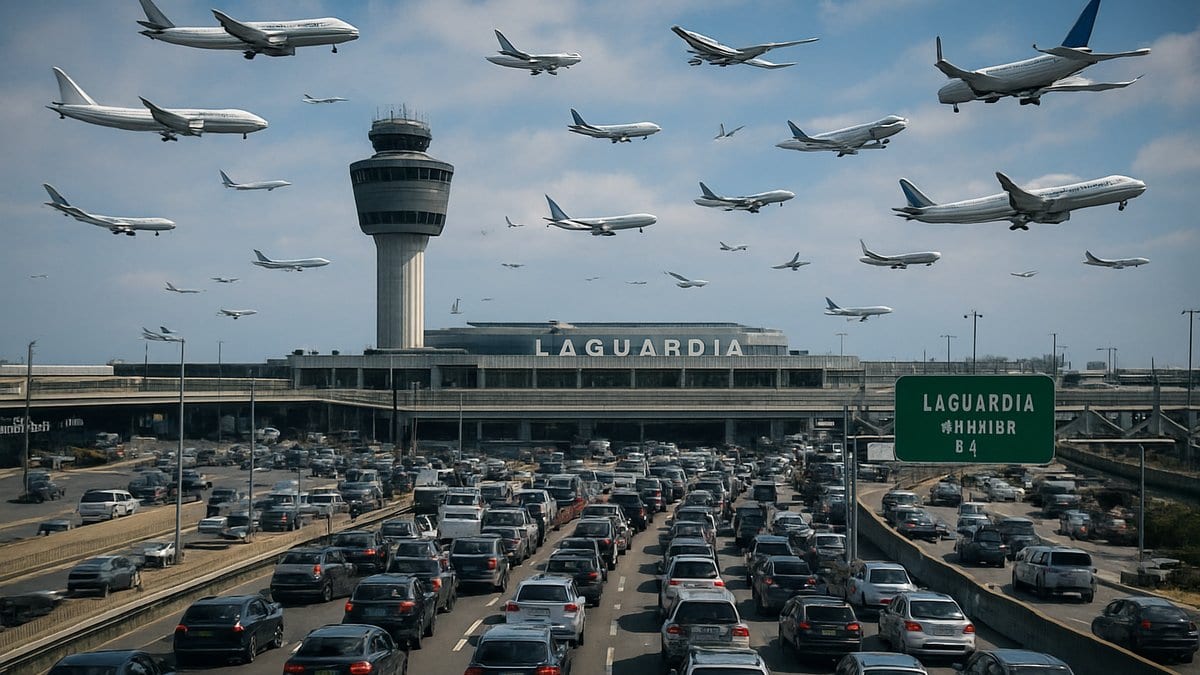
Live Data Shows LaGuardia Emerging as a National Hotspot
Flight-tracking dashboards and aviation disruption trackers for April 3 show LaGuardia among the hardest hit airports in the United States, with reports indicating roughly 245 delayed departures and arrivals and a cluster of cancellations across major domestic and regional carriers. While the absolute number of cancellations remains lower than during the most severe winter storms earlier in the year, the concentration of delays at a slot-constrained airport like LaGuardia has proved enough to create bottlenecks that stretch far beyond New York City.
Coverage from aviation-focused outlets and travel advisories highlights LaGuardia’s prominent role in the day’s disruption picture, alongside other pressure points such as Chicago and Los Angeles. Nationally, delays on April 3 have climbed into the thousands, but it is LaGuardia’s density of short-haul, high-frequency routes that turns a few hundred late departures into a systemwide headache, as missed connections and crew timeouts accumulate over the course of the day.
Real-time status boards show delays spread across the morning and afternoon waves, rather than confined to a single burst of poor weather or an isolated technical issue. This pattern suggests a combination of lingering operational constraints, weather aftershocks from earlier in the week, and ongoing air traffic flow management programs in the busy New York terminal area.
By midafternoon, passenger reports from social media and travel forums described gate areas “standing room only,” extended lines at customer service desks, and rolling departure time changes as airlines worked through backlogs while attempting to preserve evening bank connections.
From Weather Chaos to Runway Limits: How the Logjam Built
The April 3 gridlock at LaGuardia did not emerge in isolation. In the days leading up to the latest wave of disruption, severe weather systems swept across large portions of the United States, with published coverage detailing thousands of delays and hundreds of cancellations on March 31 and April 1. Those storms struck key Northeast gateways including LaGuardia, Newark, and Reagan National, triggering ground delay programs and metered arrivals that left aircraft and crews out of position.
At the same time, LaGuardia continues to work through operational strain following a recent runway collision involving an Air Canada Express regional jet and a fire truck. Subsequent reporting on that incident has pointed to tightly scheduled nighttime traffic and questions around controller staffing procedures on the evening of the crash. While investigators are still examining the sequence of events, the episode has added fresh scrutiny to how much traffic the airport can realistically accommodate during adverse conditions.
Advisories referenced by traveler communities show that in late March the New York area airports, including LaGuardia, were placed under repeated ground delay programs. These programs limit the rate at which flights may depart for or arrive at the airport, effectively throttling throughput in order to preserve safety margins when weather or infrastructure constraints reduce capacity.
Once those flow restrictions intersect with LaGuardia’s heavy schedule of shuttle-style services and banked departures, recovery can be slow. Aircraft that arrive late often depart late again, and crews who reach duty limits overnight can trigger last-minute substitutions or cancellations the following morning. That cycle appears to have carried into April 3, setting the stage for the latest cluster of more than 245 delays.
Chicago, Montreal and Beyond: Key Routes Bear the Brunt
According to published coverage drawing on flight-tracking data, some of the worst knock-on effects from LaGuardia’s April 3 delays are being felt on heavily trafficked corridors to Chicago and Montreal. Multiple daily services operate between LaGuardia and Chicago’s O’Hare and Midway airports, split among large network carriers and low-cost operators. When LaGuardia’s departure queues lengthen, these links quickly become chokepoints for passengers with onward domestic and international connections.
Earlier in the week, a bomb-threat diversion involving an American Airlines flight from LaGuardia to Chicago O’Hare underscored how sensitive this corridor has become to disruption. That service was forced to divert to Detroit, leading to an extended delay for passengers and additional complexity for aircraft and crew scheduling across the broader route network. As airlines absorb both security-related and weather-related disruptions, even routine afternoon departures between New York and the Midwest are more vulnerable to rolling delays.
On the cross-border side, recent coverage of an Air Canada Express service between Montreal and LaGuardia has highlighted how the New York–Montreal corridor is closely intertwined with both U.S. domestic and Canadian regional operations. Any extended delay in New York can cascade into missed connections in Montreal, particularly for transatlantic services that run on fixed overnight schedules.
With LaGuardia also acting as a key origin and destination point for travelers heading to secondary cities across the Northeast and Mid-Atlantic, today’s delay totals are reaching well beyond marquee city pairs. Smaller markets that rely on single daily flights or thin regional schedules may experience outsized disruption when an aircraft spends hours waiting on a LaGuardia departure slot.
Passengers Confront Crowded Terminals and Thin Options
For travelers on the ground, the statistics behind LaGuardia’s 245-plus delays translate into long hours in crowded concourses and difficult choices about rebooking. Travel forums and social posts from April 3 describe passengers arriving at the airport to find departure boards dominated by yellow “delayed” markers, with estimated times shifting in 15- or 30-minute increments throughout the day.
Across the national network, consumer-facing travel coverage notes that major airlines are juggling not only LaGuardia’s disruptions but also elevated delay counts at other hubs, limiting their ability to reroute passengers quickly. This has left some LaGuardia travelers facing overnight stays or long overland journeys when same-day alternatives are unavailable, especially for those on the final flight of the day to smaller destinations.
Informational resources stress that in many cases these delays stem from weather and air traffic management constraints, which can limit eligibility for monetary compensation. Even so, airlines generally outline policies for meal vouchers, hotel accommodations, or rebooking assistance when passengers are stranded for extended periods, and travelers are being urged to familiarize themselves with those commitments.
Experts quoted in recent disruption analyses also emphasize the importance of proactive monitoring. Passengers are encouraged to track their flight status via airline apps and independent trackers well before leaving for the airport, particularly when traveling through LaGuardia and other congestion-prone hubs during the current period of volatility.
Persistent Vulnerabilities in New York’s Air and Ground Grid
The latest episode at LaGuardia is drawing renewed attention to the structural vulnerabilities of New York’s aviation and ground-transport network. Policy papers and government reports have long portrayed LaGuardia as a case study in demand outstripping capacity, where every additional scheduled flight heightens the risk that weather or operational snags will push the system into gridlock.
On April 3, those pressures have translated into slower moving queues not only in the air but also on the ground. With many travelers opting to rebook through nearby airports, regional rail and intercity bus services are seeing increased demand, while ride-hailing pickup zones at LaGuardia and alternative airports are reporting heavy traffic. The city’s subway and commuter rail lines, which connect to onward coach and airport shuttle services, are also absorbing some of the overflow from passengers who abandon delayed flights in favor of same-day ground transport.
Recent analysis of national delay patterns suggests that LaGuardia’s situation is unlikely to be a one-off. As spring storm systems collide with dense schedules and lingering staffing and infrastructure constraints, airports that operate close to their capacity limits are expected to remain particularly vulnerable. For New York, that means LaGuardia will continue to be a bellwether for the health of the broader network, where a few hundred delayed flights on a single day can paralyze mobility far beyond the city’s airspace.
For now, publicly available data and on-the-ground accounts point to incremental improvement through the late evening hours of April 3, but with residual delays likely to carry into early departures on April 4. Travelers planning to pass through New York’s airports over the weekend are being advised by consumer advocates and travel analysts to build in extra time, prepare backup options, and assume that LaGuardia, in particular, may continue to operate on a knife-edge between manageable congestion and another day under siege.