

More news on this day
New York’s LaGuardia Airport is enduring another bruising stretch of operational turbulence, with more than 245 flight delays in a single day compounding weeks of disruptions and sending shockwaves through the city’s wider transit network.
Get the latest news straight to your inbox!
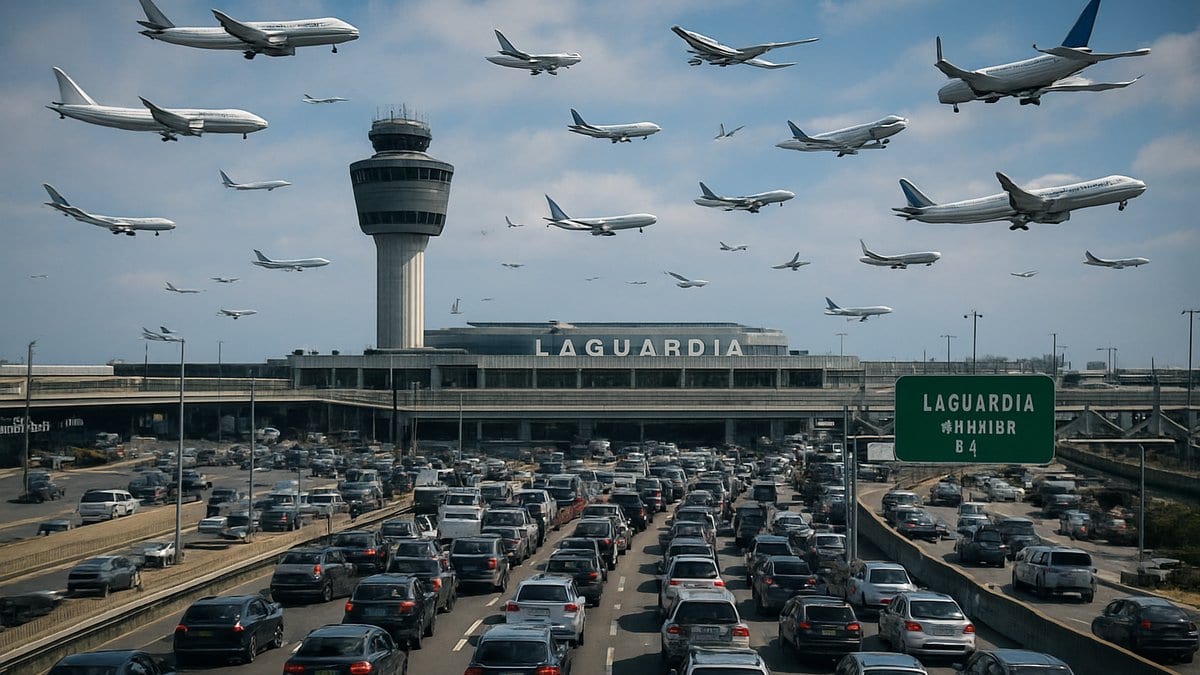
Delays Pile Up After Weeks of Turmoil
The newest wave of delays follows an already fraught period for LaGuardia, which has been under intense scrutiny since a late-March collision between an Air Canada Express jet and an airport fire vehicle forced a temporary closure of the airport. Publicly available aviation data and airline bulletins indicate that the incident triggered rolling schedule changes and ground delay programs that have yet to fully unwind.
Travel tracking services and passenger rights organizations report that, on one of the worst days this week, LaGuardia logged more than 245 delayed departures and arrivals, alongside a smaller number of outright cancellations. That tally places the Queens airport among the most disrupted hubs in the United States, despite operating with fewer runways and a smaller footprint than its regional counterparts.
Reports from flight-tracking platforms show that the latest surge in delays is layered on top of earlier weather-related disruptions across the Northeast and Mid-Atlantic. Thunderstorms and low clouds in late March and early April repeatedly forced air-traffic managers to reduce arrival and departure rates into the New York terminal area, squeezing LaGuardia’s already tight schedule.
Passenger-assistance services describe a pattern in which delays at LaGuardia have become both more frequent and more prolonged since the runway collision. In some recent cases, the number of delayed flights at the airport has exceeded 300 in a day; the current 245-plus figure is consistent with that elevated baseline rather than a one-off aberration.
System Strain Exposes Chronic Vulnerabilities
The disruption at LaGuardia is drawing renewed attention to longstanding structural constraints at the airport. Capacity is fundamentally limited by runway layout and surrounding airspace, and federal documentation on slot controls has for years highlighted LaGuardia as one of the most delay-prone airports in the country when traffic or weather pressure intensifies.
Industry analyses note that when thunderstorms, low visibility or strong winds strike the region, air-traffic managers must sharply restrict movements at New York’s three major airports. LaGuardia’s compact design and high proportion of short-haul flights make it particularly susceptible to cascading delays when arrival spacing is widened or departure queues grow.
Recent construction advisories and airport impact reports show that LaGuardia also faces periodic overnight closures for maintenance work during the warm-weather months. While these projects are scheduled in low-traffic windows, they can constrain operational resilience and limit the airport’s ability to recover from earlier disruptions, especially when traffic demand remains high into the late evening.
Analysts observing the current situation describe LaGuardia as operating at the edge of its designed capacity. A relatively small spike in traffic, a temporary ground stop, or a staffing challenge in the regional air-traffic system can quickly convert into triple-digit delay counts, as appears to have happened during the recent 245-plus delay episode.
Passenger Fallout Across Air and Ground Networks
The immediate consequence of LaGuardia’s latest delay surge has been a familiar scene of crowded concourses, rolling departure boards and mounting frustration among travelers. Passenger accounts shared via public forums describe missed connections, overnight stays in terminals and hours spent in security or boarding queues for flights that later slipped further behind schedule.
The knock-on effects extend well beyond the airport’s perimeter. With flights arriving hours late or departing deep into the night, the demand for taxis, ride-hailing vehicles and shuttle services spikes suddenly, producing traffic jams on the Grand Central Parkway and local streets in northern Queens. Buses linking LaGuardia to subway and commuter rail hubs, such as the Q70 and M60 routes, have reported heavy loads and intermittent crowding as passengers seek alternatives.
Rail and subway lines that provide indirect access to LaGuardia have also felt the strain. Riders arriving at Woodside, Jackson Heights and Harlem report fuller trains and longer waits as delayed air travelers attempt last-minute route changes or transfer between airports. For some, the compounded delays in the air and on the ground have stretched what should be a straightforward domestic trip into an all-day or overnight ordeal.
Hotels near the airport and in central Queens are seeing increased demand from stranded passengers, according to publicly available booking data. With some airlines only able to rebook travelers one or two days later due to limited seat availability, the effects of a single day’s disruption at LaGuardia can linger across multiple travel days.
Airlines, Regulators and Travelers Scramble to Adapt
Airlines with large operations at LaGuardia have been adjusting schedules, rerouting passengers through other hubs and issuing flexible rebooking policies as the disruption continues. Carrier travel waivers related to the late-March closure and its aftermath have gradually narrowed in scope, but some accommodations remain in place for customers directly affected by the most recent wave of delays.
Operational bulletins and federal airspace advisories indicate that traffic-management initiatives such as ground delay programs and controlled departure times have been repeatedly deployed at LaGuardia in recent days. These tools help prevent gridlock in the skies but also result in prolonged waits at gates and on taxiways, particularly during the afternoon and evening peaks.
Regulatory documents and previous impact studies suggest that easing LaGuardia’s chronic delay problem will require a combination of infrastructure improvements, airspace modernization and disciplined schedule planning by airlines. However, many of those changes are long term, leaving passengers to navigate a volatile near-term environment in which even routine trips can be upended by seemingly modest disruptions.
Travel advocates advise that, during this period of heightened instability at LaGuardia, passengers build in generous buffer times for connections, monitor their flights closely via airline apps and consider alternative airports in the New York region when feasible. For now, the pattern of 245-plus daily delays serves as a stark reminder of how quickly New York’s air travel system can become overloaded, and how difficult it can be to restore normal operations once the grid begins to seize.