

More news on this day
LaGuardia Airport’s long-running transformation has reached a new milestone, as Terminal B’s latest addition recasts pre-flight waiting time as something closer to a curated New York evening out than a rushed stop for a plastic-wrapped snack.
A Flagship Lounge That Thinks Like a Restaurant
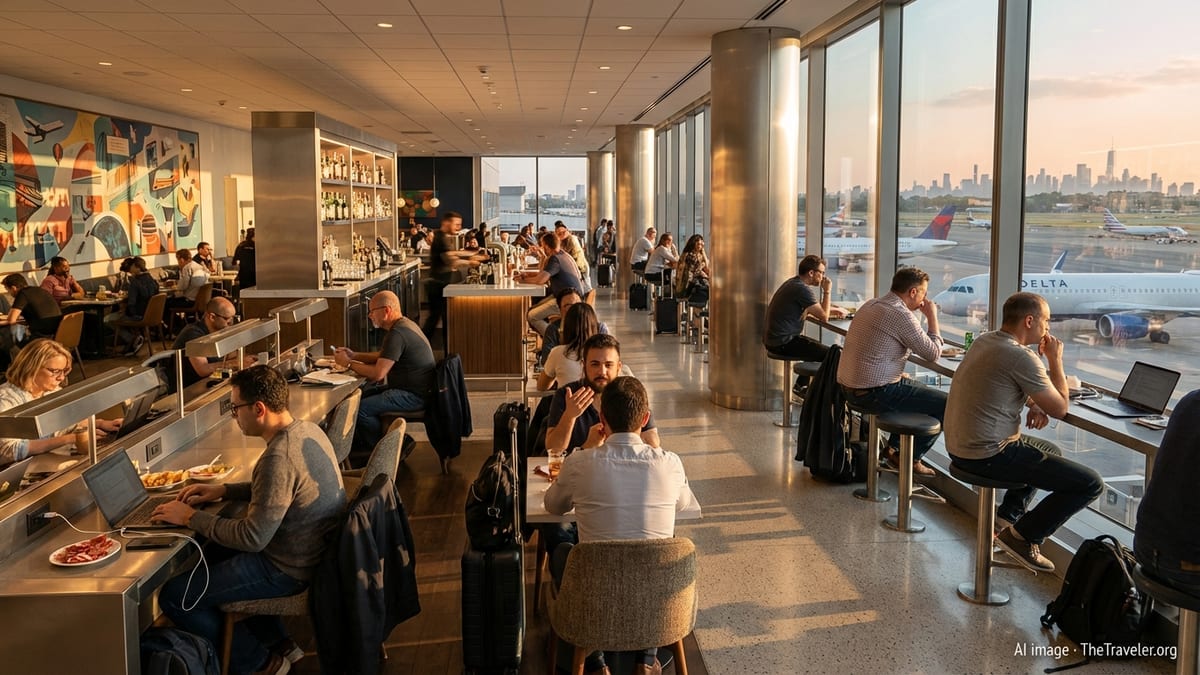
Opened in February 2026, Capital One Landing in LaGuardia’s Terminal B is the newest high-profile entry in the airport’s sweeping redevelopment, and it is explicitly designed to feel like a destination rather than a holding pen. The 12,500-square-foot space, created in partnership with chef José Andrés and his José Andrés Group, occupies one of Terminal B’s elevated pedestrian bridges, a location chosen as much for its views as for its centrality to departing passengers.
Unlike many cardholder lounges that prioritize quiet workspace over atmosphere, this concept leans into restaurant-style hospitality. Seating is arranged for dining first, with nearly every table oriented toward the floor-to-ceiling windows or the dramatic bar rather than television screens. Capital One executives describe the venue as a flagship in their lounge portfolio, aimed at matching the quality of Andrés’s Manhattan restaurants, from freshly prepared tapas to a tightly edited beverage list.
The focus on a full-service dining experience is not just an aesthetic choice. It reflects a broader shift at LaGuardia, where operators have concluded that travelers are more likely to arrive early if the airport offers food and ambiance on par with the city beyond its walls. By turning a formerly transitional space into a place people might choose to visit, Terminal B is attempting to convert dwell time into something both memorable and profitable.
Spanish Tapas, Skyline Views and a Curated Mood
At the heart of Capital One Landing’s appeal is a menu that reads more like a downtown restaurant than an airport lounge buffet. Spanish-inspired small plates, anchored by classics such as pan con tomate, jamón, croquetas and seasonal seafood dishes, are prepared to order rather than staged under heat lamps. Breakfast brings bowls of yogurt and fruit, bagels and lox, and other fresh options, while later in the day travelers find tapas counters stocked with ready-to-go bites for short connection windows.
The bar program mirrors the kitchen’s ambitions, showcasing Spanish wines, sherries and vermouths alongside classic cocktails. For travelers who view a pre-flight drink as a ritual, the space offers a setting that feels more like a city wine bar than a generic airport pub. Daily Rituals carts, roaming trolleys offering interactive snacks or drinks, underscore the idea that this is an experience to be discovered, not simply a seat to be claimed.
All of it plays out against sweeping views of the tarmac and the Manhattan skyline, framed by the skybridge’s glass walls. Natural light floods the room during the day, while dusk departures are treated to sunset reflections off aircraft tails and terminal glass. The effect is to blur the line between terminal and city, giving visitors an early taste of New York energy before they ever reach Midtown.
Open Access, Layered Pricing and an Inclusive Feel
In a departure from traditional premium lounges, Capital One Landing is not reserved solely for bank customers or elite frequent flyers. Any traveler departing from LaGuardia’s Terminal B can enter with a same-day boarding pass, subject to capacity, making the space more inclusive than many of its competitors. Cardholders of select Capital One products receive complimentary or discounted entry, but walk-up access is available for a fee, positioning the venue somewhere between an exclusive club and an upscale airport restaurant.
This open-door policy aligns with a broader shift in airport hospitality, in which operators are under pressure to elevate the baseline experience for a wider slice of passengers. LaGuardia’s Terminal B already touts nearly 50 shops, restaurants and services, and the addition of a marquee concept that is not walled off behind membership tiers is pitched as a way to democratize the airport’s new-found polish.
For travelers, the tiered pricing model also makes the offer more predictable. Instead of gambling on crowded gate seating or standing in long lines for a fast-food counter, passengers can plan for a dedicated dining slot before departure. That certainty, paired with generous operating hours that cover early morning and late-night banks, is part of the terminal’s strategy to smooth passenger flows and reduce congestion in traditional waiting areas.
From “Endure and Escape” to “Arrive Early and Linger”
Capital One Landing is the latest expression of an airport-wide effort to recast how travelers use their pre-flight time at LaGuardia. Terminal B’s redevelopment, a public-private project valued at more than five billion dollars, has already delivered a new arrivals and departures hall, 35 modern gates and an array of art installations and digital wayfinding tools. Together, these are intended to encourage passengers to move through security efficiently, then slow down and explore rather than sprint straight to their gate.
One subtle but important piece of that strategy is the use of digital messaging that tells passengers when to “relax” versus when it is time to head toward boarding. Flight information displays in the terminal do more than list departure times; they also estimate walking distances and suggest whether travelers have a window to enjoy a meal or should proceed directly to their gate. This nudge, combined with real-time security and taxi wait-time data on LaGuardia’s digital platforms, helps remove some of the anxiety that traditionally discourages people from straying far from their boarding area.
The Capital One space slots seamlessly into this ecosystem. Positioned along a primary circulation route and anchored by visible design elements such as a large mural by Queens-based artist Amrita Marino, it is difficult to miss when moving through the concourse. Travelers who receive a “relax” prompt on the screens now have a clearly signposted destination where that permission feels justified: a place to sit, plug in devices, order a meal and watch the runway drama unfold below.
Designing for Comfort, Connectivity and Quiet
Beneath the buzzy headline features, much of the new venue’s impact lies in its attention to everyday travel annoyances. Every seat is equipped with power outlets or charging ports, and tables are designed with hooks and subtle nooks to keep bags off aisles and walkways. Fast wireless connectivity is standard, making it as easy to join a video call as it is to stream a show or catch up on work between flights.
The seating mix, too, reflects an understanding of different traveler profiles. There are banquettes and communal tables for groups, bar stools for solo guests and smaller two-tops along the windows for couples or business travelers looking for a semi-private perch. Soft finishes, warm wood tones and controlled acoustics aim to keep the space from feeling like a cavernous hall, even at busy departure peaks.
Just as important is what the design tries to avoid: visual clutter and hard boundaries. The transition from concourse to lounge is gradual rather than gated off, encouraging hesitant travelers to peek inside and perhaps linger. Artwork, lighting and sight lines have been curated so that, even when the space is near capacity, it reads as calm rather than chaotic, fulfilling the airport’s stated goal of turning mandatory waiting into an interlude of relative ease.
A Broader LaGuardia Trend: Dining and Wellness as Anchors
Capital One Landing joins a growing roster of hospitality-focused spaces at LaGuardia that put food, relaxation and wellness ahead of traditional retail. At Terminal B, the Chase Sapphire Lounge by The Club has already made waves with its mix of wellness rooms, family areas and a gaming zone designed for social gatherings, all complemented by food and drink partnerships with noted New York eateries. Across the airfield in Terminal C, Delta’s new hub has filled its concourses with a lineup of local-inspired restaurants, from Greek and Italian-American dining rooms to ramen, tacos and classic New York comfort food.
The common thread is a pivot away from long corridors of duty-free and generic shops toward experiences that look more like the city’s streets. Airport and airline executives have acknowledged that many LaGuardia passengers are point-to-point travelers who arrive close to departure time and are less inclined to browse retail. They are, however, willing to spend on a quality meal, a coffee ritual or a quiet corner with a view.
For airport operators, this rebalancing carries both risks and potential rewards. Dining areas require more square footage per customer than retail, and they demand more complex staffing and supply chains. Yet when done well, they can keep guests seated and spending longer, and they can create emotional connections that anonymous duty-free aisles rarely inspire. The decision to anchor a signature skybridge with a culinary-forward lounge underscores LaGuardia’s confidence in this bet.
From Maligned Terminal to Model Gateway
The arrival of Capital One Landing also serves as a symbolic marker of just how far LaGuardia’s reputation has shifted. Once derided as cramped and outdated, the airport’s Terminal B has in recent years collected a string of accolades, including five-star ratings from international evaluators and recognition as one of the world’s best new airport terminals. Those honors cite not only architecture and operations but also the breadth and quality of amenities available to passengers.
Officials at LaGuardia Gateway Partners, the consortium that developed and now operates Terminal B, frame the latest addition as part of a longer-term promise to keep iterating on the passenger experience. The goal is not simply to meet basic expectations but to position the terminal as a showcase for New York itself, with local art, food and design embedded throughout the space. A traveler’s first or last impression of the city, they argue, should be consistent with what awaits beyond the airport perimeter.
For New York’s tourism economy, that shift matters. Airports are often the first physical touchpoint for international visitors and a frequent stop for domestic leisure travelers. When guests leave with memories of light-filled concourses, locally inspired meals and quiet spots to unwind, they are more likely to share positive stories, photos and recommendations. Capital One Landing, with its skyline views, chef-driven menu and accessible entry model, is tailored to generate exactly that kind of word of mouth.
Turning Layovers Into New York Moments
The practical payoff of LaGuardia’s latest investment may be easiest to see in small, everyday scenes. Families with children now have a place to sit down for a proper meal where kids can watch planes take off while parents recharge devices and nerves. Solo travelers who once guarded a corner of gate seating can instead claim a window stool, order tapas from a QR code and catch up on email. Business flyers facing a delayed departure can swap fluorescent-lit corridors for a seat at the bar and a glass of Spanish wine with runway views.
In each case, the airport experience becomes less about killing time and more about adding one last chapter to a New York trip, or an atmospheric prologue to the journey ahead. That shift, from endurance to enjoyment, is precisely what LaGuardia’s operators have been aiming for as they reimagine the once-maligned airport as a modern gateway. With Capital One Landing now open and drawing curious travelers onto Terminal B’s skybridge, waiting for a flight at LaGuardia increasingly looks like an opportunity rather than an obligation.