

More news on this day
Heritage steam railways in England’s Lake District are transforming classic day trips into high-end dining journeys, pairing white-tablecloth service and local Cumbrian produce with sweeping views of mountains, lakes and stone-walled valleys.
Get the latest news straight to your inbox!
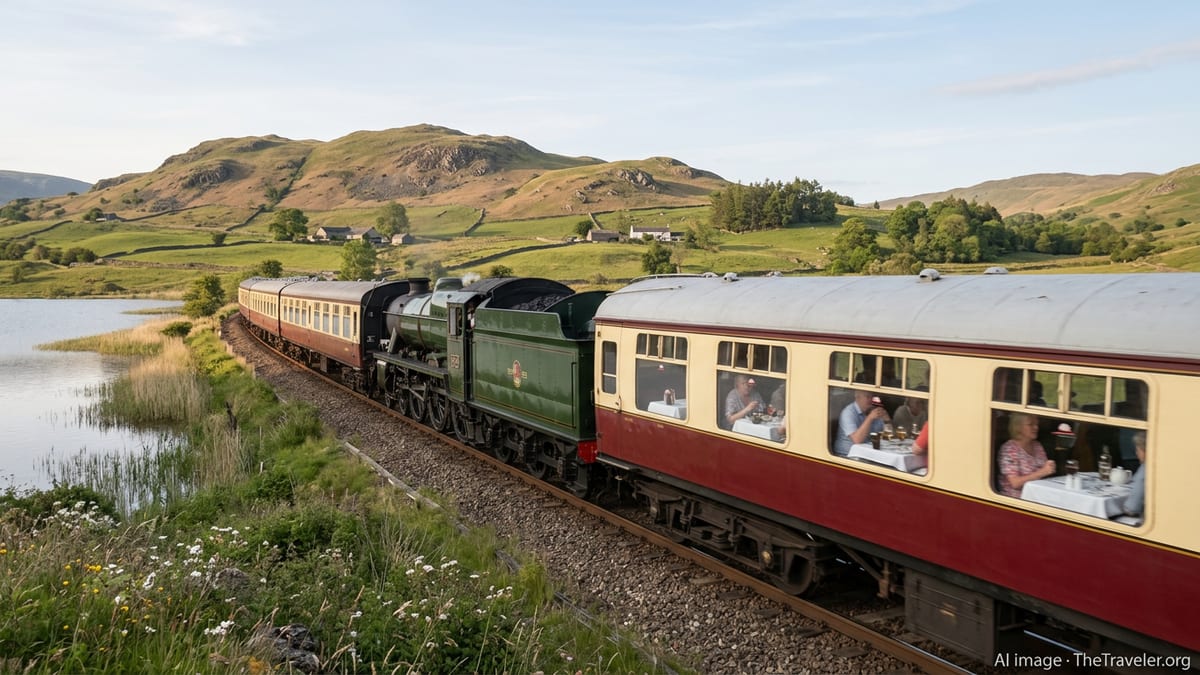
Steam-era glamour meets modern Lake District tourism
From the coastal village of Ravenglass to the wooded shores of Windermere, Lake District steam lines are increasingly positioning themselves as destinations for indulgent food as much as nostalgic travel. Onboard menus now feature locally sourced lamb, artisan cheeses and newly popular cream tea packages served in panoramic carriages, turning short heritage runs into multi-course experiences.
The trend reflects a wider resurgence in luxury rail travel across the United Kingdom, but the Lake District’s distinctive landscape gives these trips particular pull. Trains climb beside fells, skim estuaries alive with wading birds and weave through verdant valleys, offering diners a constantly shifting backdrop that rivals any countryside restaurant view.
Railway operators say demand from both domestic visitors and international tourists has grown steadily in the past few seasons as travellers seek slower, more experiential ways to explore the national park. Advance booking is now recommended for the most popular dining departures, especially during school holidays and peak summer weekends.
Many visitors are combining steam dining journeys with walking, lake cruises and overnight stays in nearby inns, helping to spread tourism spending beyond traditional hotspots such as Windermere and Keswick. Local businesses report that heritage lines with food-focused offers are encouraging visitors to stay longer and explore lesser-known corners of Cumbria.
Ravenglass & Eskdale elevates cream tea in the Western Lakes
On the Ravenglass & Eskdale Railway, a narrow-gauge line that threads seven miles from the Irish Sea deep into the Western Lake District, the introduction of luxury observation carriages has changed the character of a classic family day out. The line’s cream tea and steam packages, running from mid March through late October, pair reserved seats in first-class coaches with tiered stands of scones, cakes and sandwiches served as the train climbs inland.
The experience typically begins at Ravenglass, a quiet coastal village with Roman roots, where passengers board historic locomotives that once hauled ore and goods. Today, the rhythm of the journey is gentler. The train steams past estuary saltmarsh, through woodland and into the foothills of Eskdale, with passengers in Pullman-style cars enjoying panoramic windows, polished wood and freshly brewed tea as staff move along the aisle with china pots and trays.
Railway managers say the cream tea product has broadened the line’s appeal, attracting couples celebrating special occasions alongside multigenerational families. Accessibility upgrades, including level boarding at key stations and adaptable seating in premium carriages, aim to make the experience viable for older passengers and those with limited mobility.
Operating on a seasonal timetable, the railway increases premium catering on days when demand is highest, including summer holidays and selected themed events. Visitors are encouraged to plan ahead, particularly if they hope to secure seats in the newest luxury carriages that have quickly become a signature feature of the Western Lakes.
Lakeside & Haverthwaite focuses on heritage comfort and evening dining
On the southern fringe of Windermere, the Lakeside & Haverthwaite Railway has been steadily adding to its own portfolio of food-led journeys. The line, which runs along the River Leven between Haverthwaite and Lakeside, is well placed to link with popular boat services and aquarium visits, but operators are finding that passengers increasingly want to linger on the train for extended meals.
Special dining departures, including murder mystery evenings and seasonal supper trains, turn the compact route into a moving restaurant. Guests take their seats in restored heritage coaches while staff serve three-course menus featuring regional ingredients. Candlelit tables, crisp linen and gleaming brass recreate an atmosphere more associated with golden-age express services than with a short branch line.
The setting outside the windows remains very much Lake District in character. As locomotives work upgrade from the river, they pass beneath tree-covered slopes and stone bridges, with glimpses of distant fells appearing between cuttings. For visitors who have already hiked the high ridges, the chance to sit back and watch the scenery roll by while dinner is served offers a strikingly different way to experience the national park.
Railway volunteers and staff stress that the emphasis is on relaxed, unhurried hospitality rather than formality. Dress codes are generally informal, and many evening diners are day trippers who have spent the afternoon walking or exploring nearby attractions before boarding their train for the night.
New luxury sleeper links the Lakes with Britain’s rail renaissance
While heritage lines deliver intimate journeys within Cumbria, a more ambitious luxury rail project is now bringing high-end overnight travel back to the region. The Britannic Explorer, a modern sleeper train operated under the Belmond brand, launched three-night itineraries in 2025 that include the Lake District alongside Cornwall and Wales. The service marks the first dedicated luxury sleeper of its kind in England and Wales, signalling renewed confidence in rail-based tourism.
Departing from London, the train offers private ensuite cabins, observation spaces and two full dining cars overseen by Lake District-based chef Simon Rogan. Menus lean heavily on seasonal British produce, with many ingredients sourced from farms near Cartmel and across Cumbria. For passengers, the opportunity to sample a chef of this calibre while watching the countryside pass outside the window is a significant part of the appeal.
Itineraries that include the Lake District typically feature daylight sections through the national park, allowing guests to view peaks, stone barns and lakes from the comfort of their compartments or lounges before disembarking for guided excursions. Partnerships with local hospitality businesses and attractions are designed to channel high-spend visitors into the wider regional economy.
Travel analysts note that the sleeper’s arrival places the Lake District firmly on the map for rail-focused luxury travellers who might previously have gravitated toward Scottish or Continental routes. Combined with the region’s established network of heritage steam lines, it strengthens Cumbria’s status as one of Britain’s leading destinations for upscale rail experiences.
Balancing nostalgia, sustainability and local benefit
Behind the starched tablecloths and polished brass, operators acknowledge that running steam-hauled dining trains in a protected landscape brings scrutiny. Many lines have invested in cleaner-burning fuels, improved maintenance regimes and carbon offset schemes in response to growing expectations that tourism within national parks should minimise its environmental footprint.
Some railways highlight their role in encouraging car-free visits, pointing out that passengers can reach the lines by mainline rail connections and then travel onward by steam. Timetables are often coordinated with regional services, allowing visitors to step from modern electric trains onto vintage platforms without needing to hire a car.
Local suppliers also stand to benefit from the dining boom. Caterers typically source meat, dairy and baked goods from nearby farms and independent producers, while gift shops on station platforms stock Cumbrian preserves, beers and crafts. The combination of premium pricing and strong demand means that successful dining trains can support year-round employment in remote communities that might otherwise rely on seasonal work.
For passengers, the draw remains simple: the chance to hear a whistle echo off distant fells, feel the gentle sway of vintage coaches and watch evening light move across lakes and dry-stone walls while a carefully prepared meal is served at a linen-covered table. As Lake District railways refine their food offerings and new luxury services arrive on the main line, that blend of comfort, nostalgia and scenery looks set to remain one of the region’s most distinctive travel experiences.