

Lake Huron and Lake Michigan share the same freshwater system, yet their shorelines feel surprisingly different. From towering dunes and bustling beach towns to quiet coves and pine-framed bays, each lake offers a distinct kind of shoreline escape. If you are planning a Great Lakes beach trip and can only pick one, understanding how these two giants compare will help you choose the shoreline that matches your style of sun, sand, and surf.
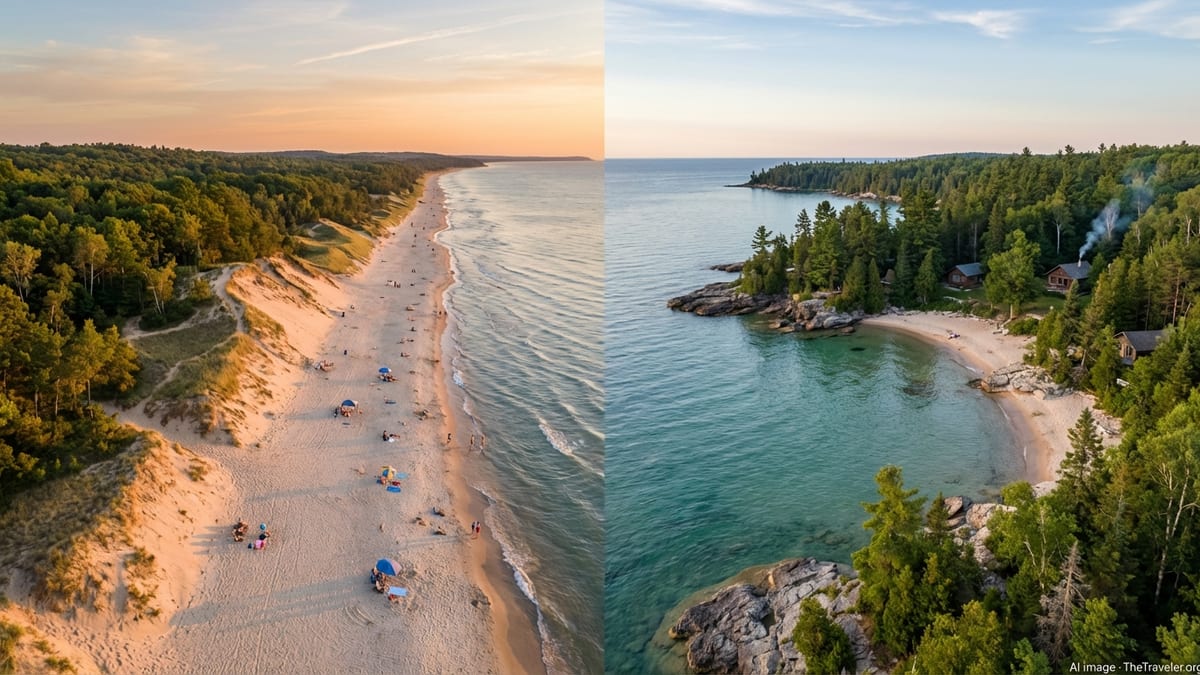
Lake Huron vs Lake Michigan at a Glance
At first glance, Lake Huron and Lake Michigan can look interchangeable on a map. Technically they form a single hydrological system often referred to as Lake Michigan Huron, connected by the Straits of Mackinac and sharing the same water level. Yet when you set foot on their beaches, the differences in shoreline shape, exposure to prevailing winds, and nearby communities become obvious. Lake Michigan is framed largely by long, west-facing sand strands and massive dune systems, while Lake Huron features more indented, island-dotted coasts with many smaller, protected bays.
For pure beach culture, Lake Michigan has become something of a freshwater Riviera, sometimes nicknamed the Third Coast of the United States for its long stretches of soft, pale sand and famous sunset views. Its eastern shore, in particular, is lined with large freshwater dunes that are recognized as the largest dune system of their kind in the world, providing a dramatic backdrop for swimming and sunbathing. On peak summer weekends, many of these beaches are vibrant, busy, and supported by well developed tourist towns.
Lake Huron, by contrast, tends to feel quieter and more dispersed. While it also has lovely sandy beaches, especially along Michigan’s Sunrise Coast and the Canadian side in Ontario, its personality leans more toward rocky points, sheltered coves, and forested headlands. On Huron, it is often easier to find stretches of shoreline where the only sounds are the waves and the wind in the pines. Travelers drawn to low key, less built up waterfronts often find Huron’s beaches appealing exactly because they feel more remote, even when they are not far from a highway or small town.
When deciding which lake is better for beaches, it comes down to what you want from your time on the shore. This comparison focuses on the experiences beach travelers care about most: sand quality, swimming conditions, scenery, nearby attractions, seasonal patterns, and how crowded things are likely to feel during peak months.
Sand, Shoreline, and Water: How the Lakes Physically Compare
For many travelers, the feel of the sand and the look of the water are the first measures of a great beach. Along Lake Michigan, especially from Indiana and Illinois up through western Michigan and into Door County in Wisconsin, the shoreline is dominated by wide, sandy beaches backed by dune systems. The sand along much of the eastern shore of Lake Michigan contains a high proportion of quartz grains that squeak underfoot, often described as singing sand. These beaches tend to be broad and gently sloping, which makes them comfortable for walking, running, or spreading out beach blankets and tents.
Water clarity on Lake Michigan can be striking, especially away from harbors and river mouths. On clear, calm days the shallows often appear turquoise, a color more commonly associated with coastal seas than with inland lakes. The water is cool even in mid summer, but in many spots it warms to relatively swimmable temperatures near the shoreline by late July and August, particularly along the Michigan side, where prevailing winds can push warmer surface water toward the coast. The combination of soft, fine sand and visually clear shallows helps explain why so many of Michigan’s most celebrated beaches are on Lake Michigan.
Lake Huron’s shoreline is more varied. In places like the Sunrise Coast of Michigan’s Lower Peninsula and many parts of Ontario’s eastern shore, you will find long sweeps of pale sand that rival Lake Michigan’s softness and color. In other sections, especially along more rugged coasts and around the Bruce Peninsula, the shoreline shifts to cobble, limestone shelves, or mixed sand and gravel. The water is often exceptionally clear, particularly in regions with rocky bottoms and less sediment. Swimmers here may feel that the water is slightly cooler than at comparable spots on Lake Michigan, though local conditions and wind direction matter more than the lake’s name on the map.
Overall, travelers who prioritize long, uninterrupted sandy strands with a consistent feel from one town to the next may tilt toward Lake Michigan. Those who value a mix of sand, rock, and crystal clear coves, or who enjoy exploring different shoreline textures and colors during a single trip, will often find Lake Huron unexpectedly rewarding.
Scenery and Sense of Place: Dunes, Cliffs, and Islands
If dramatic coastal landscapes are central to your definition of a top tier beach, Lake Michigan has a strong advantage. Its eastern shoreline is famous for soaring dunes that rise hundreds of feet above the water, creating elevated viewpoints and steep runs of sand down to the lake. Areas such as the Indiana Dunes, the dune parks near Saugatuck and Holland, and the national lakeshore and surrounding parks in northwest Michigan offer sweeping vistas, rolling dune fields, and forested backdrops that give Lake Michigan a distinctly coastal feel. The sense of space is expansive, and sunsets over the water can be breathtaking on clear evenings.
These dune systems are not just scenery; they shape the whole beach experience. Trails wind through beech and maple forests before breaking out onto open ridges of sand, where hikers and casual beachgoers can look out across miles of freshwater. In several state and national parks, beaches feel semi wild despite being a short drive from popular vacation towns. The contrast between the intimate feel of wooded paths and the sudden openness of the dunes meeting the lake is part of what many travelers remember most about Lake Michigan beach trips.
Lake Huron’s beauty is subtler but no less compelling. Instead of continuous dunes, much of its charm lies in its islands, peninsulas, and clear blue bays. On the Canadian side, the shore of Georgian Bay and around the Bruce Peninsula is often celebrated for its rugged limestone cliffs, caves, and aquamarine coves that look striking in full sun. In Michigan, the Sunrise Coast provides a gentler landscape of low dunes, pine forests, and long sandy arcs facing east toward the morning sun. While sunsets over Lake Michigan are iconic, sunrise over Lake Huron’s open water can be equally memorable for those willing to wake early.
Perhaps the most distinctive scenic feature of Lake Huron is the abundance of islands and sheltered inlets. These features break up the shoreline, creating a sense of exploration as you move from beach to beach. Some areas feel like classic cottage country, with simple cabins tucked into the trees near quiet, family oriented beaches. Others have a remote atmosphere, even if they are reached by a short ferry ride or a scenic drive. If your idea of the perfect beach scene includes a more intricate coastline with headlands, small bays, and views of islands on the horizon, Lake Huron delivers that in ways Lake Michigan generally does not.
Beach Town Atmosphere and Access to Amenities
When it comes to lively beach towns and easy access to amenities, Lake Michigan is the clear frontrunner. From northern Indiana up through western Michigan and into Wisconsin, its shoreline hosts a chain of communities with well established visitor infrastructure. You will find broad public beaches within walking distance of downtown districts, complete with cafes, ice cream shops, casual restaurants, and classic lakefront promenades. In summer, many of these towns host festivals, outdoor concerts, and art fairs that spill into waterfront parks.
For travelers who like to pair beach time with restaurants, boutique hotels, and cultural events, this concentration of towns along Lake Michigan is a major draw. Public access is often good, with city or state parks providing parking, restrooms, and seasonal lifeguards at the most popular swimming beaches. Families appreciate playgrounds, picnic shelters, and nearby grocery stores, while younger travelers may be drawn to beach bars and evening entertainment. Without ever straying far from the sand, visitors can sample a mix of local breweries, farm to table dining, and small shop browsing.
Lake Huron’s beach communities tend to be smaller and quieter, with fewer large resort style developments. Towns along Michigan’s northeast coast and on the Ontario side often feel like relaxed, traditional lakefront communities where life moves at a slower pace. You will still find motels, campgrounds, rental cottages, and local diners, but there are usually fewer dining and nightlife options than in the busiest Lake Michigan destinations. Many visitors see this as a plus, especially those looking for a low key environment where evenings are spent around a campfire or on a quiet porch rather than in crowded bars.
Accessibility is another consideration. Lake Michigan’s major beach towns are within a half day’s drive of several large metropolitan areas, which means weekend trips from cities are easy. Lake Huron is also drivable but can require slightly longer journeys from major populations centers, especially for its more scenic or island rich sections. The trade off is fewer crowds and a stronger sense of escape. When choosing between the lakes, travelers who prioritize convenience and a full slate of amenities may lean toward Lake Michigan, while those craving a laid back, small town beach atmosphere often find Lake Huron more appealing.
Swimming, Safety, and Seasonal Conditions
Despite sharing the same water system, Lake Michigan and Lake Huron can offer slightly different experiences when it comes to swimming and seasonal conditions. Both lakes are large enough to generate substantial waves, and both can feel more like inland seas than typical lakes. Summer water temperatures vary by location and year, but in general, nearshore waters along the eastern shore of Lake Michigan often warm to relatively comfortable swimming temperatures in late summer, helped by wind patterns that push surface water toward the coast. Long, shallow shelves at many beaches make it easier for families with children to wade and play close to shore.
However, Lake Michigan is also known for strong currents and occasionally dangerous wave conditions, especially near piers, breakwalls, and river outlets. Several widely reported incidents in recent years have led public agencies and local communities to emphasize safety messaging, including flags, warning signs, and beach hazard forecasts. Swimmers are encouraged to pay close attention to conditions, stay within designated swim areas when available, and avoid jumping or diving from structures into unknown depths. On rough days, Lake Michigan’s impressive surf may be better appreciated from the sand than from the water.
Lake Huron tends to offer slightly more sheltered swimming options, thanks to its many bays and inlets. In these protected areas, wave action can be gentler and water clarity very good, making for pleasant conditions on calm summer days. The trade off is that open stretches of Lake Huron can feel cooler and windier than comparable Lake Michigan beaches, and sudden weather changes can alter wave height and chop quickly. Like Lake Michigan, there are sections of Lake Huron where currents and waves can be hazardous, especially near harbor structures, so local guidance and posted advisories remain important.
Seasonally, both lakes see significant fluctuations in water level from year to year. Recent years have brought a decline from record high levels observed between 2017 and 2020, which had temporarily narrowed or eliminated some beaches in places. Today many shorelines once again show wider sandy areas, though conditions can vary by region. Erosion, bluff instability, and changing sandbars are ongoing realities along both lakes. Travelers visiting public beaches managed by state, provincial, or local agencies will generally find that these areas are monitored and maintained with safety in mind, but the dynamic nature of the Great Lakes is something every beach visitor should respect.
Crowds, Peace, and the Type of Escape You Want
For many would be visitors, the decisive question is not which lake has the softest sand, but which one offers the right balance of liveliness and solitude. Lake Michigan’s popularity is a double edged sword. On the one hand, its fame as a beach destination means you will find a wealth of lodging, dining, and recreational options, from charter fishing and sailing to dune hikes and sunset cruises. On the other hand, prime stretches of shoreline can be crowded during holiday weekends and peak summer afternoons, especially in towns that regularly appear in travel magazines and national beach rankings.
If you enjoy the energy of a busy beach, with volleyball games, families setting up day tents, and a steady buzz of conversation and music drifting along the shore, Lake Michigan will feel like the right choice. Even then, you can usually find quieter corners by visiting early or late in the day, walking a little farther down public strands, or seeking out smaller regional parks away from main downtown access points. Shoulder seasons, such as late May, early June, and early September, can also deliver excellent beach weather with fewer crowds, though water temperatures may be cooler.
Lake Huron, in comparison, more often provides the kind of quiet where the loudest sounds are waves and seagulls. Many of its beaches sit adjacent to campgrounds, cottage areas, or small, low key towns rather than major resorts. That does not mean they are empty, especially on warm weekends, but gatherings are usually smaller and more dispersed. For travelers who want to read for hours without interruption, walk the shoreline with plenty of space, or stargaze without much artificial light, Huron has a strong appeal. Families with young children who are sensitive to noise may also appreciate the calmer feel.
The choice between the two lakes is ultimately about matching atmosphere to preference. Those who thrive on people watching, restaurant hopping, and a sense of summer buzz will likely rank Lake Michigan as the better beach destination. Travelers who crave solitude, low key evenings, and the feeling of discovering lesser known stretches of sand often come away believing Lake Huron is the superior choice.
Which Lake Is Better for Your Beach Trip?
Deciding whether Lake Huron or Lake Michigan is better for beaches is less about declaring a clear winner and more about understanding which shoreline best fits your priorities. Lake Michigan excels at delivering classic beach vacation experiences: long, wide stretches of soft sand, dramatic dune backdrops, well developed towns with robust visitor services, and unforgettable sunsets over the water. It is the logical choice if you are dreaming of an easy to plan, activity filled trip with plenty of dining, shopping, and entertainment alongside your time in the sun.
Lake Huron shines for travelers who value quieter, more varied shorelines and a sense of exploration. Its beaches may be less consistently expansive than those on Lake Michigan, but they are often framed by forests, rocky points, or island studded horizons that make each stop feel distinct. The combination of clear water, low key communities, and frequent opportunities for sunrise views gives Huron a contemplative quality that many repeat visitors prize. It is a strong option if you prefer cabin porches to crowded boardwalks, and early morning swims to midday beach parties.
In practical terms, your decision may also be influenced by where you live and how much travel time you have. Lake Michigan’s busiest stretches lie within a relatively short drive of major cities, which makes them ideal for weekend getaways and short family holidays. Lake Huron can require longer drives to reach its most scenic and secluded sections, but rewards that extra effort with sparse crowds and a sense of stepping off the well trodden path. Either lake can anchor a memorable beach trip, provided you choose specific destinations that align with your expectations.
If you want to sample both characters in one vacation, it is entirely possible to design an itinerary that includes time on both shores, especially in northern Michigan or around the Straits region where the lakes effectively meet. A few days of dune climbing and sunset watching on Lake Michigan followed by a stretch of quieter mornings and island views on Lake Huron can give you a fuller sense of the Great Lakes as a whole. In the end, the better lake is the one that matches the mood you want from your time at the water’s edge.
The Takeaway
When the question is framed as Lake Huron versus Lake Michigan, it is tempting to search for an absolute answer about which Great Lake is objectively better for beaches. The reality is more nuanced. Lake Michigan clearly leads for travelers who want the iconic freshwater beach experience: sugar soft sand, towering dunes, lively resort towns, and rosy sunsets sinking into open water. It is where you go if your ideal day includes a busy beach, nearby cafes, and a long golden hour walk as waves roll in at your feet.
Lake Huron, meanwhile, holds the upper hand for those seeking quieter, more contemplative shorelines. Its beaches edge into small bays, face the rising sun, and often sit beside forests or rocky headlands rather than dense lines of vacation homes. The lake’s many islands and indented coastlines give it a sense of variety and discovery that rewards repeat visits and unhurried exploration. You may not always find the same expanse of uninterrupted sand, but you will often find more space to yourself.
If you care most about plentiful amenities, easy access, and a classic summer beach town atmosphere, Lake Michigan will likely feel like the better choice. If your priority is tranquility, natural variety, and a slightly off the beaten path feel, Lake Huron may well win your personal comparison. Either way, choosing between them is less a matter of right or wrong and more a question of the kind of memories you want to carry home: the hum of a busy boardwalk, or the sound of waves under a quiet morning sky.
FAQ
Q1. Which lake has better sand quality, Lake Huron or Lake Michigan?
Both lakes have excellent sandy beaches, but Lake Michigan offers more continuous stretches of fine, soft sand backed by large dune systems, while Lake Huron has a mix of sandy arcs, pebbly shores, and rocky coves.
Q2. Is the water warmer in Lake Huron or Lake Michigan during summer?
In many popular swimming areas, nearshore water on the eastern shore of Lake Michigan tends to feel slightly warmer by late summer, while Lake Huron often feels a bit cooler, especially on exposed coasts, though local wind and weather conditions can make a big difference.
Q3. Which lake is better for families with young children?
Lake Michigan is often more convenient for families because many of its broad, gently sloping beaches sit next to towns with playgrounds, restrooms, lifeguards in season, and easy access to food and lodging, though calm bays on Lake Huron can also be very family friendly.
Q4. Where will I find fewer crowds, Lake Huron or Lake Michigan?
In general, Lake Huron sees fewer visitors and has more low key towns, so it is usually easier to find uncrowded beaches there, while Lake Michigan’s most famous strands can become quite busy on peak summer weekends and holidays.
Q5. Which lake has better scenery for photography?
Lake Michigan excels with its towering dunes, expansive sandy beaches, and dramatic sunsets, while Lake Huron offers photogenic island views, clear blue bays, and rocky or forested shorelines; the better choice depends on whether you prefer big open vistas or more intricate coastal scenes.
Q6. Are there safety differences between swimming in Lake Huron and Lake Michigan?
Both lakes can produce strong waves and currents, but Lake Michigan is especially known for hazardous currents near piers and breakwaters in some areas, so swimmers there should pay close attention to warnings and designated swim zones, while sheltered bays on Lake Huron often feel calmer but still require sensible caution.
Q7. Which lake is easier to reach from major cities?
Lake Michigan is typically easier to reach from large urban areas because several major cities and highways lie close to its shore, which makes weekend and short trips straightforward, whereas many of Lake Huron’s quieter stretches require a bit more driving time.
Q8. Is Lake Huron or Lake Michigan better for a camping focused beach trip?
Lake Huron is an excellent choice for camping oriented trips, with many campgrounds and cottage areas near low key beaches, while Lake Michigan also has strong camping options but tends to feel busier and more developed in its most popular sections.
Q9. Which lake offers more variety in beach types during a single trip?
Lake Huron generally provides greater variety within a compact area, with sandy strands, rocky ledges, and sheltered bays appearing along the same stretch of coast, while Lake Michigan delivers a more consistent pattern of long sandy beaches backed by dunes.
Q10. If I can only visit one lake, which should I choose for beaches?
If you want classic, activity filled beach towns with wide, soft sand and dramatic sunsets, choose Lake Michigan; if you prefer quieter, more varied shorelines with a relaxed, cottage country feel, Lake Huron is likely the better fit.