

Lake Manyara National Park is one of northern Tanzania’s most compact yet varied safari destinations, a shimmering alkaline lake hemmed in by the Great Rift Valley escarpment on one side and lush groundwater forest on the other.
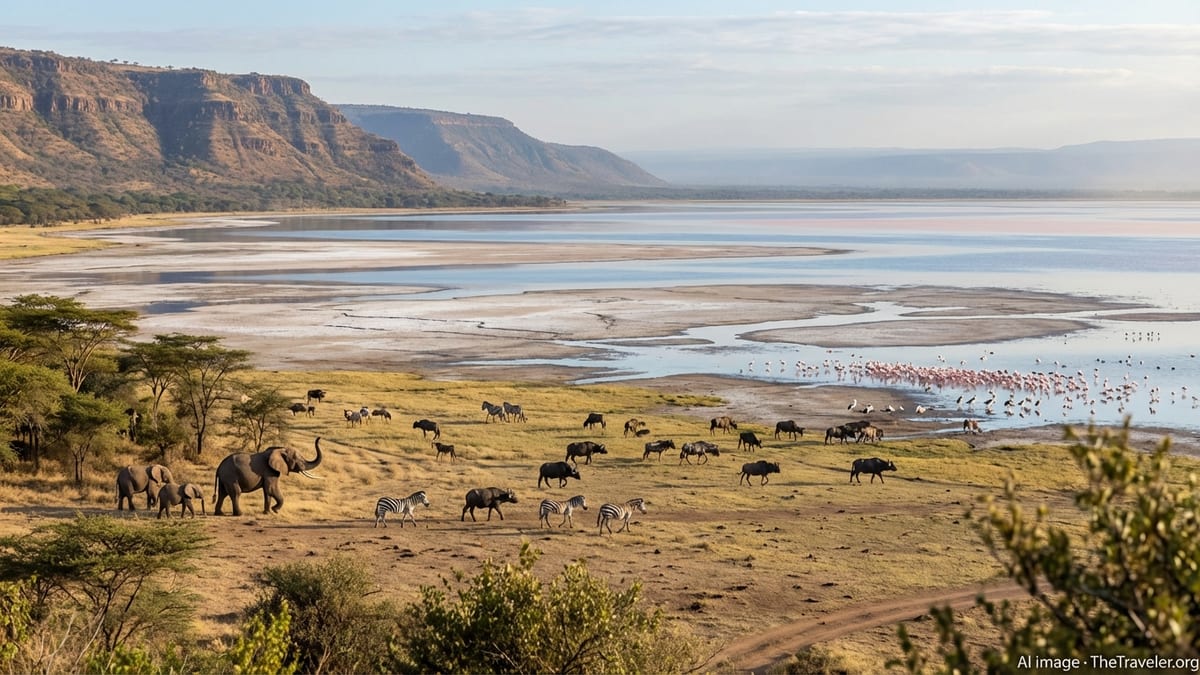
Within a relatively small area, visitors encounter elephant herds pushing through jungle-like woodland, big-tusked buffalo grazing on open floodplains, flocks of flamingos painting the shallows pink, and the park’s most famous residents, tree-climbing lions lounging on acacia branches.
Its convenient position between Arusha, Tarangire, and Ngorongoro makes Lake Manyara a classic stop on the Northern Circuit and a rewarding choice for both first-time and repeat safari travelers.
Understanding Lake Manyara: Geography and Ecosystems
Lake Manyara National Park sits along the floor of the Great Rift Valley in northern Tanzania, a couple of hours’ drive west of the safari hub of Arusha. The protected area covers roughly 330 square kilometers, with the lake itself expanding and shrinking dramatically depending on seasonal rainfall. In wet years as much as two thirds of the park can be covered by the shallow, shimmering soda lake, while in drier years wide bands of white soda flats emerge, attracting foraging birds and grazing mammals to the exposed shoreline.
This rift valley setting shapes everything about Manyara’s landscapes. To the west, cliffs of the escarpment rise sharply from the forest, with viewpoints looking out across the lake and beyond toward the Maasai steppe. To the east, the surface of the soda lake reflects sunrise and sunset in pastel tones. Underground springs seeping from the escarpment feed a permanent groundwater forest near the park entrance, while seasonal streams from nearby highlands top up the lake and sustain wildlife-rich swamps in the southern sector.
For visitors, the most striking feature is how quickly habitats change as you drive. Within minutes of entering the park you move from cool, tunnel-like forest to open woodlands and then to sweeping floodplains dotted with acacia trees and, in the distance, the shimmering lake. This ecological variety, compressed into such a small area, is a key reason Lake Manyara feels so rewarding even on a short half-day safari.
Wildlife Highlights: From Tree-Climbing Lions to Giant Elephants
Lake Manyara is best known for its population of tree-climbing lions, a rare and much-photographed behavior also associated with just a few other African parks. In the acacia woodlands behind the lakeshore, these lions are often seen draped over branches during the heat of the day, using the elevated vantage point to escape insects and catch cooling breezes. Sightings can never be guaranteed, but patient guides know the favored trees and seasonal patterns that increase your chances.
The park is also home to substantial elephant herds, which move between the groundwater forest and the open plains and swamps. These elephants are famous for their mud baths, particularly around the Silale Swamp and other wetland areas where they wallow to cool down and coat their skin. Sharing Manyara’s floodplains are Cape buffalo, wildebeest, zebra, and troops of warthog, creating classic savanna scenes with the escarpment and lake as a dramatic backdrop.
Primates are especially conspicuous in Lake Manyara. The forested entrance road is lined with large troops of olive baboons, which are among the most studied in Africa and can sometimes be seen foraging, grooming, and playing just meters from the track. Blue monkeys and vervet monkeys move through the mid and upper layers of the forest, offering excellent chances to watch primate behavior at close range. Other notable mammals include giraffe, bushbuck, impala, waterbuck, hippos at the well-known hippo pools, and, with luck, nocturnal species such as civets, genets, and porcupines on authorized night drives.
Birdlife and Aquatic Landscapes
Few parks in East Africa offer such rewarding birdwatching in such a compact area. More than 400 species have been recorded at Lake Manyara, and it is not unusual for dedicated birders to log 100 species or more in a single day. The soda lake itself is often rimmed with large flocks of lesser and greater flamingos feeding on the algae and cyanobacteria that thrive in the alkaline water. Depending on water levels and season, the density and extent of these flocks can vary dramatically, but the image of pink birds mirrored in shallow water against the hazy outline of the escarpment is quintessential Manyara.
Sharing the lakeshore and adjacent wetlands are great white pelicans, yellow-billed storks, African spoonbills, herons, egrets, and various waders combing the shallows and mudflats. Over open water you may see whiskered terns and gulls, while the papyrus fringes hide jacanas, crakes, and rail species for those with patient eyes. Raptors are also common, with fish eagles perched in lakeside trees, bateleurs and tawny eagles circling overhead, and augur buzzards riding the thermals along the escarpment.
Moving into the woodlands and forest, birders can look for hornbills, barbets, bee-eaters, kingfishers, and a wide variety of smaller songbirds. The evergreen groundwater forest supports turacos, greenbuls, and a host of forest specialists, while the drier escarpment slopes and acacia belts harbor species adapted to semi-arid conditions. Because of this diversity of habitats in such close proximity, Lake Manyara is considered a premier birding destination year round, with December to April especially productive thanks to migratory species and breeding plumage.
Scenic Routes and Classic Safari Circuits Inside the Park
Even for visitors focused on wildlife, the route you take inside Lake Manyara shapes your experience. Most safaris enter through the northern gate near Mto wa Mbu, immediately threading into the shady groundwater forest where the air feels cool and damp and sunlight filters through towering mahogany and fig trees. Here the tracks run close to clear streams fed by underground springs, a favorite haunt of elephants, monkeys, and birds. This section of the park is particularly atmospheric in the early morning when mist lingers among the trunks.
Continuing south, the forest gradually thins and gives way to mixed woodland and then to open floodplains that stretch toward the lake. The main game-drive loop passes the well-known hippo pool, a reliable stop to watch hippos partially submerged while egrets and other waders pick their way along the shoreline. With the escarpment behind and the lake ahead, this part of the route delivers sweeping vistas and frequent encounters with zebra, wildebeest, and giraffe. Several designated picnic sites sit on slight rises or near viewpoints, providing safe places to step out of the vehicle and enjoy lunch with panoramic views.
For full-day safaris, vehicles often continue farther south toward the remote sectors where the Silale Swamp and hot spring areas lie. When conditions allow, this circuit opens up quieter corners of the park, with fewer vehicles and higher chances of extended sightings of elephants, buffalo, and sometimes large predators. The southern Maji Moto area, where geothermal waters bubble up through mineral-streaked soil, adds a geological counterpoint to the wildlife viewing and emphasizes the volcanic forces that built the rift valley.
Planning Your Visit: Seasons, Logistics, and Entrance Rules
Lake Manyara National Park is accessible year round, but the nature of your experience changes with the seasons. The long dry season, typically from June to October, concentrates wildlife around permanent water sources and makes game viewing on the plains and near the swamps particularly rewarding. Vegetation is more open, visibility improves, and tracks are usually in excellent condition. Many travelers combine Lake Manyara during this period with visits to Tarangire, Ngorongoro Crater, and Serengeti in a classic Northern Circuit safari.
The green seasons, usually November to December and March to May, bring a flush of vegetation, swollen streams, and more dramatic skies. Afternoon showers are common, tracks can be muddy, and some southern routes may occasionally close when water levels are high. In exchange, the park feels lusher and more atmospheric, crowds are lighter, and birding is at its peak as Palearctic migrants arrive and many resident species display breeding plumage. Photography can be excellent, with clear post-rain light and reflections in pools and puddles.
Most visitors enter through the main northern gate, reached from Arusha in about two hours along a surfaced road that passes through the market town of Mto wa Mbu. Secondary gates serve travelers arriving from Tarangire or the Dodoma road and those staying in southern lodges. The park operates as a cashless destination, with conservation and entrance fees typically paid by card or through your safari operator. Current published fees for non-resident adults generally fall in the range of approximately 50 to 60 US dollars per person per 24 hours, with reduced rates for children, East African residents, and Tanzanian citizens, plus separate charges for vehicles, campsites, and special activities. Because tariffs are periodically revised, it is important to confirm exact amounts and payment requirements with your tour operator or directly with the park authority before travel.
Activities Beyond the Game Drive
Traditional vehicle-based game drives remain the core experience at Lake Manyara, but the park and its surroundings offer a growing range of additional activities that reveal different perspectives on the landscape. One of the most distinctive is the treetop canopy walkway near the northern entrance, a series of suspended bridges and platforms hung between large trees in the groundwater forest. Elevated above the forest floor, you can watch birds at eye level, look for monkeys moving through the branches, and appreciate the vertical structure of this rare habitat.
Guided walking safaris, when available and arranged through authorized operators, give visitors the chance to slow down and learn about tracks, plants, insects, and bird calls that are often overlooked from a vehicle. Shorter interpretive walks near the park entrance are ideal for families and first-time safari-goers, while longer walks in designated areas cater to more experienced travelers. Night drives, offered by certain lodges under special permits, reveal a different array of species, from bush babies and genets to porcupines and, with luck, nocturnal predators such as leopard and hyena.
Outside the park boundaries, the bustling community of Mto wa Mbu has become a hub for cultural tourism. Guided village walks introduce travelers to banana plantations, rice paddies, local markets, and artisan workshops. Visits to nearby Maasai homesteads, traditional cooking demonstrations, and tasting sessions featuring banana beer or local coffee help deepen understanding of how human communities have long coexisted with the wildlife of the rift valley. For many travelers, combining a morning game drive in Lake Manyara with an afternoon cultural tour in Mto wa Mbu offers a balanced introduction to both nature and culture in northern Tanzania.
Where to Stay and How Long to Spend
Accommodation options for visiting Lake Manyara range from simple public campsites inside the park to high-end lodges set along the escarpment or deep within the forest. The public and special campsites managed by the park authority cater to self-drivers and mobile camping safaris seeking direct contact with the environment. Some high-end properties are located inside or abutting the southern sections of the park, offering secluded forest settings and easy access to quieter game-viewing areas, especially for guests staying multiple nights.
Outside the park, a cluster of lodges and tented camps lines the escarpment rim and surrounds Mto wa Mbu. These properties often combine sweeping views across Lake Manyara with convenient access to the main gate. Travelers combining several parks in the Northern Circuit frequently choose to overnight in the Karatu highlands between Lake Manyara and Ngorongoro, then drop down to the lake for a half-day excursion. The range of choices means that Lake Manyara can fit comfortably into both budget-conscious and luxury itineraries.
Time-wise, Manyara is one of the few parks where a half-day visit can feel genuinely satisfying, especially for travelers primarily interested in a quick taste of forest, lake, and plains before continuing on to Ngorongoro or Serengeti. A morning or afternoon game drive, paired with a canopy walk or village visit, works well for those on tighter schedules. That said, staying one or two nights in or near the park allows time to explore the southern reaches, enjoy early and late light for photography, and mix daytime game drives with night drives or walks where available. Birders and keen photographers often appreciate having at least a full day and a half to make the most of the park’s variety.
Responsible Travel and Conservation Context
As part of Tanzania’s network of national parks, Lake Manyara is managed to protect biodiversity while contributing to regional development through tourism revenue. Entry fees, activity permits, and concession payments from lodges help fund anti-poaching patrols, habitat management, research, and community outreach. In recent years, particular attention has been given to maintaining wildlife corridors between Manyara and neighboring areas such as Tarangire National Park and the Ngorongoro highlands, ensuring that migratory routes for elephants and other species remain open despite increasing pressure from agriculture and settlement.
Visitors can support this conservation mission by choosing reputable operators who adhere to park regulations, keep respectful distances from wildlife, and avoid off-road driving that damages fragile soils and vegetation. Simple actions such as limiting noise, refraining from feeding animals, and packing out all litter help preserve both the environment and the quality of experience for others. Selecting locally owned lodges, participating in vetted cultural tourism programs in Mto wa Mbu, and purchasing crafts directly from community groups also channel more of your spending into nearby households.
Climate variability has affected Lake Manyara in recent decades, with notable fluctuations in lake extent and occasional flooding impacting roads and facilities. These events underscore the importance of ongoing research and adaptive management in the park, as well as broader conversations about land use and water resources across the Lake Manyara basin. Traveling responsibly, staying informed about current conditions, and being flexible with routing helps both visitors and managers respond effectively to these environmental changes.
The Takeaway
Lake Manyara National Park offers an unusually rich safari experience within a compact and easily accessible setting. Towering escarpment cliffs, lush groundwater forest, acacia woodlands, and shimmering soda lake are all linked by a single circuit of tracks, making it possible to sample a remarkable cross-section of East African habitats in just a few hours. Wildlife highlights, from tree-climbing lions and bathing elephants to vast baboon troops and colorful bee-eaters, unfold against a backdrop of sweeping rift valley panoramas and mirror-like lake reflections.
For many travelers, Manyara serves as an introduction to northern Tanzania’s protected areas, often as the first or second stop on a longer circuit that includes Tarangire, Ngorongoro, and the Serengeti. Yet it stands on its own merits as a destination worth lingering in, particularly for birders, photographers, and those who appreciate the interplay of geology, water, and life along the rift valley floor. When combined with cultural encounters in nearby Mto wa Mbu and thoughtful choices that support conservation and local communities, a visit to Lake Manyara becomes more than a day of game viewing. It is a compact lesson in how landscapes, wildlife, and people can coexist in one of Africa’s most storied regions.
FAQ
Q1. Where is Lake Manyara National Park and how do I get there?
Lake Manyara National Park lies in northern Tanzania along the Great Rift Valley, about 125 kilometers west of Arusha by road. Most visitors arrive by 4x4 vehicle on a surfaced highway that passes through the town of Mto wa Mbu before reaching the main gate. There is also an airstrip near the park used by scheduled and charter flights linking Manyara with Arusha, Serengeti, and other safari destinations.
Q2. What is Lake Manyara best known for?
The park is especially famous for its tree-climbing lions, large elephant herds, and prolific birdlife, including seasonally impressive flocks of flamingos on the soda lake. Its dramatic scenery, with the Rift Valley escarpment rising sharply above the forest and plains, also makes it one of the most visually striking parks in Tanzania’s Northern Circuit.
Q3. How many days do I need in Lake Manyara?
A half-day visit can provide a satisfying introduction to the park, particularly if you are combining it with Ngorongoro or Serengeti. However, one or two nights in or near the park allow time to explore more thoroughly, reach the quieter southern sections, and mix activities such as game drives, canopy walks, cultural tours, and, where available, night drives.
Q4. When is the best time of year to visit?
Lake Manyara is a year-round destination. The dry season from June to October offers easier wildlife viewing as animals congregate near remaining water sources and vegetation thins out. The green seasons around November to December and March to May bring lush scenery, fewer visitors, and exceptional birding, though some tracks may be muddy and conditions more changeable.
Q5. What animals can I expect to see?
Common sightings include elephants, buffalo, giraffe, zebra, wildebeest, warthog, hippos, baboons, and various antelope such as impala and waterbuck. Predators include lions, sometimes seen in trees, as well as spotted hyena and elusive leopards. The park also hosts smaller mammals like dwarf mongoose and primates such as vervet and blue monkeys.
Q6. Are there special activities in addition to game drives?
Yes. Depending on current park regulations and your lodge or operator, you may be able to join a treetop canopy walk in the groundwater forest, take part in guided walking safaris, or go on authorized night drives to search for nocturnal species. Outside the park, cultural tours in Mto wa Mbu offer village walks, visits to banana plantations, and introductions to local crafts and cuisine.
Q7. How much are the park fees and how are they paid?
Entrance and conservation fees for non-resident adults typically fall in the range of roughly 50 to 60 US dollars per person per 24 hours, with lower rates for children, East African residents, and Tanzanian citizens. There are separate fees for vehicles, camping, and premium activities such as night drives or canopy walks. Payments are generally cashless and made by card or via your tour operator, so you should confirm the latest tariffs and procedures before traveling.
Q8. Is Lake Manyara suitable for families and first-time safari travelers?
Lake Manyara is particularly well suited to families and first-time visitors because of its compact size, varied habitats, and relatively short driving distances. The entrance forest road, hippo pools, canopy walkway, and abundance of monkeys and birds keep children engaged, while the park’s location close to Arusha reduces travel time and logistical complexity compared to more remote destinations.
Q9. What should I pack for a visit to Lake Manyara?
Pack lightweight, neutral-colored clothing, a warm layer for cool mornings and evenings, and a rain jacket or poncho, especially in the green season. A wide-brimmed hat, sunglasses, sunscreen, and insect repellent are important, as are binoculars and a camera with spare batteries and memory cards. Closed shoes are recommended for walks and around camps, and a small daypack helps keep essentials accessible on game drives.
Q10. Can I visit Lake Manyara as a standalone trip?
It is possible to visit Lake Manyara as a standalone overnight or day trip from Arusha, particularly if you have limited time. Many travelers, however, find that combining it with Tarangire, Ngorongoro, or Serengeti in a multi-day itinerary creates a richer and more varied safari experience. Whether as a quick escape or an integral part of a longer circuit, Lake Manyara’s mix of wildlife, scenery, and cultural encounters makes it a worthwhile inclusion in any northern Tanzania journey.