

The Great Lakes are often described as North America’s inland seas, and two of the most compelling for travelers are Lake Michigan and Lake Ontario. Both promise long sandy shorelines, dramatic skies, and easy-going coastal towns, but they offer very different styles of vacation. Whether you are dreaming of beach days, wine country drives, or culture-packed city breaks, understanding the character of each lake will help you choose the trip that fits you best.
Getting Oriented: Two Very Different Great Lakes
Lake Michigan and Lake Ontario sit at opposite ends of the Great Lakes chain and feel remarkably different on the ground. Lake Michigan is entirely within the United States and framed by Michigan, Indiana, Illinois, and Wisconsin. Its shores are known for wide, dune-backed beaches, resort towns, and classic Midwestern summer culture. From Chicago’s urban skyline to remote stretches of national lakeshore, it is ideal if you want a US-focused trip with straightforward logistics.
Lake Ontario forms part of the border between the United States and Canada, with New York State on the south shore and Ontario province to the north. Here, the lake is closely tied to the St. Lawrence River and the Great Lakes Seaway, so coastal drives often mix shoreline views with lighthouses, canal history, and working ports. Travelers are drawn to its wine country, island archipelagos, and compact historic cities such as Rochester, Kingston, and Toronto.
Size and mood differ as well. Lake Michigan’s long, curved coastline gives it a big-sky, oceanlike feel, especially where high dunes fall straight to surfy water. Lake Ontario is smaller and sits farther east, so its climate is slightly more temperate, with coastal orchards and vineyards thriving along the south shore. On both lakes, conditions can change quickly and the water stays cool through most of the summer, which adds to the wild, refreshing character of a trip here.
For a first-time Great Lakes vacation, the decision often comes down to what you want at your doorstep. If your ideal afternoon is walking from a rental cottage over a dune to a wide beach, Lake Michigan has the edge. If you imagine pairing lake views with wine tasting and historic harbor towns, you may feel more at home along Lake Ontario.
Beaches, Water, and Outdoor Adventure
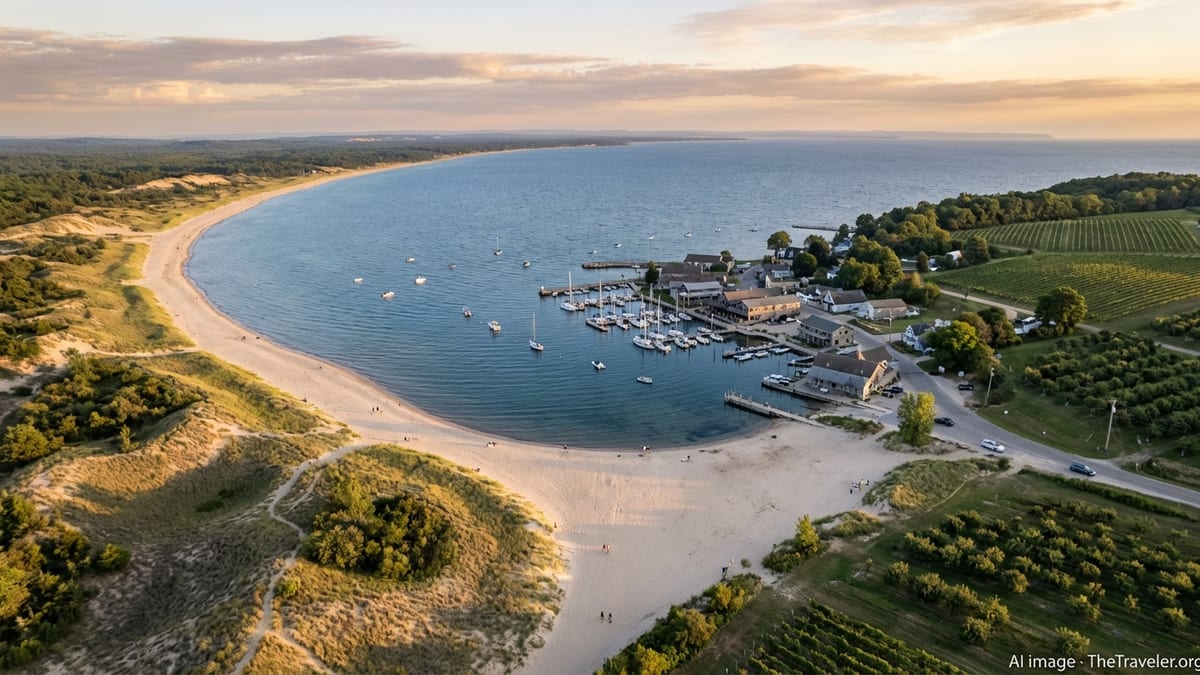
Beach lovers tend to gravitate to Lake Michigan. The lake’s eastern shore, especially in Michigan, is famous for long arcs of pale sand bordered by some of the largest freshwater dunes in the world. Areas like Sleeping Bear Dunes National Lakeshore offer miles of undeveloped beach, hiking trails over towering bluffs, and expansive lake views that feel almost oceanic in scale. Oval Beach near Saugatuck and other West Michigan strands regularly feature in national rankings for their soft sand, sunsets, and family-friendly facilities.
On the Wisconsin side, destinations such as Door County and Kohler-Andrae State Park offer a gentler version of the same appeal: sandy beaches fronted by dune and forest, often with smaller crowds than popular Michigan resort towns. In Indiana and Illinois, shorter stretches of public shoreline mix urban backdrops and protected dunes, including Indiana Dunes National Park and the lakefront parks that frame Chicago’s skyline.
Lake Ontario’s beaches tend to be more varied and less uniformly sandy, but there are still excellent swimming spots. Along New York’s south shore, state parks such as Fair Haven Beach or Southwick Beach offer natural strands backed by forest, and many towns maintain family-oriented municipal beaches. On the Canadian side, the shoreline alternates between rocky sections, small pocket beaches, and broader sandy bays, with provincial parks providing good access. The water here can feel slightly warmer by late summer, thanks in part to the lake’s smaller volume and more sheltered bays.
Both lakes support strong outdoor scenes beyond the beach. Paddling is popular on quieter inlets and rivers that meet Lake Michigan, such as the Platte and Crystal rivers near Sleeping Bear Dunes, as well as on sheltered harbors in Door County. Lake Ontario’s shoreline is interwoven with the Great Lakes Seaway Trail in New York, a designated National Scenic Byway that connects parks, birding sites, and lighthouses. Cyclists and anglers will find opportunities around both lakes, but Lake Ontario’s mix of river and lake fishing, particularly for salmon and trout in season, is a major draw for dedicated anglers.
Coastal Towns and City Experiences
If your perfect trip blends beach time with dining, galleries, and nightlife, it is worth looking closely at the communities that anchor each lake. Lake Michigan’s standout urban center is Chicago, which stretches for miles along the shoreline. Here, travelers can combine mornings at city beaches like North Avenue with afternoons in world-class museums and evenings in vibrant neighborhoods. The lakefront path, parks, and architecture cruises make Chicago one of the most compelling city-on-a-lake experiences in North America.
Beyond Chicago, Lake Michigan is ringed with characterful small towns. Saugatuck and neighboring Douglas in Michigan, for example, are longtime art colonies and summer escapes with galleries, independent shops, and historic inns. Farther north, coastal towns such as Holland, Grand Haven, and Traverse City cater to visitors with waterfront dining, breweries, and cultural festivals. Door County in Wisconsin offers harbor villages, lighthouses, and a quietly upscale food scene, often compared to classic New England destinations.
Lake Ontario’s urban anchor on the Canadian side is Toronto, a global city with a dense waterfront, islands reachable by short ferry rides, and a skyline that rises directly from the lake. It is ideal for travelers who want cosmopolitan energy, diverse dining, and extensive cultural offerings, with the option of day trips to quieter lakeside communities. On the US side, cities such as Rochester and Oswego in New York State combine lakefront parks, revitalized downtown waterfronts, and easy access to nearby state parks.
Smaller towns give Lake Ontario a different flavor from Lake Michigan. The south shore in New York and the north shore in Ontario feature historic canal ports, farming communities, and wine villages where daily life revolves as much around orchards and vineyards as around the lake itself. The atmosphere is more rural and agricultural, particularly along the Lake Ontario Wine Trail in New York and in parts of Prince Edward County in Ontario, making it a good fit for travelers who prefer quiet evenings and scenic drives over busy boardwalks.
Wine, Food, and Cultural Routes
Lake Michigan’s food and drink scene is tightly linked to its vacation towns and nearby agricultural regions. The shoreline of northwest Michigan, for example, is surrounded by orchards, berry farms, and vineyards that benefit from the lake’s moderating effect on climate. Around Traverse City and the Leelanau and Old Mission peninsulas, you will find wineries, farm markets, and restaurants that highlight local produce. In small towns like Saugatuck, menus lean into freshwater fish, seasonal vegetables, and a growing craft beer and cider culture.
In Wisconsin, Door County has become known for cherry orchards, fish boils, and waterfront restaurants that take advantage of sunset views over the lake. Milwaukee and Chicago contribute urban food cultures rich in breweries, ethnic neighborhoods, and creative dining, so a Lake Michigan trip can easily focus on tasting your way through cities and smaller communities.
Lake Ontario offers a more concentrated wine experience. The Lake Ontario Wine Trail in New York links wineries, cideries, and farm-based tasting rooms across multiple counties, with scenic drives between them. The lake’s breezes help regulate temperatures, creating favorable conditions for cool-climate grapes and fruit orchards. On the Canadian side, regions like Prince Edward County and areas east of Toronto have developed reputations for boutique wineries, farm-to-table restaurants, and seasonal food festivals.
Culturally, both lakes offer a mix of maritime history, indigenous heritage, and modern arts. Museums and interpretive centers around Lake Michigan delve into Great Lakes shipwrecks, lighthouses, and coastal communities, while Lake Ontario’s shoreline intersects with the story of the Erie Canal, the St. Lawrence Seaway, and early North American trade routes. Art galleries are widespread in resort towns around Lake Michigan and in creative enclaves along Lake Ontario, giving travelers plenty of chances to connect with local artists and craftspeople.
Road Trips, Logistics, and Border Considerations
For road trippers, both lakes have well-established scenic routes, but their character differs. Lake Michigan is especially popular for loop itineraries that start and finish in Chicago or Milwaukee, circling the lake or focusing on a stretch such as Michigan’s west coast. Distances between major stops are manageable, and roadside services are frequent, which is reassuring for travelers new to the region. Many visitors choose a series of two- or three-night stays in different towns, creating a relaxed progression of beaches, parks, and small-city experiences.
Driving along Lake Ontario, especially on the US side, has a more linear feel. The Great Lakes Seaway Trail connects Lake Erie, the Niagara River, and Lake Ontario, continuing along the St. Lawrence River. This creates a natural itinerary that strings together state parks, riverside towns, and historic sites. It is a strong choice if you want to include Niagara Falls or to continue northeast toward the Thousand Islands and beyond. On the Canadian side, highway networks link Toronto with smaller lakefront communities and island regions, making it straightforward to pair city time with quieter coastal nights.
Logistics can influence your choice. Because Lake Michigan lies entirely within the United States, a US-based traveler can plan a multi-state route without carrying a passport or navigating a border crossing. This simplifies arrangements for families or groups with varied documentation. Lake Ontario, by contrast, involves an international border if you plan to visit both the US and Canadian sides. For many travelers, this is an advantage, adding a cross-border dimension to the trip, but it does require up-to-date passports and attention to customs regulations.
Driving conditions around both lakes are generally straightforward, but winter can be challenging. Lake-effect snow can reduce visibility and make smaller roads difficult, especially east and southeast of the lakes. If you are planning an off-season drive, it is wise to build extra time into your schedule and to favor main highways over back roads in stormy weather.
Weather, Seasons, and Best Time to Visit
The travel season on both Lake Michigan and Lake Ontario runs primarily from late spring through early fall, but each lake has its own seasonal nuances. Summer brings the warmest water and liveliest town centers, with July and August especially busy in popular beach communities. On Lake Michigan, this is peak season for swimming and boating, and reservations for national parks, state parks, and sought-after towns can be essential. Afternoon thunderstorms are possible, and breezes off the lake can make evenings cooler than inland areas, so light layers are useful.
Lake Ontario sees a similar summer rhythm, though the lake’s eastern location can bring slightly milder heat and, in some areas, slightly less intense humidity than farther west. This is prime season for wine touring, agricultural festivals, and outdoor concerts in lakeside cities. Both lakes experience occasional high-water years or erosion concerns that can affect beach width or access in specific spots, so it is wise to check local park or tourism updates close to your departure date rather than assume conditions based on previous visits.
Spring and fall are shoulder seasons that reward travelers looking for lower prices and fewer crowds. Around Lake Michigan, May and early June offer wildflowers, cool hikes, and quiet towns waking up for the season, though the water is still cold for swimming. September and early October bring crisp air and, in northern areas, excellent fall color, especially when combined with vineyard visits or harvest events. On Lake Ontario, spring showcases orchard blossoms and greenery in wine regions, while autumn combines foliage with grape harvests and seasonal food menus.
Winter on both lakes can be striking but is best suited to travelers comfortable with snow and cold. Lake Michigan’s dune areas transform into sculpted snowfields, and some coastal parks support cross-country skiing or snowshoeing. Lake Ontario’s shorelines and river corridors may see dramatic ice formations and low-angle light that appeals to photographers. However, daylight is short, many seasonal businesses close, and storms can disrupt travel plans, so a winter visit works best as a deliberate cold-weather getaway rather than an improvised road trip.
Who Should Choose Lake Michigan vs Lake Ontario
Thinking about your priorities will quickly point you toward one lake or the other. Lake Michigan tends to be the better fit for travelers whose top goals are beach time, US-only logistics, and a mix of resort towns and major cities. Families with children often appreciate the wide, sandy beaches, lifeguarded swim areas in popular parks, and the straightforward drive from many Midwestern metros. Couples can combine romantic small towns with city weekends in Chicago or Milwaukee, and outdoor enthusiasts will find plenty of hiking, paddling, and camping options in places like Sleeping Bear Dunes and Indiana Dunes.
Lake Ontario, by contrast, is ideal for travelers drawn to wine tasting, cross-border itineraries, and quieter, more rural landscapes. If your perfect day includes visiting wineries, walking through historic towns, and ending with a sunset over a smaller bay or harbor, the south and north shores of Lake Ontario deliver that pace. It is also a strong choice if you want to connect several different water features in one trip, from the open lake to rivers, canals, and island archipelagos.
Budget and travel style play a role too. Lake Michigan’s busiest resort areas tend to command high-season rates, especially for waterfront rentals and popular campgrounds. That said, choosing less famous towns or staying slightly inland can keep costs manageable. Lake Ontario’s lodging prices vary widely, with some wine-country inns and boutique hotels at premium levels, but many small towns and rural areas remain relatively affordable in comparison to big-city lakefronts.
If you remain undecided, consider starting with a focused trip to one region on each lake rather than trying to circle them in a single vacation. A long weekend on Lake Michigan’s eastern shore paired with a later trip to Lake Ontario’s wine country or the Thousand Islands can give you a clear sense of which environment speaks to you, and you can plan a longer, deeper trip to that lake in the future.
The Takeaway
Lake Michigan and Lake Ontario both showcase the power and beauty of North America’s inland seas, yet they deliver distinct travel experiences. Lake Michigan leans toward classic beach vacations, dune-backed horizons, and an all-American road trip arc that ties together major cities and beloved summer towns. Lake Ontario, meanwhile, excels at weaving the lake into a broader landscape of rivers, vineyards, historic ports, and cross-border culture.
Choosing between them does not have to feel like a permanent decision. Instead, it can be a way to shape the tone of a particular trip. For a family-friendly week that revolves around sandcastles, ice cream, and sunset swims, Lake Michigan may be the clearer choice. For a slower journey through wine country, heritage sites, and island-dotted waterways, Lake Ontario is likely to shine.
Whichever lake you select, planning with realistic driving times, seasonal conditions, and local updates in mind will pay off. The Great Lakes change from day to day, and that variability is part of their appeal. By matching your expectations to each lake’s character, you can craft a trip that feels less like a compromise and more like a perfect fit.
FAQ
Q1. Is Lake Michigan or Lake Ontario better for a beach-focused vacation?
Lake Michigan generally offers more extensive sandy beaches and large dune systems, making it the stronger choice if long days on wide, soft sand are your top priority.
Q2. Which lake is better if I want to visit wineries?
Lake Ontario has more concentrated wine trails close to the shoreline, especially in New York State and parts of Ontario, so it is usually the better option for wine-focused trips.
Q3. Do I need a passport to visit both sides of Lake Ontario?
Yes, if you plan to cross between the United States and Canada around Lake Ontario, you will need valid passports or other accepted travel documents for the border.
Q4. Which lake has warmer water for swimming?
Both lakes remain cool for much of the year, but in late summer, sheltered bays on Lake Ontario can sometimes feel slightly warmer than more exposed stretches of Lake Michigan.
Q5. Can I easily combine city and small-town experiences on both lakes?
Yes. Lake Michigan pairs cities like Chicago and Milwaukee with nearby resort towns, while Lake Ontario combines urban centers such as Toronto or Rochester with smaller ports and rural communities.
Q6. Is driving around Lake Michigan or Lake Ontario more scenic?
Both are scenic in different ways. Lake Michigan offers classic coastal resort views, while Lake Ontario features a mix of shoreline, river corridors, and agricultural landscapes along routes such as the Great Lakes Seaway corridor.
Q7. Which lake is better for a budget-conscious traveler?
Costs vary by town and season, but less-known communities on either lake can be budget friendly. Lake Ontario’s smaller rural towns often have modestly priced lodging outside peak festivals.
Q8. Are there national parks or major protected areas on both lakes?
Lake Michigan has sites such as Sleeping Bear Dunes and Indiana Dunes, while Lake Ontario is fringed more by state and provincial parks and scenic byways than by large national parks.
Q9. Which lake is better for visiting with young children?
Families often favor Lake Michigan for easy-access sandy beaches and family-oriented resort towns, though many Lake Ontario parks and beaches are also suitable with careful supervision around the water.
Q10. If I have only one long weekend, which lake should I choose?
Select based on your interests and starting point. If you are within easy reach of Chicago or West Michigan, Lake Michigan is practical. If you are closer to upstate New York or southern Ontario, Lake Ontario will maximize your time on the water rather than on the road.