

More news on this day
A powerful February storm has turned Lake Tahoe into a postcard-perfect winter scene while simultaneously crippling travel, closing ski lifts and contributing to deadly avalanches across the Sierra Nevada, leaving visitors and residents grappling with the razor-thin line between alpine playground and high-altitude hazard.
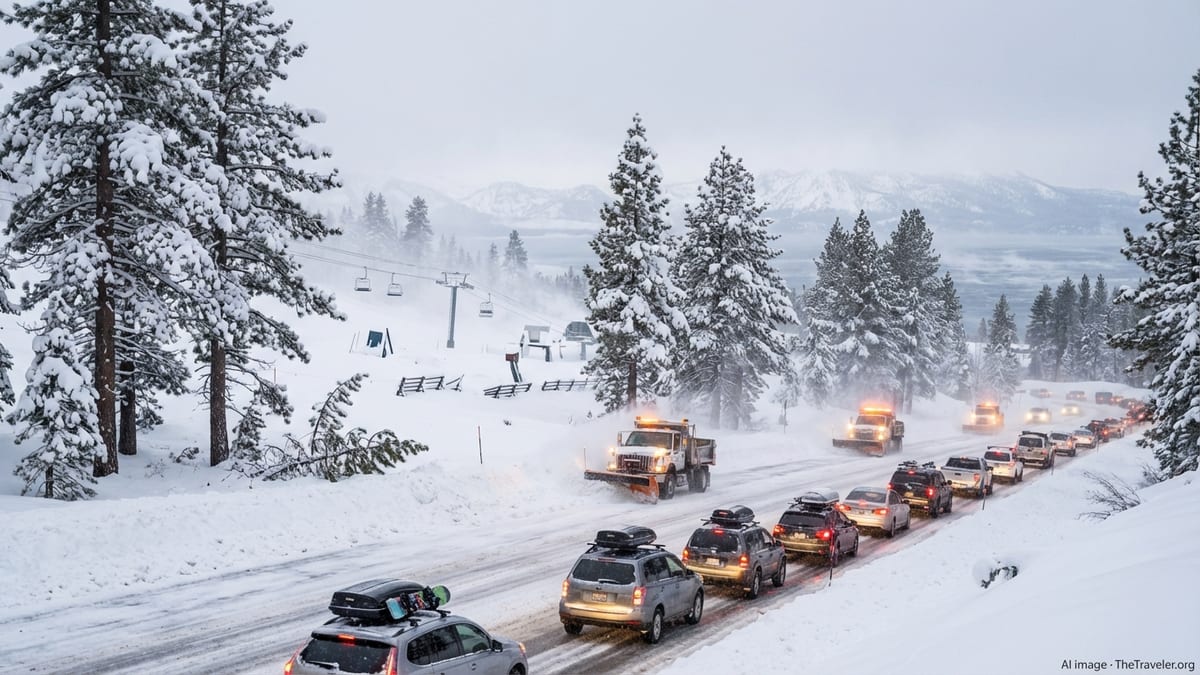
Storm Slams Tahoe With Feet of Snow and Ferocious Winds
The latest winter blast began sweeping into the Sierra Nevada on Sunday, February 15, quickly intensifying into one of the strongest storm cycles of the season for the Lake Tahoe region. Over a three day stretch, major resorts around the lake reported more than five feet of new snow, with some upper mountain totals nearing or exceeding six to eight feet as bands of moisture stalled over the crest.
At Palisades Tahoe, upper mountain gauges logged roughly 76 inches of snow in just 72 hours, transforming previously thin coverage into chest-deep drifts and burying lift terminals and avalanche fencing. Nearby Homewood, Diamond Peak and other resorts around the basin reported storm totals pushing five to nearly six feet, while snow also pounded lower elevation communities along the lake shore.
The National Weather Service warned of blizzard-like conditions at times, as strong ridge-top winds combined with heavy snowfall to create whiteouts and rapidly drifting snow. Gusts on exposed peaks frequently topped 60 miles per hour, shutting down upper mountain access and scouring some slopes while loading others with unstable slabs.
By midweek, the storm had already rewritten the winter landscape. Streets in South Lake Tahoe were lined with towering berms, parking lots disappeared under mounds of plowed snow, and crews worked around the clock just to keep main arteries open as new waves of snow continued to roll through the range.
Highways Choked, Drivers Stranded as Travel Turns Treacherous
While skiers welcomed the long-awaited powder, the storm quickly devolved into a nightmare for travelers attempting to reach or leave the Tahoe basin. Interstate 80 over Donner Summit, the primary east west artery linking the Bay Area and Sacramento to Truckee and Reno, endured repeated shutdowns due to spinouts, avalanche hazard and near-zero visibility.
Caltrans implemented chain controls early in the storm and at times closed long stretches of the freeway to all but essential traffic, backing up semi trucks for miles on either side of the pass. When the interstate did reopen, drivers faced long delays, icy pavement and lanes narrowed by walls of snow. Similar restrictions were imposed on Highway 50 over Echo Summit, where heavy snowfall and gusty winds turned the sinuous mountain road into a gauntlet of blowing snow and black ice.
To the northeast, the Mt. Rose Highway connecting Reno to the upper reaches of the Tahoe basin became a focal point of the storm’s raw power. State crews used avalanche control systems to deliberately trigger massive slides above the roadway, sending an estimated 15 feet of snow thundering down onto the pavement so it could be cleared in a controlled manner. Traffic was halted during the operation, then slowly allowed through once plows carved out a corridor through the debris.
Local officials urged would be visitors to postpone nonessential trips or be prepared for hours-long journeys, emergency closures and the possibility of being turned around at chain checkpoints. Placer County warned that with nearly nine feet of new snow in some North Lake Tahoe areas and all weekend parking reservations sold out at major resorts, patience would be as essential as snow tires.
Ski Resorts Dig Out Amid Widespread Closures and Limited Operations
For the region’s ski industry, the storm delivered both a much needed bounty and a major operational headache. As snow piled up by the foot, resorts around Lake Tahoe cycled through complete standstills, rolling wind holds and heavily curtailed terrain offerings, frustrating powder hounds but underscoring the immense work required to safely reopen the mountains.
Palisades Tahoe, which recorded nearly eight feet of new snow in three days, shuttered most of its lift network during the height of the storm, operating only a beginner chair and magic carpet at the base while patrol and avalanche teams probed the upper mountain. Resort officials described their crews as being in full reestablish and recovery mode, struggling just to dig out access roads, chairlift load ramps and avalanche control routes from snow drifts exceeding eight feet in places.
Elsewhere around the lake, the picture was patchwork. Homewood and Diamond Peak managed to keep several lifts spinning, while Kirkwood and Mt. Rose offered partial operations as high winds forced intermittent shutdowns of exposed chairs. Sierra-at-Tahoe, south of the lake, was forced to remain fully closed at points during the storm as whiteouts, deep snow and ongoing avalanche mitigation work made opening to the public unsafe.
Resort operators reminded guests that even after the skies cleared, the impacts of such a powerful system would linger for days, with delayed openings, limited terrain and sudden weather changes all part of the post-storm reality. They encouraged skiers and riders to check snow reports and resort advisories before leaving home, and to view slow, methodical openings as a sign of caution rather than inconvenience.
Deadly Avalanche Near Castle Peak Highlights Extreme Backcountry Risk
Beyond resort boundaries, the storm’s most harrowing consequences unfolded in the backcountry north of Lake Tahoe. On Tuesday, February 17, an avalanche on the slopes around Frog Lake and Castle Peak, near Donner Summit, swept through a guided group of backcountry skiers, killing eight people and leaving one more missing and presumed dead. Six others survived.
The tragedy, one of the deadliest avalanches in modern California history, occurred as the group returned from a multiday hut trip organized by a professional guiding service. Investigators say the slide struck during a period of intense snowfall and unstable conditions, with several feet of new, dense snow overlying a weak early season snowpack. Survivors described a massive wall of snow barreling down in whiteout conditions, leaving little time to react.
Rescue teams from multiple agencies battled brutal weather, deep snow and ongoing avalanche danger to reach the scene. Helicopters, avalanche dogs and ground crews all took part in the effort, though deteriorating conditions and the risk of additional slides limited how long searchers could safely remain on the slopes. The Tahoe National Forest subsequently closed the Castle Peak area through mid March to allow mitigation work and recovery operations to continue without endangering the public.
The incident sent shockwaves through Tahoe’s tight knit ski and snowboard community, where several of the victims were known as experienced, safety conscious backcountry travelers. Avalanche forecasters had been warning of a widespread natural avalanche cycle as the storm intensified, urging people to avoid travel in, near or below avalanche terrain. The Castle Peak slide now stands as a stark reminder of how rapidly conditions can spiral when heavy snow, high winds and a fragile snowpack converge.
Resort Fatalities and Medical Emergencies Add to a Grim Week
The dangers of the storm were not confined to the backcountry. Within resort boundaries, a series of fatal incidents underscored how hazardous even controlled slopes can become during volatile winter weather. At Heavenly Mountain Resort on the lake’s south shore, two men died in separate, unrelated incidents near the Boulder Lodge area on Friday, both occurring around midday as the storm’s impacts continued to ripple through the region.
In one case, a 33 year old skier suffered a fatal crash on an intermediate trail, despite rapid response from ski patrol. In the other, a 58 year old man experienced a serious medical emergency while on a return run and could not be revived. Local authorities said there was no connection between the victims, but confirmed the deaths were among several recent fatalities across Lake Tahoe resorts in February, a month already marked by the massive Castle Peak avalanche.
These incidents came on the heels of other deaths at Northstar California and nearby mountains earlier in the season, prompting renewed scrutiny of on mountain safety and guest decision making during high hazard periods. Officials stressed that while resorts devote significant resources to grooming, patrolling and avalanche control, guests still bear responsibility for matching their speed, route choices and equipment to the conditions underfoot.
Ski industry representatives also emphasized the cumulative strain on patrollers and medical personnel during intense storm cycles, when visibility is poor, snow surfaces are inconsistent and emergency response times can be slowed by buried roads and limited lift access.
Local Communities Dig Out, Schools and Services Disrupted
As the snow piled up in the high country, communities around the lake scrambled to cope with day to day disruptions. In South Lake Tahoe, local officials reported more than two feet of accumulation in town from the first pair of storm waves alone, with plow crews struggling to keep up as new snow filled freshly cleared streets. Many side roads remained impassable well into the workweek, complicating everything from school drop offs to medical appointments.
The heavy snowfall forced closures at local institutions, including the Boys and Girls Club of Lake Tahoe, which cited unplowed side streets as a key reason staff could not safely reach the facility. Some county offices also shut down temporarily, while businesses along major corridors opened late or stayed dark as employees dug out driveways and parking lots.
Power outages, a recurring problem during Sierra storms, affected tens of thousands of customers statewide as heavy, sticky snow and gusty winds toppled branches and downed lines. Utility crews worked extended shifts in frigid temperatures to restore service, often battling the same treacherous roads and poor visibility that hampered other emergency responders.
Despite the hardships, many residents took the conditions in stride, sharing images of buried cars, children tunneling through snowbanks and dogs bounding through powder. For longtime locals, the storm evoked memories of older, deeper winters, even as officials reminded the public that climate change is making such extreme swings between drought and deluge more common.
Authorities Urge Caution as Post Storm Hazards Persist
With skies beginning to clear and forecasts pointing to a brief window of calmer weather, public agencies across the region warned that the end of active snowfall does not mean an end to danger. Avalanche centers continued to flag high to considerable avalanche risk on many slopes, noting that the large load of new snow would take days to bond to underlying layers and stabilize.
Highway departments kept chain controls in place on key passes and cautioned that avalanche mitigation would continue, potentially leading to sudden, short term closures as crews used artillery, explosives or remote systems to clear unstable slopes. Drivers were reminded to carry winter emergency kits, including food, water and blankets, in case of unexpected delays.
In resort parking lots and village areas, towering piles of plowed snow created blind corners and narrowed walkways, while icy patches formed as daytime sun and vehicle traffic compacted the fresh snow before overnight refreezes. Skiers and pedestrians were urged to slow down, yield at congested crossings and watch for heavy machinery moving snow.
Backcountry users, in particular, were urged to show restraint. Avalanche professionals stressed the importance of stepping back terrain choices, favoring lower angle slopes and forested areas, and being willing to turn around entirely if conditions did not match the day’s plan. They also encouraged recreationists to keep rescue gear current and practice regularly so they could respond quickly in the event of a slide.
A Powder Windfall With a Complex Legacy for Tahoe Tourism
For Lake Tahoe’s tourism economy, the storm presents a paradox familiar to mountain destinations. On one hand, the deep blanket of new snow is a financial lifeline after a series of lean and weather plagued winters. Bookings for late February and early March jumped as images of bottomless powder and snow draped pines spread across social media, and smaller, snow starved hills elsewhere in California looked to Tahoe’s bounty with envy.
On the other, the chaos of road closures, resort shutdowns and high profile accidents raises fresh questions about how the region balances its reputation as a premier winter playground with the real risks that come when powerful storms collide with heavy visitation. Local officials, transportation agencies and resort operators have all urged visitors to embrace a more flexible, safety first mindset, one that prioritizes weather windows and traffic advisories over fixed itineraries.
In the coming weeks, attention will also turn to what this storm means for the broader snowpack and spring outlook. Hydrologists note that several feet of high elevation snow is a welcome boost for California’s water supply, particularly after dry spells earlier in the winter. At the same time, a deep, quickly loaded snowpack can set the stage for ongoing avalanche problems and rapid melt pulses later in the season if warm atmospheric rivers arrive.
For now, though, the Lake Tahoe basin is in the midst of a stark transformation. What was, just days ago, a patchy midwinter landscape has become a world of towering snowbanks, buried chairlifts and humming generators. It is a scene of beauty and peril in equal measure, a winter wonderland turned hazardous that demands respect from everyone who chooses to travel, ski or simply live beneath the storm laden peaks.