

More news on this day
Growing reports of long queues, missed flights and overcrowded passport controls at Lanzarote’s César Manrique airport are prompting renewed concern that the island’s hard-won tourism reputation is being put at risk.
Get the latest news straight to your inbox!
Mounting complaints about queues and missed flights
Over recent months, a steady flow of visitor accounts shared in local media, industry publications and online forums has highlighted lengthy waits at Lanzarote airport, particularly at passport control and taxi ranks. Travellers arriving from the United Kingdom and Ireland report queues stretching across the arrivals hall at peak times, with some describing the experience as chaotic.
Published coverage notes that the situation is most acute when multiple flights from non‑EU destinations land within a short window, overwhelming the current border control area. In some cases, reports indicate that flights have departed with dozens of booked passengers still stuck in queues, unable to clear formalities in time to board their connections.
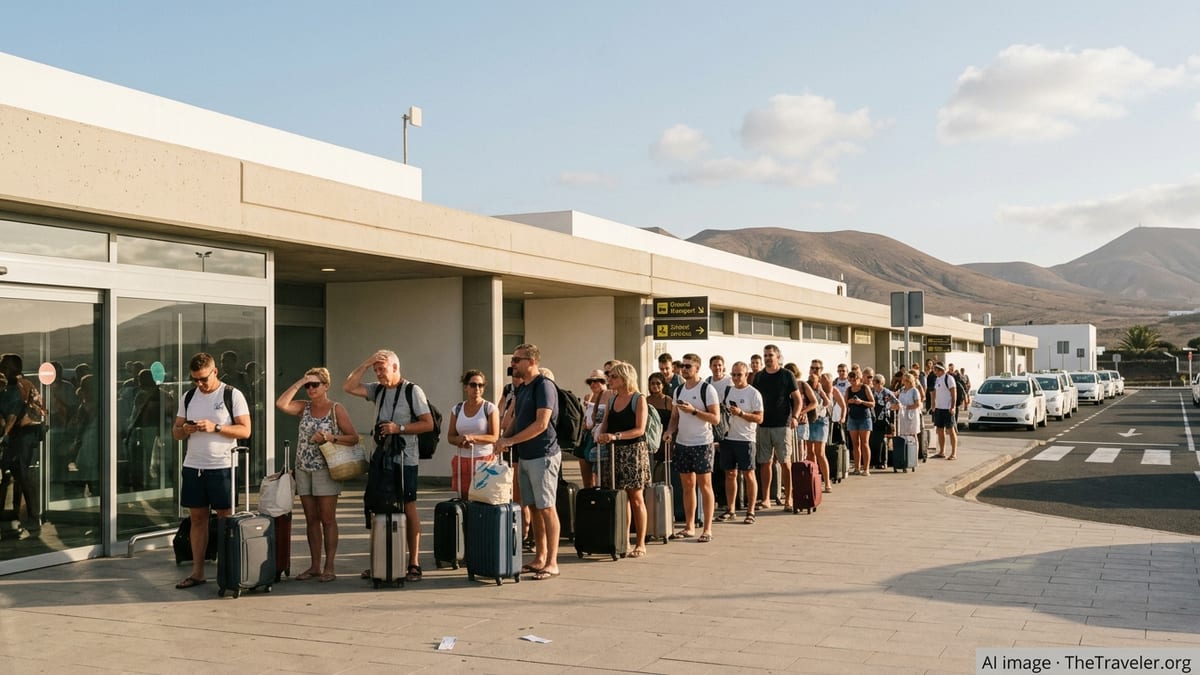
Complaints are not limited to border control. Local outlets also describe recurring lines for taxis outside the terminal, especially during busy mornings and late‑night arrival banks. Images shared with Lanzarote‑based news sites show long columns of visitors waiting in the open air for cabs, with some passengers turning to private transfers or car rentals to avoid uncertainty.
These operational strains are drawing increased scrutiny from tourism bodies on the island, which argue that the airport experience is a critical part of Lanzarote’s brand as a reliable, easy holiday destination.
Tourism federation warnings over Lanzarote’s image
The Lanzarote tourist federation and associated business groups have repeatedly stressed in public statements that airport bottlenecks pose a reputational risk for a destination that depends heavily on repeat visitors. According to industry data referenced in recent coverage, British travellers alone account for well over half of the island’s international tourist arrivals, placing particular pressure on non‑EU border facilities.
Business leaders argue that, while visitors may accept isolated disruptions, repeated stories of two‑hour queues and missed flights risk deterring future bookings. Travel media in the UK and Ireland have begun to highlight the situation, amplifying social media posts that characterise Lanzarote airport as prone to long waits and patchy ground transport.
Federation representatives contend that this perception clashes with the island’s efforts to position itself as an easy, family‑friendly winter‑sun and short‑haul destination. They point to the contrast between the modern, well‑regarded hotel infrastructure and the more constrained airport layout, particularly in the arrivals hall and external transport zone.
Publicly available commentary from the sector also links airport congestion to broader pressure on the Canary Islands’ tourism model. With passenger numbers recovering strongly after the pandemic and airlines adding capacity, local tourism interests warn that failing to resolve operational issues at the gateway could undercut years of marketing investment.
New EU border rules add pressure at passport control
A significant factor behind the recent disruption is the phased introduction of the European Union’s new Entry/Exit System, known as EES. The digital scheme, now active at Lanzarote airport, requires non‑EU travellers to register biometric data such as fingerprints and facial images on their first entry, a process that lengthens each transaction at the border.
Travel industry reports explain that, while the technology aims to streamline future crossings, the initial enrolment phase has proved challenging at smaller airports with limited space. At Lanzarote, the existing arrivals area was already handling high volumes of leisure traffic, and the additional EES checks have, at times, produced queues that extend beyond the designated border zone.
Accounts shared in recent weeks describe arrival delays of an hour or more for some passengers, with particular pressure when several UK flights arrive closely together. For travellers with tight turnaround times or onward connections, these delays have increased the risk of missed departures, even when they arrive at the airport well in advance.
Border management agencies and airport stakeholders across Europe are still adapting to EES, and commentators suggest that Lanzarote will need further staffing, revised passenger flows and clearer signage to ensure that the new system does not routinely overwhelm facilities during peak holiday periods.
Taxi shortages and ground transport bottlenecks
In parallel with border delays, ground transport at César Manrique airport has become another flashpoint. Local news outlets have repeatedly published images and testimonies of tourists waiting in lengthy lines for taxis, particularly during weekends and at the start and end of school holidays, when flight schedules are heavily concentrated.
Taxi cooperatives on the island acknowledge high‑demand periods but say publicly that fleet numbers and regulations make it difficult to respond quickly to sudden surges, such as the near‑simultaneous arrival of multiple large aircraft. Debate continues over proposals to adjust licensing rules or introduce additional services to better match airport demand without undermining drivers’ incomes during quieter hours.
The situation has knock‑on effects for visitor satisfaction scores. Some travellers arriving after long flights report spending an additional 30 to 60 minutes in the taxi queue before reaching resorts in Puerto del Carmen, Costa Teguise or Playa Blanca. For families arriving late at night, or older visitors who may be less comfortable navigating unfamiliar bus networks, these delays can strongly influence their overall impression of the island.
Tourism businesses argue that more predictable transport options are essential, noting that holidaymakers increasingly compare destinations not only on beaches and hotels but also on how smooth and stress‑free the arrival process feels.
What travelers need to know before flying to Lanzarote
For visitors planning trips in 2026, recent experience suggests allowing extra time and preparation when passing through Lanzarote airport. Airlines and travel advisers generally recommend that departing passengers arrive at the terminal earlier than pre‑pandemic norms, especially during school holidays and at weekends. Travellers connecting from inter‑island services or domestic Spanish flights should factor in potential lines at security and, for non‑EU citizens, at exit controls.
On arrival, non‑EU passengers who have not yet been registered in the EES system should be prepared for longer passport formalities. Guidance from European border authorities indicates that first‑time registration will take additional minutes per person, and this can scale into significant queues when several flights arrive together. Families may find it helpful to stay together in line and have travel documents ready before reaching the kiosks or counters.
In terms of onward transport, pre‑booked transfer services or rental cars can reduce uncertainty for those arriving at peak times, although many visitors will still rely on the taxi rank. Local coverage notes that queues are variable: on some days, travellers report moving through quickly, while on others waits are considerable, particularly late at night or when weather or air traffic disruption clusters flights into narrower time windows.
Tourism bodies on the island continue to call for infrastructure upgrades, additional staffing and better coordination between national agencies, airport managers and local transport providers. While changes will take time to implement, the emerging message from the sector is clear: ensuring a smoother airport experience is now viewed as central to protecting Lanzarote’s status as one of Europe’s most popular island escapes.