

More news on this day
Lanzarote and Tenerife, two of Europe’s most beloved winter-sun escapes, have been thrust into the spotlight for 2026 after appearing on “no travel” and “no list” warnings that urge holidaymakers to rethink trips to the Canary Islands, not because they are unsafe, but because the archipelago is buckling under the strain of overtourism and local unrest.
Get the latest news straight to your inbox!
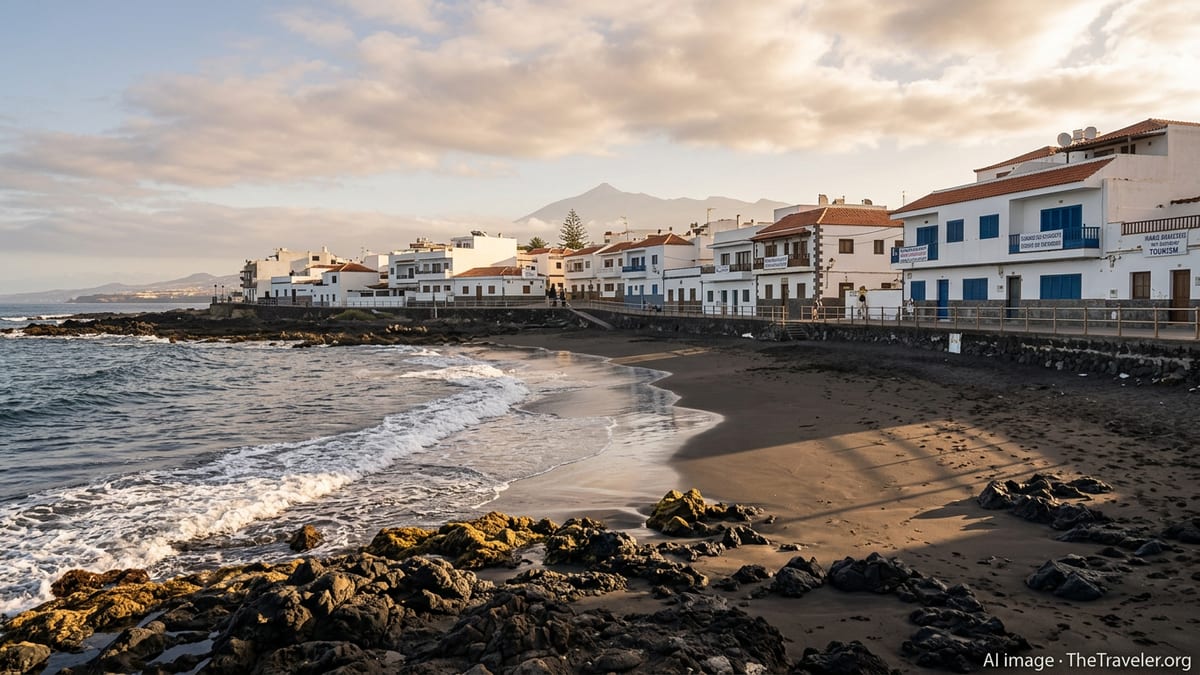
From Dream Destination to 2026 “No Travel” Example
The phrase “no travel” attached to Lanzarote and Tenerife has alarmed would-be visitors scanning headlines for their 2026 breaks. In reality, there is no broad government security advisory against visiting the Canary Islands. Spain, including its Atlantic territories, remains on standard travel advisories from major governments such as the United States and the United Kingdom, which highlight routine urban risks but do not discourage tourism outright.
The sharper language is coming instead from travel media, risk consultancies and sustainability commentators. Influential outlets that compile annual “no list” or “rethink travel” roundups for 2026 have grouped the Canary Islands among destinations where visitor numbers are considered environmentally and socially unsustainable. These lists have cited record arrivals in 2024 and 2025, overcrowded beaches and trails, and mounting pressure on water supplies and protected landscapes.
Lanzarote and Tenerife, the best-known islands for package tourism, are frequently named as emblematic of the problem. Massive resorts, high-rise coastal strips and cheap short-haul flights have made them magnets for European holidaymakers, but also lightning rods for criticism about how tourism is planned and managed in a warming, water-stressed Atlantic environment.
Industry analysts say the 2026 warnings are a reputational shock more than a sudden collapse. Tour operator data show bookings dipping modestly for the coming summer compared with 2025, suggesting that some travelers are hesitating, while many others continue to choose the islands regardless of the tone of recent headlines.
Protests, Housing Anger and Graffiti Telling Tourists to Go Home
Behind the 2026 “shunned” narrative is a two-year wave of protests across the Canary Islands that began drawing global attention in 2024. Tens of thousands of residents marched in Santa Cruz de Tenerife, Las Palmas and resort towns, carrying banners that denounced mass tourism, speculative development and what they see as an economic model that leaves locals with low wages and soaring rents.
By 2025, demonstrations had become a semi-regular feature of public life on several islands, including Lanzarote and Tenerife. Protest groups accused authorities of allowing too many hotel and holiday-rental projects, arguing that long-term residents were being priced out of coastal neighborhoods while wages in the hospitality sector stagnated. Social media amplified images of graffiti telling visitors to “go home” and warning that the islands were “not for sale,” which in turn fed alarmist international coverage.
Local campaigners stress that their target is not individual tourists, but the political and corporate decisions behind the tourism boom. Organizers have repeatedly said that respectful visitors remain welcome, while calling for caps on short-term rentals, tighter regulation of new builds and a rebalancing of the economy towards more sustainable sectors. Still, the optics of marches and slogans have fuelled the perception that the islands, and particularly their busiest corners, are turning against tourism itself.
Authorities in the Canary Islands regional government have begun to respond with small steps, including debates over eco-taxes, stricter licensing rules for holiday lets and reviews of coastal development plans. Yet activists argue that change is coming too slowly compared with the speed of tourist growth, which is why they have embraced the visibility that international “no travel” lists provide.
Lanzarote and Tenerife in the Crosshairs of Overtourism
Lanzarote and Tenerife play distinct roles in the Canary archipelago, but both sit at the heart of the overtourism debate. Tenerife, the most populous island, hosts sprawling resort zones in the south alongside the volcanic landscapes of Teide National Park, one of Spain’s most visited natural attractions. Lanzarote, smaller and drier, combines low-rise planning inspired by artist César Manrique with increasingly crowded resort strips and heavy dependence on charter flights.
Tourism arrivals across the Canary Islands reached record levels in 2024 and 2025, with more than 14 million international visitors in a single year and monthly peaks never seen before. Analysts say these figures translate into day-to-day strain: congested roads between airport and resorts, queues at popular hiking routes, and mounting pressure on desalination plants and wastewater systems that were not built for such volumes.
Residents in Lanzarote and Tenerife report that the most visible flashpoints are housing and infrastructure. Blocks of apartments once rented to local families are being converted into holiday lets, pushing rents beyond the reach of service workers who underpin the tourism industry. At the same time, complaints about traffic jams, litter on hiking trails and crowded emergency services have grown louder, feeding the argument that the islands have reached or surpassed their sustainable carrying capacity.
Sustainability researchers note that these problems are not unique to the Canaries, but the combination of limited land, protected ecosystems and a narrow economic base makes them particularly vulnerable. That vulnerability is part of what 2026 “no travel” commentaries aim to highlight, using Lanzarote and Tenerife as case studies of how success in attracting visitors can tip into crisis when long-term planning lags behind.
Are the Canary Islands Really Off-Limits in 2026?
Despite stark headlines, there is no blanket ban on visiting Lanzarote, Tenerife or any of the other Canary Islands in 2026. Government travel advisories continue to focus on common-sense security and health information, and the islands remain rated as relatively low-risk European destinations. Flights and package holidays are still operating at scale, and major airlines have not announced wholesale withdrawals from the market.
What has changed is the tone of conversation around whether travelers should go, rather than whether they can. Several major travel publications and sustainability-focused outlets have urged readers to reconsider trips to the archipelago this year, particularly during peak holiday periods, or to choose less-visited islands and shoulder-season dates. Environmental groups and local campaigners see this as leverage to push authorities towards firmer caps on visitor numbers and stronger protection for residents.
Travel insurers and corporate risk maps have also begun to flag the Canary Islands under environmental and social stress categories, even while security ratings remain stable. For tour operators, that means a heightened duty to brief clients about the context they are entering and the expectations around responsible behavior, from water use to respect for protest activity.
For holidaymakers already booked to visit Lanzarote or Tenerife in 2026, experts suggest that panic cancellations are not necessary. Instead, they recommend informing themselves about local debates, being prepared for the possibility of demonstrations in urban centers, and understanding that some residents may be weary of tourism’s impacts, even as they continue to rely on it for work.
How Travelers Can Respond to “No Travel” Warnings Responsibly
The 2026 “no travel” spotlight on Lanzarote and Tenerife is as much a call to change visitor behavior as it is a critique of policy. Sustainability specialists argue that tourists can help ease the pressure simply by adjusting when, where and how they travel. Avoiding the most crowded weeks, choosing accommodation in established town centers rather than in newly built coastal enclaves, and exploring beyond a single resort strip are all cited as ways to reduce strain and spread economic benefits.
Responsible travel on the islands increasingly means asking questions of hotels and rental hosts about their environmental practices and local hiring. Opting for properties that support community initiatives, treat wastewater correctly and manage energy use sensitively can make a tangible difference, particularly on resource-stressed islands like Lanzarote. Visitors are also encouraged to use public transport where feasible, respect trail closures and fire restrictions, and moderate water use in accommodations that rely on desalination.
Local businesses and tourism boards are trying to pivot towards a more conscious model rather than simply chasing higher arrival numbers. Initiatives range from promoting lesser-known inland villages and cultural sites to testing visitor caps in the most fragile natural areas. The hope is that by steering demand, the islands can retain tourism income while mitigating its most damaging side effects.
For now, the “shunned” label attached to Lanzarote and Tenerife serves as a stark warning rather than an iron gate. The islands remain open, but the message of 2026 is clear: future access will depend on how quickly authorities, industry and visitors can align around a version of tourism that safeguards both the volcanic landscapes and the communities that call them home.