

More news on this day
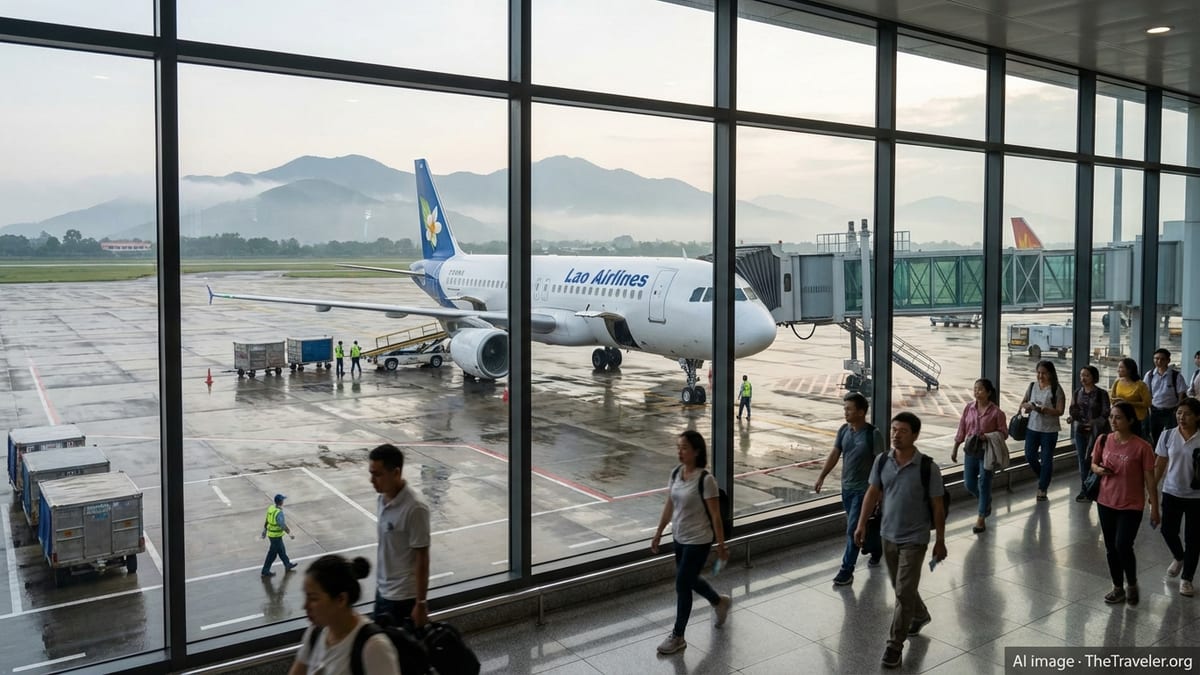
Lao Airlines will restart direct flights between Vientiane and Da Nang from March 29, a timely move that strengthens regional air links as tourism between Laos and Vietnam accelerates.
Route Resumption Timed With Tourism Recovery
The national flag carrier of Laos has confirmed that its Vientiane–Da Nang service will return at the launch of the Northern summer 2026 season, after previous attempts were halted amid a slower-than-expected post-pandemic rebound. The route, which last operated in 2024, is being reintroduced as both countries report double-digit growth in cross-border travel and renewed appetite for short-haul regional breaks.
From March 29, Lao Airlines will operate two round-trip flights each week, on Thursdays and Sundays, reconnecting the Lao capital with Vietnam’s leading central coast destination in just around one hour and 20 minutes. The relaunch is seen by local industry observers as a strategic step, restoring a missing link in the Mekong region’s air network at a moment when demand is surging rather than merely recovering.
The service also reflects broader momentum in Southeast Asia’s tourism sector, where secondary cities and mid-haul connections are increasingly important. By linking a compact capital like Vientiane with a fast-growing coastal hub such as Da Nang, Lao Airlines is positioning itself to capture both regional leisure traffic and niche business and tour group demand.
Flight Schedule, Aircraft Choice and Fares
Under the new schedule, flight QV317 will depart Vientiane’s Wattay International Airport at 11:20 and arrive at Da Nang International Airport at 12:40 local time. The return leg, QV318, is slated to leave Da Nang at 13:50 and land back in Vientiane at 15:10, offering convenient same-day connectivity and enabling travelers to optimize beach stays, city tours or onward journeys within each country.
The route will be operated by the Comac C909, a narrow-body aircraft configured with 90 economy-class seats. This marks a shift from the pre-pandemic era, when Lao Airlines deployed 70-seat ATR-72 turboprops via a stopover in Pakse, and from a brief 2023 relaunch using larger Airbus A320 jets. The C909’s mid-range capacity is being touted as a better fit for current demand patterns, allowing higher load factors while maintaining frequency.
Tickets are being sold through Lao Airlines ticket offices in Laos, a network of authorized travel agents, as well as the carrier’s official website and mobile application. Indicative round-trip fares for April 2026 are listed from around 290 US dollars, positioning the service competitively against multi-stop itineraries while promising time savings and simplified border formalities for both independent travelers and group tours.
Boost for Da Nang’s Hub Ambitions and Central Vietnam
Da Nang has set an ambitious target of welcoming about 19 million visitors in 2026, underlining its transformation from a domestic beach escape into a regional tourism and aviation hub. The return of non-stop flights from Vientiane is expected to reinforce that trajectory, adding another international link to a network already popular with travelers from South Korea, China and other parts of Asia.
Local tourism authorities view the restored route as particularly valuable for diversifying source markets and spreading arrivals beyond Vietnam’s main gateways. Direct access from Laos is likely to support new twin-center itineraries that combine Da Nang’s coastline and nearby heritage sites such as Hoi An and the former imperial city of Hue with cultural and nature experiences in Laos.
The connection also strengthens Central Vietnam’s appeal for travelers who use Da Nang as a transit base. Many visitors from North Asia already treat the city as a launchpad for exploring the wider Mekong region. A reliable twice-weekly link to Vientiane will give tour operators and airlines more options for regional circuits and may encourage longer stays as travelers add Laos to Vietnam-focused trips.
Deepening Laos–Vietnam Tourism Flows
Vietnam has emerged in recent years as one of the largest sources of foreign visitors to Laos, while Laos consistently ranks among Vietnam’s top feeder markets. Tourism flows in both directions have been expanding at more than 20 percent annually, driven by improved road links, relaxed visa policies and growing middle-class demand for cross-border leisure travel.
The reinstated Vientiane–Da Nang route is poised to reinforce this trend by offering a fast, direct alternative to land crossings and multi-stop air itineraries. For Lao travelers, Da Nang’s beaches, shopping centers and family-friendly attractions are strong draws, especially during the summer peak when demand for coastal escapes typically spikes. For Vietnamese travelers, easier access to Vientiane opens up routes further north to Luang Prabang and other destinations as Laos continues upgrading its rail and road infrastructure.
Industry analysts note that the new flight pattern aligns with evolving travel behavior, with more visitors from both countries opting for shorter, more frequent holidays rather than single long trips. The compact schedule and flight time suit weekenders and regional business travelers, potentially smoothing seasonal swings that previously challenged the route’s viability.
Strategic Significance for Lao Airlines and the Mekong Region
For Lao Airlines, the decision to resume the Vientiane–Da Nang service is part of a broader strategy to rebuild and refine its regional network in a disciplined way. After experimenting with different aircraft types on the route, the carrier is now betting that the 90-seat C909 offers the right balance between capacity, operating economics and market size, providing a more sustainable foundation for long-term operations.
The move also underscores the role of smaller national carriers in knitting together secondary cities across the Mekong subregion. While major hubs dominate long-haul traffic, growth in intra-ASEAN tourism increasingly depends on efficient point-to-point connections. By restoring a direct air bridge between Laos and Central Vietnam, Lao Airlines is helping to reduce travel times, encourage cross-border investment in hospitality and services, and support government efforts on both sides to deepen economic and cultural ties.
As the route prepares to relaunch at the end of March, stakeholders across the tourism value chain, from hoteliers and ground handlers to tour operators and airport authorities, are watching closely. If early bookings are strong and load factors hold through the summer, the Vientiane–Da Nang service could become a template for future regional links that pair emerging destinations with established hubs in the fast-evolving Mekong travel market.