

More news on this day
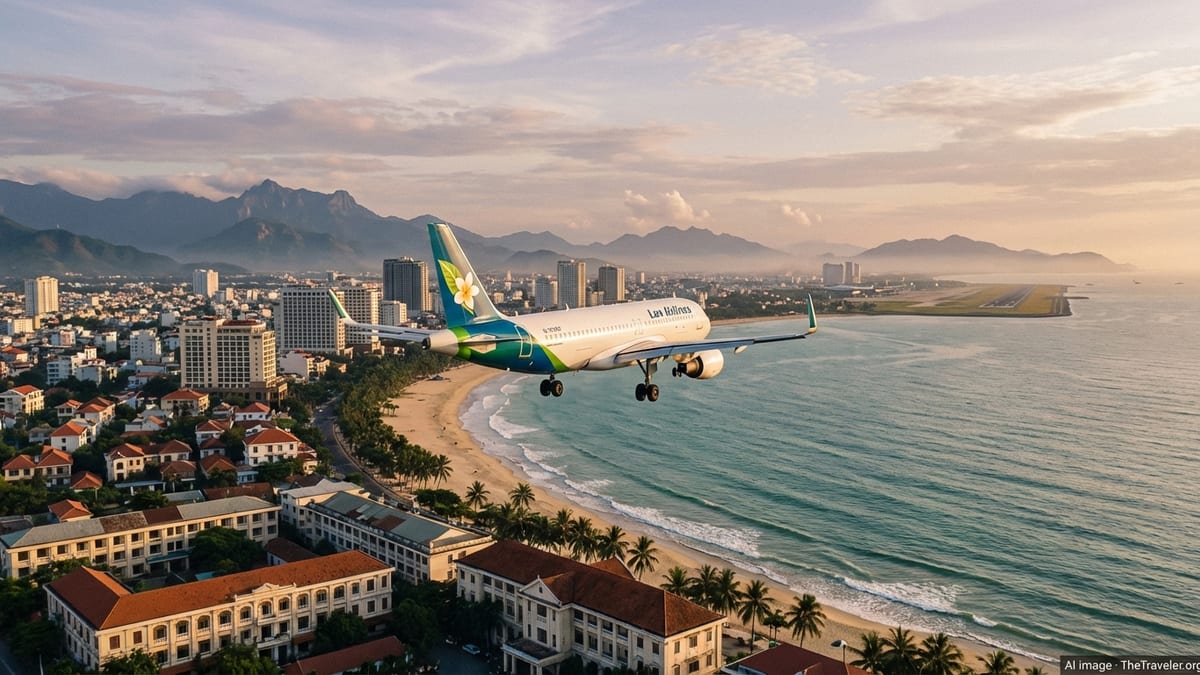
Lao Airlines is reviving direct flights between Vientiane and Da Nang from March 29, 2026, restoring a key air corridor that brings Laos within easy reach of central Vietnam’s coastal resorts and imperial heritage hubs Hue and Hoi An.
A Strategic Air Bridge Returns
The national carrier of Laos has confirmed that the Vientiane–Da Nang route will resume with two weekly services, operating on Thursdays and Sundays. The short sector, scheduled at around one hour and 20 minutes, will be operated by Comac C909 aircraft configured with 90 economy seats, a capacity matched to current demand as regional tourism continues to grow.
Flight QV317 is slated to depart Vientiane at 11:20 and arrive in Da Nang at 12:40, with the return leg QV318 leaving Da Nang at 13:50 and landing in Vientiane at 15:10 the same day. The schedule gives leisure travelers almost immediate onward access to central Vietnam’s beaches and heritage towns while allowing short, efficient business trips between the two cities.
The route has been attempted before, including a 2023 relaunch that was later suspended as demand struggled to recover fully after the pandemic. This latest revival comes at a very different moment for the region, with both Laos and Vietnam reporting double-digit growth in two-way visitor flows over the past two years and airlines racing to restore and expand regional connectivity.
At Wattay International Airport, the Da Nang link joins existing routes from Vientiane to Hanoi and Ho Chi Minh City, giving Lao travelers and international visitors a more complete set of options into Vietnam. For Vietnam, it strengthens Da Nang’s position as the main international gateway to the country’s central region.
Gateway to Hue and Hoi An’s Cultural Heartlands
While the revived service is point-to-point between Vientiane and Da Nang, its real impact stretches further along Vietnam’s central coastline. Da Nang International Airport sits roughly midway between the UNESCO World Heritage town of Hoi An and the former imperial capital of Hue, making it the most convenient entry point for travelers seeking a blend of beach relaxation and cultural discovery.
From Da Nang, road transfers to Hoi An typically take under an hour, bringing travelers directly into a walkable old town of lantern-lit lanes, riverside markets and preserved merchant houses. North of Da Nang, Hue is reachable in around two to three hours, via the coastal Hai Van Pass or the modern tunnel, unlocking imperial citadels, royal tombs and riverside pagodas for visitors arriving from Laos.
Up to now, travelers from Vientiane heading for Hue or Hoi An typically pieced together multi-leg journeys through Hanoi, Ho Chi Minh City or Bangkok, adding hours of transit and extra costs. The revived Vientiane–Da Nang corridor removes a major friction point, turning what was often a full-day odyssey into a compact half-day trip that can realistically fit into long weekends and short regional breaks.
Tour operators in both countries are already positioning the route as a fast track to twin-centre itineraries that pair the laid-back Mekong charm of Vientiane and Luang Prabang with the beaches, cuisine and heritage towns of central Vietnam. The connectivity is also expected to encourage cross-border circuit routes that loop travelers through Laos, central Vietnam and onward by air or rail to southern or northern Vietnam.
Why the Timing Matters for Tourism Growth
The decision to revive the air corridor comes as both Laos and Vietnam prepare for what their tourism authorities forecast will be a record year for international arrivals in 2026. Da Nang alone is targeting tens of millions of visitors as it leans on an expanded network of routes from Northeast Asia, Central Asia and within Southeast Asia, positioning itself as a regional hub for beach and city breaks.
On the Lao side, the government has prioritized aviation links as a pillar of its tourism strategy, using improved air access to offset the country’s landlocked geography. Vientiane’s role is evolving from simple capital gateway to a connective node linking domestic destinations such as Luang Prabang and Pakse with regional hubs including Bangkok, Hanoi, Ho Chi Minh City and now again Da Nang.
Two-way tourism between the neighbors is already on an upward trajectory. Vietnam has become one of the largest source markets for Laos, while Laos consistently appears among the top outbound markets feeding into Vietnam. Officials report that visitor flows between the two countries rose more than 20 percent in 2024, with further increases through 2025, underscoring a robust appetite for short-haul regional travel.
Industry analysts say the resumed route is well positioned to tap into that demand. The smaller C909 aircraft gives Lao Airlines flexibility to grow frequencies as the market matures, while the schedule connects neatly with other regional services, making it easier for travelers from South Korea, China and beyond to tag a short visit to Laos onto an existing beach stay in Da Nang, or vice versa.
Unlocking New Multi-Destination Escapes
For travelers, the most immediate benefit of the Vientiane–Da Nang revival is not simply faster access but richer itinerary options. With direct air links between Vientiane and three Vietnamese gateways – Hanoi, Ho Chi Minh City and now Da Nang – it becomes far easier to design open-jaw trips that begin in Laos and end in Vietnam, or the other way around, without backtracking.
A typical route might see visitors arrive in Vientiane, connect by air or rail to Luang Prabang, then fly directly to Da Nang for a few days of beach time, before finishing in Hoi An or Hue. Business travelers can also carve out brief cultural detours, trading a single extra night for a stroll through Hoi An’s old town or a visit to Hue’s citadel at the start or end of a work trip.
For tour operators, the revived corridor creates opportunities to package themed journeys around shared Buddhist heritage, Mekong cultures or contemporary food scenes that span both countries. The proximity of central Vietnam’s coastal resorts to Laos also opens doors for wellness and golf itineraries that cross borders while remaining within a compact geographical area.
The air corridor is expected to support not just tourism but trade and education links as well, with universities, conferences and small businesses on both sides gaining from shorter, more predictable travel times. In an era when travelers increasingly seek multi-country, experience-rich trips within a single region, the renewed Vientiane–Da Nang link aligns closely with shifting preferences.
A Test Case for Deeper Regional Connectivity
Beyond the immediate tourism gains, aviation observers view the route’s revival as a test of how secondary city links within mainland Southeast Asia can complement, rather than compete with, dominant hubs. If the Vientiane–Da Nang corridor proves sustainable, it could encourage further point-to-point services that connect Laos with other coastal and cultural centers in Vietnam and the wider Mekong region.
The move also fits into a broader pattern of cooperation between Lao Airlines and Vietnamese carriers, which have signed agreements on codesharing, maintenance and joint marketing to extend their reach without overextending capacity. For passengers, this should translate into more seamless ticketing, checked-through baggage and aligned schedules between Lao domestic routes and Vietnamese networks.
As regional airlines gradually rebuild their networks, smaller but strategically chosen routes such as Vientiane–Da Nang are becoming crucial building blocks. They disperse visitor flows beyond megacities, spread tourism spending more evenly and bring landlocked destinations like Laos closer to the sea, both literally and figuratively.
For now, the twice-weekly flights are modest in number but significant in symbolism. They mark a renewed confidence that travel between Laos and the beaches and heritage cities of central Vietnam is not just returning, but evolving into more integrated, multi-stop journeys that reflect how modern travelers increasingly want to explore the region.