

More news on this day
New nonstop flights between Larnaka and Barcelona, along with a broader boost in summer air capacity across Mediterranean routes, are expected to strengthen tourism flows between Cyprus and Spain in 2026, building on record visitor numbers in both countries last year.
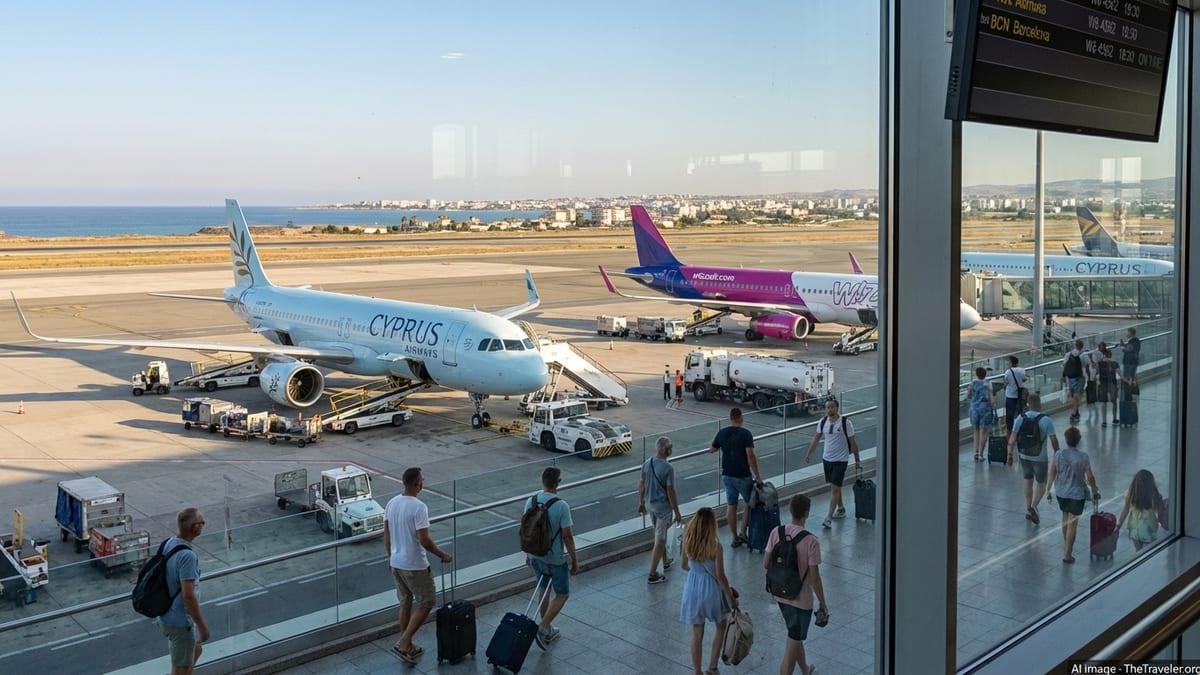
New Larnaka–Barcelona Links Mark a Strategic Mediterranean Bridge
The reactivation and expansion of direct services between Larnaka International Airport and Barcelona El Prat in 2026 are emerging as one of the most closely watched developments in the Eastern Mediterranean aviation market. Flight schedules compiled by route-tracking platforms show that both Cyprus Airways and low cost carrier Wizz Air are planning nonstop operations on the 2,850 kilometer sector, with a block time of around four and a half hours. The combination of a full service and a budget operator gives both leisure and business travelers more choice as capacity ramps up into the northern summer season.
Cyprus Airways is slated to relaunch its Larnaka to Barcelona operation at the start of the IATA summer season on 29 March 2026, while Wizz Air is expected to maintain three weekly frequencies that it has been operating on a seasonal basis. Together, the two airlines will create the most extensive direct connectivity yet between Cyprus and Catalonia, reducing the need for time consuming connections through hubs such as Athens, Istanbul or central European airports.
For tourism planners on both sides, the route is far more than just another sun route between Mediterranean destinations. Barcelona acts as a powerful entry point to Spain for long haul visitors, while Larnaka is a key gateway to Cyprus’s coastal resorts and cultural inland regions. Improved air links between the two are likely to facilitate multi destination itineraries, twin center holidays and new short city breaks that were previously constrained by limited capacity and higher fares.
Industry analysts note that the timing of the service comes as both Cyprus and Spain attempt to shift their tourism models toward higher value, more diversified demand. Direct flights tying together two high performing destinations can help spread visitor flows more evenly across the season and encourage longer stays, especially among independent travelers and niche segments such as culture tourists, sports enthusiasts and conference delegates.
Cyprus Tourism Enters 2026 From a Record Breaking High
The new connectivity is being added at a moment of historic strength for Cyprus tourism. Official data released in January and February 2026 confirm that the island welcomed around 4.53 million visitors in 2025, the highest figure ever recorded and roughly 12 percent higher than the previous year. Revenues have followed a similar upward curve, with tourism income over the first eleven months of 2025 reported at approximately 3.6 billion euros, underscoring the sector’s critical role in the Cypriot economy.
Monthly performance figures underline how broad based the recovery has been. August 2025 set an all time record with more than 602,000 tourist arrivals, while July and November also posted historic highs. Over the January to September 2025 period, arrivals increased by more than 10 percent year on year, reflecting sustained demand from core markets in northern and central Europe as well as regional neighbors.
Although the United Kingdom, Israel and Poland remain the island’s leading source markets, with Germany and Sweden gaining importance, Cyprus has deliberately sought to diversify its visitor base and lengthen the season. That strategy includes attracting more city break travelers into Larnaka and other urban centers, building cultural and gastronomic offerings and investing in conferences and events. Enhanced air links with Spain’s second city are expected to complement this diversification, encouraging more European and long haul visitors who enter Europe via Barcelona to consider Cyprus as a second stop.
Outbound travel by Cypriot residents has also been climbing steadily, with double digit increases in trips abroad recorded through much of 2025. While Greece and the United Kingdom dominate these flows, Spain has been steadily gaining ground as a leisure and city break destination for Cypriots. A direct Larnaka–Barcelona connection systematically available across the summer schedule is likely to accelerate that trend, particularly among younger travelers and families seeking new cultural experiences.
Spain’s Record Tourism and Catalonia’s Pull Strengthen Route Economics
On the Spanish side, the fundamentals are equally robust. Spain achieved a new national tourism record in 2025 with 96.8 million foreign visitors, surpassing its previous highs and cementing its status as one of the world’s most visited countries. Tourism now accounts for roughly 12 to 13 percent of national GDP, and spending by international visitors reached nearly 135 billion euros last year according to recent data from Spanish authorities.
Catalonia, with Barcelona as its focal point, continues to rank as Spain’s top regional destination, attracting just over 20 million visitors in 2025. The city’s combination of architecture, beaches, gastronomy and events makes it a powerful magnet for European short haul markets, even as it grapples with housing pressures and a push from local authorities to manage visitor flows more sustainably. For airlines, such sustained demand translates into relatively low risk when opening or scaling up seasonal routes, particularly from emerging origin markets such as Cyprus.
Tourism strategists point out that with Spain’s traditional feeder markets like the United Kingdom, France and Germany already highly penetrated, growth increasingly comes from smaller but fast rising sources. Countries in the Eastern Mediterranean and Middle East, where air connectivity has grown rapidly in the last decade, fit this profile. By linking Larnaka and Barcelona with direct flights and integrating them into alliance and codeshare networks, carriers can tap into two way flows that span tourism, diaspora travel and business links, reinforcing the economics of the route.
For Catalan tourism operators, Cyprus offers access to a relatively affluent market with high outbound travel rates in summer and strong interest in cultural and coastal experiences. For Cypriot hoteliers, meanwhile, Barcelona is both a lucrative source of visitors and a valuable showcase market, where joint promotions, roadshows and trade partnerships can position Cyprus as an attractive extension to Iberian itineraries.
Summer 2026 Capacity: More Seats, Higher Frequency and Competitive Fares
The structure of the 2026 summer schedule suggests a measurable increase in seats on the Larnaka–Barcelona corridor compared with previous years. Cyprus Airways’ planned seasonal reintroduction at the end of March, combined with Wizz Air’s three weekly flights, is expected to yield multiple weekly frequencies at the height of the season. Industry planners forecast that additional ad hoc and charter operations could be layered on top for specific tour operator programs or sports and incentive events.
More capacity typically results in greater price competition, especially where a low cost carrier is present alongside a full service airline. For travelers from Cyprus, this is likely to translate into more affordable access to Barcelona and onwards to other Spanish destinations, whether via domestic flights or rail. For Spanish residents, particularly in Catalonia and neighboring regions, the increased competition could make week long stays in Cyprus more accessible, opening up the island as an alternative to better known eastern Mediterranean destinations.
Travel agents in both markets are already beginning to package the new flights into summer 2026 offers, pairing Larnaka with Barcelona for twin center holidays that combine urban culture and island relaxation. Industry insiders expect to see a rise in flexible itineraries, where travelers spend a few nights in one city before transferring to the other, rather than committing their entire stay to a single resort. This kind of blended trip has become increasingly popular among younger segments and remote workers who can extend their holidays.
Airports on both ends are also preparing operationally for the added demand. Larnaka International has been working with airlines and handlers to optimize turnaround times and manage peak hour congestion, while Barcelona El Prat, which is already one of Europe’s busiest hubs, is fine tuning slot allocations and terminal operations for the summer surge. Both sides see the route as part of a wider pattern of strengthened Mediterranean connectivity, which also includes growing links to destinations in Italy, France and the Balkans.
Tourism Stakeholders Anticipate Strong Two Way Benefits
Hoteliers, destination management companies and local tourism boards in Cyprus are optimistic that the Larnaka–Barcelona services will generate tangible benefits even beyond headline visitor numbers. Direct flights tend to encourage repeat visits, as travelers become more familiar with both ends of the route and perceive the journey as simple and predictable. This, in turn, promotes deeper exploration beyond the main resort belts, benefitting rural areas and inland communities.
For Spain, and Catalonia in particular, visitors from Cyprus and neighboring markets tend to be relatively high spending, often booking four star or boutique accommodation and seeking out local gastronomy and experiences rather than purely budget packages. As Spain continues to pivot toward a qualitative tourism model that favors higher per capita spending over raw volume growth, these characteristics make the Cypriot market an attractive complement to its mass segments.
Both destinations also hope to leverage the expanded connection for events and conference tourism. Barcelona is a global leader in trade fairs and congresses, from technology and mobile communications to medical and cultural gatherings. Direct flights from Larnaka could make it significantly easier for Cypriot professionals and companies to participate in such events, and for organizers to consider Cyprus for satellite meetings, incentive trips or post congress extensions.
Travel industry associations in Cyprus have furthermore highlighted the potential for education and sports travel, citing the popularity of football academies, summer language schools and university exchanges in Spain. Reliable direct links to Barcelona simplify logistics for group movements and allow schools and clubs to design more ambitious exchange programs with partner institutions in Catalonia and beyond.
Sustainability, Water Stress and the Push for Smarter Growth
The prospect of rising arrivals in summer 2026 also sharpens the focus on sustainability, particularly in Cyprus, where water scarcity has been a recurring concern. In 2025, the government announced funding schemes to help hotels install their own small scale desalination plants and committed additional resources to upgrade aging water infrastructure, after a series of dry winters left dam reserves uncomfortably low. Authorities have made clear that tourism growth must be balanced with responsible resource management.
These measures are part of a broader effort to future proof the sector against climate risks. By boosting desalination capacity, improving leakage control and encouraging more efficient water use in tourism facilities, policymakers aim to ensure that expanding air links and higher visitor numbers do not exacerbate local tensions over resources. Industry stakeholders see this as essential not only for environmental reasons but also for maintaining Cyprus’s reputation as a reliable, high quality destination.
Spain faces its own sustainability debates, particularly around overtourism in Barcelona and other hotspots, as well as pressure on housing and urban services. Local authorities in Catalonia have been tightening regulations on short term rentals, promoting dispersal of visitor flows into lesser known neighborhoods and secondary cities, and encouraging more responsible behavior from both tourists and operators. As new source markets like Cyprus grow in importance, these policies will shape the type of experiences on offer and, potentially, the length and timing of stays.
In practice, both countries increasingly favor tourism that is spread more evenly throughout the year and more focused on culture, nature and gastronomy rather than purely peak season beach tourism. The Larnaka–Barcelona connection could support this by enabling spring and autumn short breaks, cultural circuits, and off peak event travel, even if the bulk of capacity is scheduled for the core summer months.
Opportunities for Airlines, Airports and Regional Cooperation
From an aviation perspective, the reinforced Larnaka–Barcelona corridor illustrates how airlines in smaller markets can use targeted seasonal routes to punch above their weight in regional connectivity. For Cyprus Airways, a strong performance on the route could support future network expansion into other Spanish cities or deeper codeshare arrangements with Iberian partners, while reinforcing its position as Cyprus’s national carrier in an increasingly competitive environment.
Wizz Air, already a major player in Central and Eastern Europe, views Mediterranean sunshine routes as a key profit driver, and its presence on the Larnaka–Barcelona sector is likely to keep fares competitive and stimulate demand among more price sensitive travelers. The airline’s extensive network from both airports also offers passengers connecting options to secondary cities without needing to transit through traditional legacy hubs, a shift that has reshaped Europe’s air travel map over the past decade.
For the airports themselves, the route strengthens their roles as regional gateways. Larnaka benefits from association with a globally recognized destination that can help attract further airline interest, while Barcelona bolsters its already dense web of Mediterranean links. Aviation authorities in both countries have suggested that such connections can be a platform for broader cooperation, including joint marketing, data sharing on travel trends and coordinated efforts to promote off season tourism.
Looking ahead to the peak months of 2026, industry observers will be watching key metrics such as load factors, average fares and booking patterns on the Larnaka–Barcelona flights. Strong performance could pave the way for additional frequencies, a longer operating season or even year round services in subsequent years, deepening the corridor that now links Cyprus and Spain across the Mediterranean.