

More news on this day
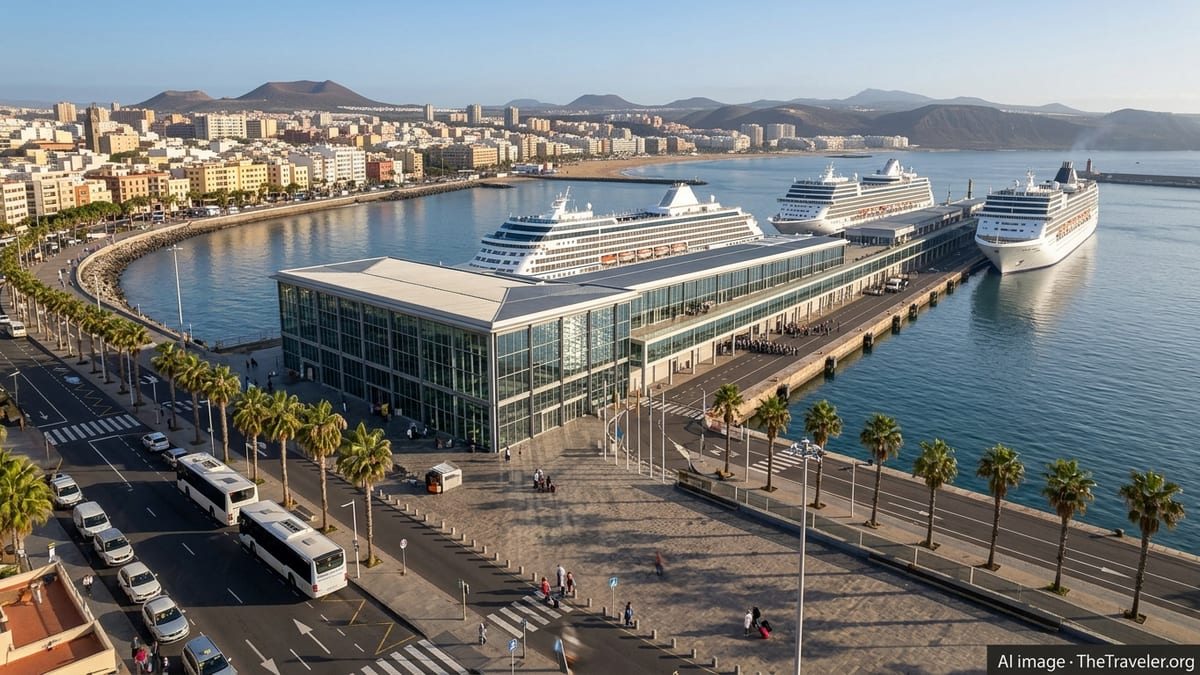
Las Palmas Cruise Port in Gran Canaria has officially opened what reports describe as Europe’s largest cruise terminal, a milestone that strengthens the Canary Islands’ position on global cruise itineraries and signals a significant new phase of tourism-driven growth for the Spanish archipelago.
Get the latest news straight to your inbox!
A Flagship Terminal for Europe’s Cruise Market
The new Las Palmas Cruise Port terminal began operations at the Santa Catalina pier in early October 2025, welcoming Celebrity Cruises’ Celebrity Apex as its first ship. According to published coverage from the cruise industry press, the facility is being presented as the largest dedicated cruise terminal in Europe, both in overall terminal area and simultaneous passenger handling capacity.
Publicly available information indicates that the terminal building spans around 14,400 square meters, developed under a long term concession held by Global Ports Holding in partnership with local operator Sepcan and the Port Authority of Las Palmas. The project forms part of a wider investment package in the Canary Islands’ cruise infrastructure, with new or upgraded terminals also progressing in nearby Fuerteventura and Lanzarote.
Industry reports describe the Las Palmas facility as capable of handling up to five cruise ships and around 12,000 passengers at once, positioning Gran Canaria to accommodate the latest generation of large vessels. This scale is intended to ease congestion on peak days, shorten embarkation and disembarkation times, and support turnaround operations that begin and end cruises on the island.
The operational launch arrives as Spain and the Canary Islands experience record or near record cruise volumes, with Las Palmas already among the country’s busiest cruise ports by passenger traffic. The new terminal is expected to underpin further growth by giving cruise operators added confidence in the port’s capacity and efficiency.
Boosting Gran Canaria’s Role in Global Cruise Itineraries
The opening of the enlarged Las Palmas Cruise Port terminal is widely viewed as a strategic move for both the island and the wider Atlantic cruise network. Located off the northwest coast of Africa yet part of the European Union, Gran Canaria occupies a natural crossroads between Mediterranean routes, Northern Europe, West Africa, and transatlantic sailings.
Cruise deployment announcements in recent seasons have highlighted a growing reliance on the Canary Islands as a winter base, particularly as geopolitical factors have affected some Eastern Mediterranean and Red Sea routes. Publicly available statements from major cruise lines indicate that more itineraries are now built around Canary Islands circuits, often pairing Gran Canaria with Tenerife, Lanzarote, Fuerteventura, Madeira, and mainland Spanish ports.
The expanded terminal in Las Palmas reinforces the island’s ability to function as both a port of call and a turnaround hub. Enhanced baggage handling, check in areas, and passenger circulation space are designed to support fly cruise packages using the island’s international airport as a gateway. This in turn provides local tourism businesses with more stable, year round demand rather than relying solely on day visit spending.
Industry commentary suggests that the scale of the new facility will help Las Palmas compete more directly with established European cruise hubs. While ports such as Barcelona, Civitavecchia, and Southampton remain leaders in passenger volume, the Canary Islands are increasingly promoted as a climate reliable alternative for winter and shoulder seasons.
Economic Impact on Las Palmas and the Canary Islands
Economic projections associated with the Las Palmas Cruise Port upgrade point to substantial gains for the local and regional economy. Cruise passenger numbers at the port complex, which includes Gran Canaria and neighboring islands in the same port authority, were already reported in the high six figures to around 1.8 million annually prior to the terminal’s opening, and growth of more than 20 percent year on year has been noted in recent traffic updates.
The new terminal is expected to support increased passenger volumes, higher onshore spending, and expanded employment opportunities in sectors ranging from ground handling and security to hospitality and retail. Investment figures published by Global Ports Holding and related sources place capital spending for Las Palmas and the surrounding Canary Islands ports in the tens of millions of euros, forming part of a broader infrastructure program valued at approximately 250 million euros across the company’s global portfolio.
Local businesses in Las Palmas, particularly those in the Santa Catalina and Puerto de la Luz districts near the cruise quay, are anticipated to benefit from the more consistent footfall that accompanies larger and more frequent ship calls. Restaurants, cafes, tour operators, shops, and cultural venues are positioned to capture additional demand, while suppliers providing fuel, provisions, and technical services to visiting ships also stand to gain.
Regional tourism planners view the terminal as a tool to extend visitor stays beyond a single day. Marketing efforts increasingly encourage cruise guests to return for longer land based holidays, using shore excursions as a first introduction to Gran Canaria’s beaches, volcanic landscapes, historic neighborhoods, and inland villages.
Design, Operations, and Passenger Experience
Reports on the new Las Palmas terminal highlight a design that balances capacity with passenger comfort. The building incorporates high ceilings, large glass façades, and open circulation areas intended to manage high passenger volumes without crowding. Wayfinding, security screening, check in desks, and baggage systems have been laid out to streamline flows between ship, terminal, and ground transportation.
Environmental and sustainability considerations feature prominently in publicly available project material. The terminal uses recycled and locally sourced materials where possible and is described as being equipped with modern energy management systems. The design aims to minimize environmental impact while providing the infrastructure needed to handle the latest large cruise ships that call in the Atlantic region.
Operational upgrades continued even after the terminal’s initial opening. In late 2025, Las Palmas Cruise Port completed the installation of three new boarding bridges manufactured in Spain and transported preassembled to Gran Canaria. These telescopic bridges can be adjusted to different ship sizes and quay heights, improving accessibility and reducing turnaround times during embarkation and disembarkation.
For passengers, the enhanced infrastructure is intended to translate into shorter queues, clearer signage, and smoother transfers to excursions or city sightseeing. The terminal’s location near Las Palmas’ urban center means visitors can quickly reach attractions such as Las Canteras Beach and the historical district of Vegueta, increasing the likelihood that cruise calls will generate meaningful onshore experiences.
A New Benchmark for Atlantic Cruise Infrastructure
The launch of Europe’s largest cruise terminal at Las Palmas Cruise Port sets a new reference point for cruise infrastructure in the Atlantic basin. By combining high capacity berthing, a large modern terminal building, and updated piers and boarding systems, the project signals how ports are responding to the trend toward ever larger ships and more diversified itineraries.
Industry analysis places the development within a broader pattern of investment across Atlantic and Mediterranean ports as operators compete to attract ship deployments and homeport operations. In this context, the Canary Islands are positioning themselves not only as a seasonal destination but as a strategic hub that can connect northern and southern routes, as well as Europe and the Americas.
Gran Canaria’s strengthened role in global cruise tourism is likely to evolve further as additional upland development around the terminal is completed and as cruise lines test new itineraries that take advantage of the port’s enhanced capabilities. For the city of Las Palmas, the project represents both an economic engine and a highly visible gateway through which millions of international travelers may form their first impressions of the island.
As cruise traffic continues to recover and expand worldwide, the performance of the new terminal over upcoming winter and summer seasons will be watched closely by other ports considering similar large scale investments, and by travel companies seeking reliable, high capacity turnaround hubs within the European market.