

More news on this day
Peak spring travel collided with mounting operational strain at Las Vegas’ Harry Reid International Airport on April 11, 2026, as hundreds of flights were delayed and passengers across the country faced cascading schedule disruptions.
Get the latest news straight to your inbox!
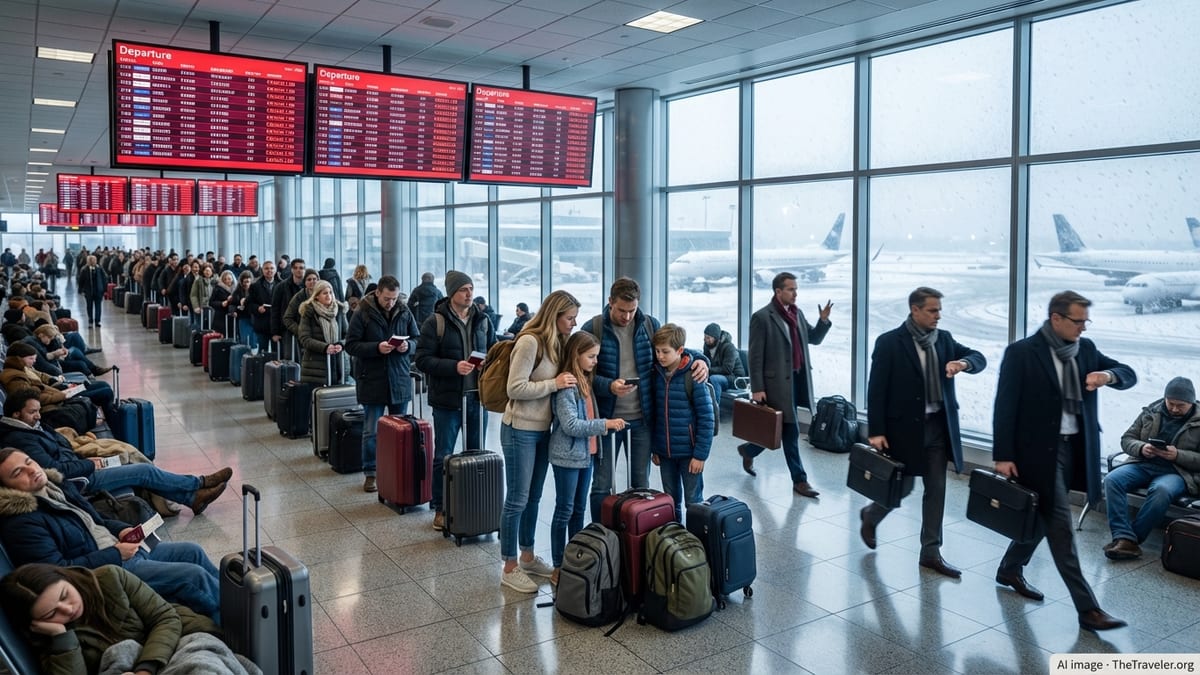
Hundreds of Flights Disrupted at Harry Reid International
Publicly available flight-tracking data for April 11 indicates that Harry Reid International Airport recorded more than 250 delayed flights and a small number of cancellations, affecting both arrivals and departures across major U.S. and Canadian routes. One industry-focused outlet reported 251 delays and two cancellations tied to the airport by late afternoon, underscoring how quickly routine congestion turned into a daylong disruption.
The delays affected services operated by large network and low-cost carriers, including Delta Air Lines, United Airlines, American Airlines and several leisure-focused airlines that carry visitors to and from the Las Vegas Strip. Routes to Los Angeles, Denver, Chicago, Toronto and New York were among those most heavily impacted, creating knock-on effects at other hubs as late-arriving aircraft forced schedule shuffles.
By Saturday evening, delay dashboards still showed a significant share of flights operating behind schedule from Las Vegas, even as federal aviation status pages continued to list only general arrival and departure congestion rather than a formal ground stop. The pattern mirrored disruption seen earlier in April at other major U.S. hubs, where rolling delays clustered around peak travel periods rather than a single weather or technical trigger.
While cancellation numbers remained relatively low compared with earlier nationwide disruption in the month, the volume of late departures was enough to push some journeys into the early hours of Sunday and derail tightly timed connections for spring breakers and weekend visitors.
Spring Break Demand and a Busy April Weekend
The disruption arrived at a moment when Las Vegas is already experiencing elevated visitor volumes, with entertainment events, conferences and late-season spring break trips all converging on the same April weekend. Traffic reports and tourism data from recent months show Harry Reid International handling more than 11,000 aircraft operations in a typical April, placing sustained pressure on gate space and runway capacity during peak hours.
Travel and aviation analysts have noted that 2026’s spring travel period has been particularly sensitive to even modest operational hiccups. Earlier in the week, consumer-rights platforms highlighted widespread delays across U.S. hubs, including Las Vegas, during a mid-April disruption that saw thousands of flights arrive late nationwide. The April 11 issues at Harry Reid fit into that broader pattern of a strained but technically functioning system.
Local travel coverage also points to a still-growing events calendar in the Las Vegas Valley, with major sports fixtures and resort openings drawing visitors outside traditional holiday windows. That has made Saturday travel more volatile than historic norms, increasing the risk that a busy noon departure bank or evening wave can tip into extended queues once schedules begin to slip.
For many travelers on April 11, the result was a mismatch between expectations of a quick weekend turnaround and the reality of crowded concourses, full departure boards and uncertain connection times as the day wore on.
Ground Congestion and Infrastructure Pressures
The strain was not limited to airside operations. Recent updates from Nevada transportation agencies describe a series of overnight lane closures and pavement works on key connectors near the airport, including stretches of Sunset Road and the Airport Connector. Although most of that work has been scheduled for nighttime hours, reports indicate that drivers heading to and from the terminal area in April have been advised to allow extra time, especially around weekend peaks.
Earlier local coverage also highlighted lane reductions on terminal roadways as Harry Reid International proceeds with lighting and infrastructure upgrades. Even when constrained to off-peak windows, that type of work can leave little margin when traffic surges unexpectedly, contributing to slowdowns at curbsides and parking facilities if passenger flows remain high into the late evening.
The broader Las Vegas transport network is itself in transition, with major highway and tunnel projects under way to improve long-term connectivity between the resort corridor, the airport and outlying suburbs. Planners have pointed to projects such as the regional freeway build-out and an eventual supplemental commercial airport south of the city as key to handling future demand, but those measures are still years from providing meaningful relief during days like April 11.
In the near term, the combination of heavy rideshare activity, high taxi demand and intermittent road work has continued to complicate access for passengers trying to reach Harry Reid International in time for increasingly crowded departure banks.
Weather, Airspace Conditions and Knock-on Effects
Weather in the Las Vegas Valley on the night of April 10 into the early hours of April 11 included a wind advisory issued by the National Weather Service, reflecting gusty conditions across portions of southern Nevada. Federal aviation status pages for Las Vegas on April 10 and 11 listed the airport as experiencing general delay conditions, though not a full closure, with updates noting periods of traffic management as air traffic controllers balanced arrivals and departures.
No single severe-weather incident has been identified in public data as the direct cause of the April 11 backlog. Instead, the delays appear to reflect a mix of residual operational challenges from earlier in the week, tight aircraft rotations after previous nationwide disruptions, and localized air-traffic flow management measures that slowed movements during already busy periods.
Other major hubs have reported comparable patterns this spring, including Phoenix Sky Harbor and Newark Liberty, where spring-weekend disruptions in early April similarly developed over the course of the day as minor constraints coincided with heavy demand. For passengers, the practical impact is the same: rolling gate holds, slow turnarounds and a higher likelihood that a delay in one city echoes across several others.
Airspace changes and capacity constraints elsewhere in the western United States earlier in 2026, including temporary flight restrictions in parts of Texas and New Mexico, have also kept airlines on edge about maintaining reliable long-haul schedules. While those closures are not directly tied to the Las Vegas situation on April 11, they illustrate how quickly regional bottlenecks can reverberate through already-tight national networks.
What Travelers Faced and How to Prepare
Passengers passing through Harry Reid International on April 11 encountered a mix of full security checkpoints, busy gate areas and longer-than-expected waits for checked bags as operations absorbed the wave of late flights. In anticipation of growing crowds, the airport recently added online displays of estimated TSA checkpoint wait times, giving travelers a more precise snapshot of screening conditions before they leave for the terminal.
Travel and consumer guidance published ahead of this year’s spring break period has consistently recommended that passengers build in additional buffer time for airport processes. Standard advice calls for arriving at least two hours before domestic departures and three hours ahead of international flights, with extra leeway during weekend peaks and major event weeks in cities like Las Vegas.
On days like April 11, practical steps such as monitoring airline apps, enabling flight alerts and checking both airport and federal status dashboards can provide early warning of emerging disruption. Publicly available information also suggests that rebooking options are often more flexible when passengers act quickly once a delay crosses certain thresholds or when missed connections become unavoidable.
For Las Vegas specifically, transportation agencies continue to urge drivers to factor in construction-related slowdowns around the airport corridor over the coming weeks. As spring melts into the busy summer travel season, the experience of April 11 offers an early indication that Harry Reid International is likely to remain a focal point of national aviation congestion whenever demand surges and operating conditions tighten.