

More news on this day
Las Vegas’ Harry Reid International Airport saw passenger numbers soften in February, underscoring a broader cooling in Southern Nevada travel demand even as major airlines posted sharply mixed results on key routes and markets.
Get the latest news straight to your inbox!
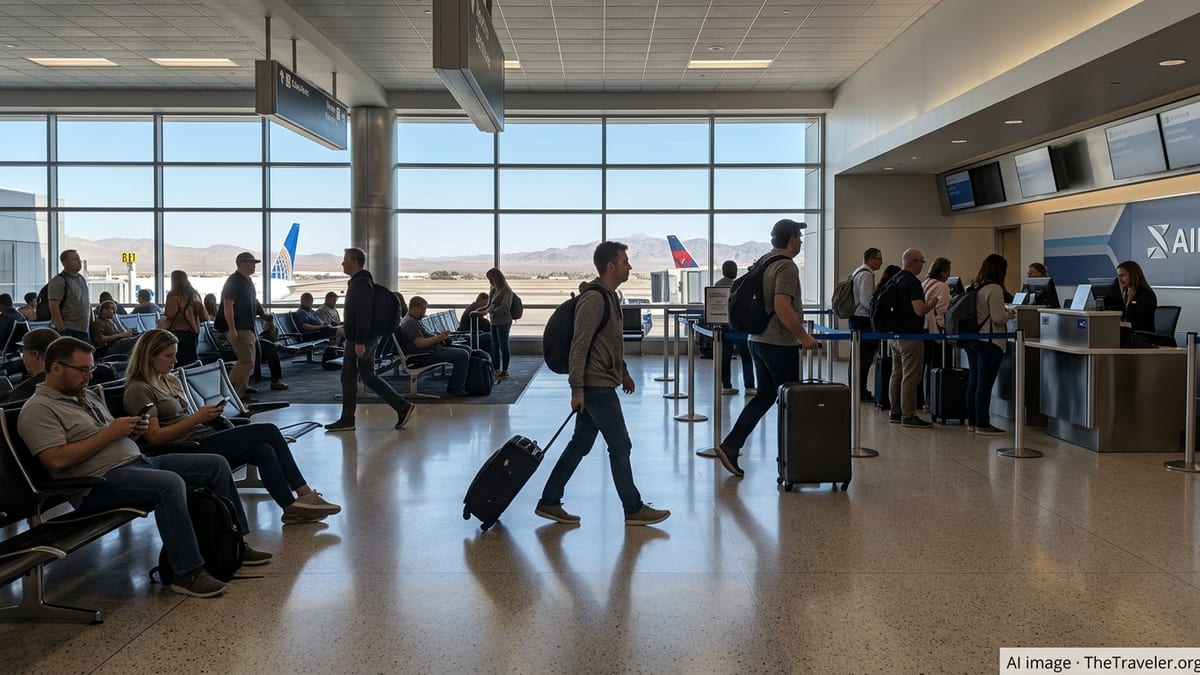
February Slowdown Follows Record-Breaking Years
The latest monthly traffic snapshot for Harry Reid International points to a clear comedown from the airport’s record-setting run in 2023 and 2024. Publicly available data from the Clark County Department of Aviation shows that after topping 58 million passengers in 2024, traffic eased in 2025 and has continued to lose momentum into early 2026.
February’s decline builds on a weaker January, when the airport handled just over 4 million passengers, down nearly 8 percent from January a year earlier. Reports indicate the pullback is broad-based, affecting both domestic and international segments following two years when Las Vegas outperformed many U.S. leisure markets.
The shift reflects a normalization in air travel after the post-pandemic surge, combined with softer tourism demand in Las Vegas itself. Recent coverage of the city’s visitor metrics points to cooler convention attendance, more cautious consumer spending and a drop in some key international source markets, all of which flow directly into airport traffic numbers.
Even with the slowdown, Harry Reid International remains one of the nation’s busiest hubs for origin-and-destination traffic. Airport statistics show that February’s passenger totals are still historically high compared with pre-pandemic years, underscoring how elevated the market became during the recent boom.
Domestic Airlines Split Between Cuts and Growth
Beneath the headline decline in total passengers, major U.S. carriers serving Las Vegas are moving in different directions. Capacity decisions, network reshaping and route-level performance have produced a patchwork of winners and losers on the February scoreboard.
Southwest Airlines, long the dominant carrier at Harry Reid International, has trimmed some frequencies and paused select routes in response to softer demand and aircraft delivery constraints. At the same time, publicly discussed schedule filings for later in 2026 show the airline planning new international services from Las Vegas, signaling that it still views the city as a key long-term growth market.
Legacy carriers are also recalibrating. Delta Air Lines has pared back certain West Coast connections involving Las Vegas, including reductions on the San Diego route highlighted by travelers tracking 2026 schedules. By contrast, United Airlines has previously emphasized expanded winter capacity to Las Vegas from several hubs, using larger aircraft on peak days to concentrate demand rather than sustaining year-round frequency growth.
Ultra-low-cost and leisure-focused airlines have been among the most sensitive to the cooling trend. Consulting analysis presented to local tourism officials in recent months highlighted reduced seat capacity into Las Vegas, tied in part to network cuts at carriers like Spirit and Frontier. That pullback is particularly visible in February, when leisure demand typically relies heavily on price-sensitive travelers.
International Markets and Canada Weigh on Totals
International traffic has been a notable weak spot in Las Vegas’ air service picture, and February’s numbers continue that pattern. While total international passengers through Harry Reid International remain above early-pandemic levels, they are down from the peaks seen in 2023 and 2024 and are underperforming domestic flows.
Reports focused on the Canadian market describe a pronounced drop in airline seats from Canadian cities into Las Vegas, resulting in the lowest capacity from Canada in roughly two decades. Analysts have connected the pullback to economic pressures on travelers, currency dynamics and changing perceptions about U.S. travel among Canadian visitors.
The impact shows up starkly in airport statistics, which track both scheduled seats and realized passenger counts. February’s international totals remain constrained by those capacity reductions, particularly on routes historically popular with winter visitors seeking Las Vegas’ milder weather and entertainment offerings.
Other long-haul international markets are more mixed. Aviation industry coverage notes that new services from European carriers scheduled to begin in 2026 could eventually offset some of the February declines if demand recovers, but for now those additions are overshadowed by cuts closer to home in North America.
Tourism Headwinds Ripple Through the Airport
Air traffic trends at Harry Reid International are closely tied to the fortunes of the Las Vegas tourism sector, and February’s decline in passengers is part of a broader slowdown in visitor activity. Recent data from local tourism authorities points to weaker midweek occupancy, softer convention calendars and reduced spending per visitor compared with the boom years immediately after the pandemic.
Local business coverage has spotlighted how fewer high-spending international and out-of-state visitors, including from Canada, are filtering through to hotels, restaurants and attractions. In turn, airlines have adjusted schedules to reflect the new reality, prioritizing routes and time periods where demand remains resilient and trimming capacity where it has softened.
Higher airfares relative to pre-pandemic norms are also influencing behavior. With inflation pressing household budgets, some would-be leisure travelers are driving from nearby states rather than flying, while others are shortening stays or opting for off-peak visits. February’s passenger counts capture these shifts as travelers react to price and value considerations.
Despite the headwinds, airport planners continue to emphasize long-term projects intended to support growth over the coming decades, including work tied to a proposed supplemental airport in Southern Nevada. Those efforts reflect confidence that the current slump is cyclical rather than structural, even if the near-term picture looks softer than in recent years.
What Travelers Can Expect in the Months Ahead
The February pullback in traffic, layered on top of a weak January, suggests that Las Vegas flyers will see a more fluid air service landscape throughout 2026. Schedules are likely to continue shifting as airlines test new routes, adjust capacity and respond to booking trends into the summer and fall.
For travelers, that means more frequent timetable updates and occasional reductions on secondary routes, alongside targeted growth in markets that continue to perform well. New international services planned for later in the year indicate that carriers still view Las Vegas as a powerful draw, but they are being more selective about where they deploy aircraft.
Industry observers note that special events, major conventions and new resort openings can still generate short-term spikes in demand that temporarily reverse the downward trend in passenger counts. However, absent a broader rebound in tourism or a shift in economic conditions, February’s numbers point to a steadier, more moderate phase of air travel to and from Las Vegas.
In practice, visitors booking flights into Harry Reid International may find a bit less choice on some nonstop routes than in the recent past, especially from smaller origin markets and from Canada. At the same time, competition among the largest carriers on core domestic routes should keep a solid baseline of options in place, even as overall airport traffic settles below its previous peaks.