

More news on this day
Travelers at Harry Reid International Airport in Las Vegas faced mounting frustration on Saturday as publicly available flight-tracking data showed at least 142 delays and 16 cancellations affecting Delta Air Lines, Southwest Airlines, American Airlines and Spirit Airlines, with disruptions rippling out to Los Angeles, New York and other major U.S. cities.
Get the latest news straight to your inbox!
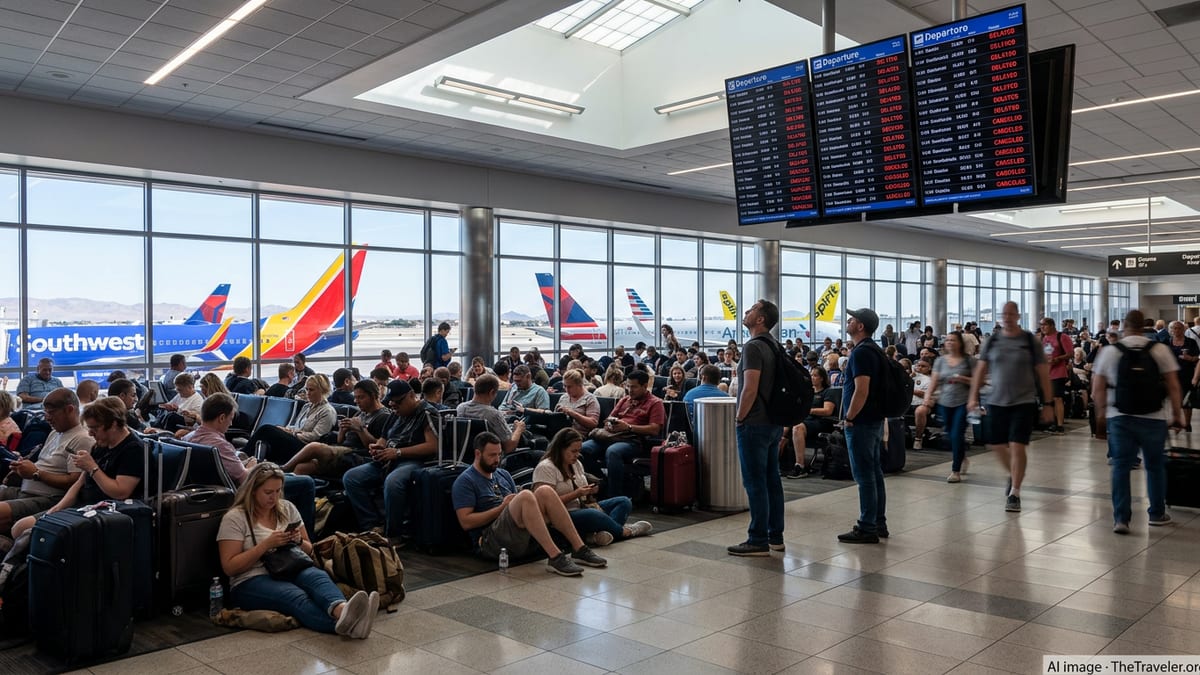
Las Vegas Ground Disruptions Spread Across Airline Networks
By early afternoon, flight-status boards at Harry Reid International were showing a growing list of delayed departures and late arrivals, particularly among the four largest carriers operating at the airport. Data from widely used tracking services indicated that dozens of flights were running behind schedule by 30 minutes or more, with some pushed back several hours.
The disruption in Las Vegas has had an outsized effect because the airport functions as a key leisure and convention gateway, with tightly timed turnarounds for aircraft serving destinations across the West and Midwest. When departures from Las Vegas slip, the same aircraft and crews often arrive late into their next cities, feeding a chain of additional delays.
Reports from passengers and publicly visible operations feeds show that the 16 cancellations were scattered through the day rather than concentrated in a single window, complicating rebooking efforts. With many weekend flights operating near capacity, travelers whose flights were scrapped faced limited options and longer waits for open seats.
Published airport statistics highlight how dependent Las Vegas has become on the affected carriers, with Southwest and Spirit in particular handling a significant share of domestic passenger volume. That concentration means operational issues for any one of these airlines can quickly reshape the overall departures and arrivals picture for the airport.
Impact on Los Angeles, New York and Other U.S. Hubs
The knock-on effects were felt far beyond Nevada. Flights scheduled between Las Vegas and Los Angeles, both at Los Angeles International and regional Southern California airports, experienced notable delays as aircraft waited for clearance to depart or arrived late from earlier segments. Passengers reported tight connections becoming unworkable as departure times slid.
On transcontinental routes linking Las Vegas with New York area airports, delays of an hour or more were common by mid-day, according to real-time tracking boards. Late departures from Las Vegas translated into arrivals creeping toward or past curfew-sensitive evening windows on the East Coast, increasing the risk of further schedule reshuffling.
Other cities including Phoenix, Denver, Dallas, Chicago and Seattle saw secondary disruptions as aircraft originally planned for Las Vegas rotations were reassigned or arrived late. In some cases, crews timed out under federal duty limits, forcing airlines to combine flights or cancel select segments to keep the broader schedule workable.
Travel analysts note that when a busy leisure market such as Las Vegas encounters operational strain, the effect can spread quickly to airports that already run near capacity, particularly at peak weekend travel times. The resulting congestion can take much of the day to unwind, even if conditions at the original trouble spot improve.
Delta, Southwest, American and Spirit Respond With Schedule Adjustments
Publicly available information from airline status tools and mobile apps showed each of the four carriers adjusting their operations in different ways in response to the disruptions at Harry Reid International. Some Delta and American flights appeared to hold longer on the ground to wait for connecting passengers or inbound aircraft, resulting in extended gate times but fewer outright cancellations.
Southwest and Spirit, which operate dense point-to-point networks into and out of Las Vegas, showed a higher number of short rolling delays as departure times were repeatedly pushed back in 15-to-30-minute increments. Travelers monitoring their flights in airline apps and third-party trackers described schedules that shifted multiple times before boarding began.
Industry coverage and prior operations data suggest that carriers sometimes opt for prolonged delays rather than cancellations to preserve aircraft positioning and reduce the complexity of reaccommodating passengers. However, from the traveler perspective, the distinction can be academic when delays stretch into several hours and disrupt hotel check-ins, event plans or onward connections.
Customer-facing tools displayed a mix of explanations, including air traffic flow constraints, crew availability and late-arriving aircraft. While the underlying causes varied by route and airline, the net result for many passengers at Harry Reid International and downline airports was the same: longer-than-expected waits in terminals and crowded gate areas.
Travelers Confront Long Waits and Limited Alternatives
Inside Las Vegas and other affected airports, passengers faced familiar scenes of families camped out on the floor, long lines at customer service counters and crowded seating near charging stations. With 142 flights delayed and a relatively small number formally canceled, many travelers remained in limbo, uncertain whether to stay at the gate or seek overnight accommodations.
In markets such as Los Angeles and New York, where multiple daily departures normally offer flexibility, published schedules showed fewer immediately available alternatives on certain routes once delays accumulated. Some travelers turned to same-day standby on different airlines, while others opted to push their trips to the following day to secure confirmed seats.
Travel forums and social media posts reflected a mix of frustration and resignation, with some passengers highlighting that delays have become an increasingly routine part of domestic air travel. Others focused on practical workarounds, such as tracking inbound aircraft, signing up for text alerts and proactively requesting rebooking when early signs of disruption appeared.
Consumer advocates frequently advise travelers facing widespread delays to monitor both airline apps and independent flight-tracking platforms, as discrepancies sometimes appear between the two. When disruptions are concentrated at a single airport like Las Vegas, they also recommend checking alternative routings that bypass the affected hub entirely, even if it means adding a connection.
What Today’s Disruptions Signal for Spring and Summer Travel
While Saturday’s operational issues at Harry Reid International are limited in scale compared with major nationwide meltdowns, the pattern of rolling delays, crew constraints and ripple effects into coastal hubs offers a glimpse of the pressures airlines may face heading into the busier spring and summer travel periods.
Recent traffic reports for Las Vegas show sustained passenger growth and heavy reliance on a handful of large domestic carriers, particularly for short-haul and medium-haul routes. As schedules tighten and aircraft utilization rises, relatively small disruptions can more easily cascade into multi-airport delays similar to those seen across Los Angeles, New York and other cities.
Industry observers note that weather remains a dominant driver of large-scale disruptions, but operational complexity at busy airports, including runway work, air traffic constraints and staffing challenges, can generate significant delays even on clear days. In such an environment, airports like Harry Reid, which serve as both destination and de facto connecting points, are especially vulnerable.
For travelers, today’s pattern of 142 delays and 16 cancellations serves as a reminder to build additional time into itineraries, favor morning departures when possible and keep contingency plans in mind for key trips. As airlines continue to refine their schedules and staffing for the high season, passengers are likely to remain on the front lines of any mismatch between demand and operational capacity.