

More news on this day
A woman’s arrest at Las Vegas’ Harry Reid International Airport after allegedly abandoning her dog at a JetBlue Airways ticket counter has thrust U.S. and Nevada service animal rules back into the spotlight, raising questions about how clearly airlines and airports communicate the line between true service animals and ordinary pets.
The February Incident That Sparked a National Conversation
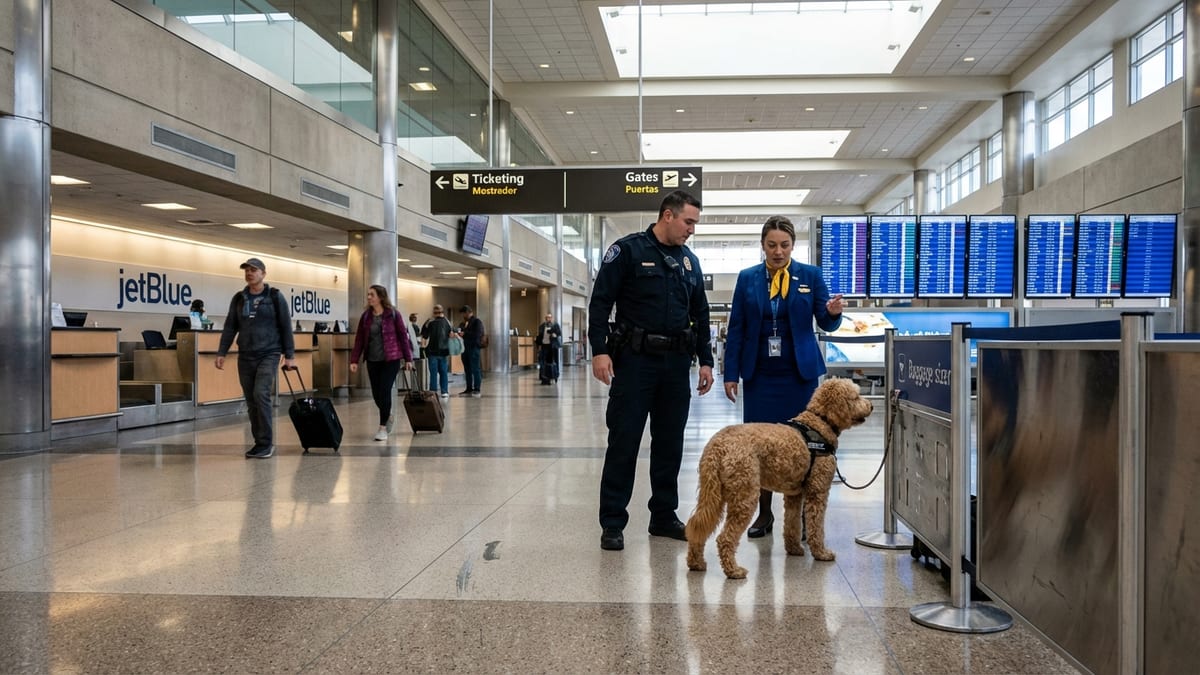
According to Las Vegas Metropolitan Police, the incident unfolded late on the night of February 2 at Terminal 3 of Harry Reid International Airport. A 26-year-old traveler arrived at the JetBlue ticket counter with a two-year-old goldendoodle and attempted to check in for her flight, telling staff she intended to fly with the dog as a service animal.
JetBlue staff informed the passenger that specific online documentation was required in advance for an animal to travel in the cabin as a service dog. When those forms were not completed, the airline declined to issue a boarding pass. Surveillance and body camera footage later released by police shows the woman speaking with agents, then tying the dog to a metal carry-on baggage sizer near the counter before walking away.
Officers were called after airport staff discovered the unattended dog and reported that the owner had proceeded toward the departure gates alone. Police located the woman at a gate in the D concourse and escorted her back toward the ticketing area. In a statement, investigators said she claimed the animal had a tracking device and would be able to find her, remarks that have since fueled public outrage on social media.
The woman was arrested on misdemeanor counts including animal abandonment and resisting arrest. Court records indicate additional allegations related to providing false information to an officer. The dog, quickly nicknamed Jet Blue by rescuers and airport workers, was taken into the care of local animal services and later placed with a rescue organization.
What Federal Law Actually Says About Service Animals on Planes
The case has drawn attention in part because it highlights common confusion about what qualifies as a service animal under federal rules and what passengers must do before arriving at the airport. In 2021, the U.S. Department of Transportation revised its regulations on animals in air travel, sharply narrowing the definition of service animals and ending the routine acceptance of emotional support animals in cabins.
Under these federal rules, a service animal on a commercial flight must be a dog that is individually trained to perform tasks or work for a person with a disability. Airlines are allowed to treat emotional support animals and other species as ordinary pets, meaning they can restrict where they travel, charge fees, or refuse them outright. Passengers who wish to fly with a service dog are generally required to complete standardized federal forms attesting to the dog’s training, health, and behavior.
Airlines such as JetBlue typically require that these forms be submitted electronically ahead of time, especially for longer flights or multi-segment itineraries. Carriers can also set cut-off times for documentation, and may deny boarding if the paperwork is incomplete or if staff observe behavior that suggests the animal has not been properly trained for public settings. Industry representatives argue that these measures balance disability access with safety and comfort for other travelers.
Advocates for passengers with disabilities say the collapse of the emotional support animal category was necessary after years of abuse by travelers seeking to bring pets on board without fees. However, they also warn that misunderstanding of the new rules can still put legitimate service dog teams in difficult situations, particularly when front-line staff are not consistently trained.
Nevada Law and Animal Welfare Concerns
Beyond air travel regulations, the Las Vegas case is now being cited in Nevada as a reminder of state laws on animal cruelty and abandonment. Nevada statutes make it a crime to intentionally desert an animal in a public place or otherwise deprive it of necessary care. Even when an animal is left in a climate-controlled terminal rather than outdoors, authorities can treat the act as abandonment if there is no plan for its immediate care and retrieval.
Local animal advocates say the images of the young goldendoodle tied to airport equipment have resonated with residents already sensitive to animal welfare issues. Nevada shelters and rescues regularly warn that dogs left in stressful environments can develop anxiety or behavioral challenges, even when they avoid physical injury. In this case, the dog was described by rescuers as surprisingly affectionate and well socialized despite the ordeal.
The incident is also amplifying calls for clearer messaging inside Nevada’s busiest airport. Advocates argue that conspicuous signage about both state cruelty laws and available pet resources, such as relief areas and contact numbers for assistance, might deter similar behavior and remind travelers that alternatives exist if their plans change.
For prosecutors and law enforcement, the case offers an opportunity to underscore that animal abandonment at a transportation hub is not a minor matter. Even misdemeanor charges can carry fines, mandated counseling, community service, or restrictions on future pet ownership, outcomes that authorities hope will serve as a deterrent.
How JetBlue and Airports Handle Service Animal Documentation
The events at Harry Reid International have also turned a spotlight on how airlines, including JetBlue, manage the practicalities of service animal documentation on busy concourses. Carriers have built online portals that ask customers to submit federal service animal forms before travel, with questions about the dog’s training, behavior, and health certification from a veterinarian.
Airline employees at check-in counters are trained to confirm that these forms have been accepted and, if necessary, ask follow-up questions if something appears inconsistent. In some cases, staff may also assess whether the dog is calm, housebroken, and able to remain under the handler’s control in crowded spaces. Failure to meet these standards can lead to denial of boarding, though passengers are generally offered options such as rebooking or traveling without the animal under standard pet policies if space allows.
At large airports like Harry Reid International, coordination between airline staff, airport operations, and law enforcement is central to handling incidents involving animals. When a passenger leaves a dog unattended, agents can alert airport dispatch, which in turn notifies police assigned to the terminal. Security footage, such as the images released in this case, often plays a key role in documenting what happened for investigators and courts.
Some aviation analysts say the Las Vegas incident may motivate airlines to revisit their script for conversations at the counter, particularly when a customer is being denied boarding for documentation reasons. They suggest that clearer verbal explanations, written handouts, and on-the-spot reminders of local animal laws could help de-escalate situations before they turn into criminal matters.
Service Animals, Emotional Support Pets, and Traveler Confusion
For many travelers, the most confusing part of the current regulatory landscape is the distinction between a task-trained service dog and an emotional support animal. Under federal air travel rules, emotional support animals are no longer afforded the same access rights they once had, yet a number of online vendors still advertise quick paperwork or vests that can make a pet appear more official than it is.
Disability rights advocates say that authentic service dog users can be unfairly scrutinized when news stories focus on animal incidents inside airports. They emphasize that many service dog teams train for months or years to work safely in crowded, high-stress environments like terminals and aircraft cabins. When animals that are not properly trained are passed off as service dogs, they can undermine public understanding and set the stage for tougher restrictions that ultimately harm people who rely on legitimate service animals.
The Las Vegas case has therefore become part of a wider conversation about traveler education. Airlines, airport authorities, and advocacy organizations are being urged to use websites, booking confirmations, and terminal signage to explain the current rules in plain language, including the fact that emotional support animals are treated as pets, subject to carrier-specific fees and size limits.
Travel advisors note that many misunderstandings could be avoided if passengers contacted their airline well before departure to verify what documentation is needed and how their animal will be classified. For people with disabilities, that often includes confirming seating arrangements, pre-boarding procedures, and any restrictions on where a larger dog can safely lie during a flight.
Harry Reid International’s Role and Facilities for Pets
Harry Reid International Airport, one of the busiest gateways in the United States, has invested in dedicated pet and service animal relief areas across its terminals in recent years. Airport guidance highlights indoor post-security spaces and outdoor enclosed locations where handlers can take their animals to relieve themselves before or between flights.
Passenger services staff and airline representatives can direct travelers to these areas or arrange assistance for those with mobility challenges. The airport also provides contact information for an ADA and Section 504 coordinator, giving passengers with disabilities a clear channel for questions or concerns about accessibility during their journey.
Following the February incident, observers say the airport’s pet infrastructure is not the core issue so much as the interaction at the point where rules meet real-world stress. A late-night check-in, tight schedules, and a traveler facing denial of boarding can create a volatile mix, particularly when the person involved may not fully understand the consequences of leaving an animal behind.
Airport officials, while generally deferring to airlines on documentation requirements, are likely to review internal protocols to ensure frontline staff know when and how to escalate animal welfare concerns. The rapid response by police and rescuers in this case is being cited as an example of the system working after the fact, even as questions remain about how to prevent similar scenes from unfolding.
Rescue, Public Reaction, and the Dog’s New Future
Amid the legal and regulatory debates, the fate of the dog at the center of the story has captured significant public attention. After the owner failed to reclaim the animal during a mandatory holding period, Jet Blue was transferred to a Las Vegas rescue group specializing in retrievers and similar breeds. Volunteers report that the dog has been neutered, vaccinated, and placed in foster care while a permanent home is identified.
Staff at the rescue describe Jet Blue as outgoing and gentle, greeting visitors with trust despite having been left alone in a busy terminal. They say the widespread media coverage has resulted in a surge of adoption inquiries, along with donations aimed at supporting other animals in the group’s care. The organization has publicly promised that the goldendoodle will never again face the risk of abandonment.
Social media reactions to the airport footage and police body camera clips have ranged from anger to disbelief, with many commenters expressing sympathy for the dog and frustration at what they see as a cavalier attitude toward a living animal. Others have used the moment to call for tougher penalties for animal abandonment or stronger screening of passengers who claim to be traveling with service dogs.
For animal welfare advocates, Jet Blue’s story is a reminder that rescue networks, airline staff, law enforcement, and passengers themselves all play a role in protecting animals in transit. They argue that while one high-profile case cannot represent the entire air travel system, it can serve as a powerful teaching moment for future travelers.
What Travelers Need to Know Before Flying With a Dog
In the wake of the Las Vegas arrest, both national advocacy organizations and local officials are reiterating a few basic guidelines for anyone considering flying with a dog. First, passengers should determine whether their animal is a trained service dog, an emotional support animal, or a pet. Only task-trained service dogs enjoy broad federal protections in the aircraft cabin, and airlines will expect documentation in line with those rules.
Second, travelers are being advised to review their airline’s animal policies at the time of booking, not at the airport. That means completing required forms online, confirming any advance notice deadlines, and speaking directly with the carrier if there are questions about size, breed, or the nature of a disability. Some airlines limit the number of in-cabin pets on each flight, and space in climate-controlled cargo holds may be restricted at certain times of year.
Finally, officials stress that if plans fall apart at the last minute, abandoning an animal is never an acceptable solution. Options can include rebooking for another day, arranging for a trusted person to retrieve the animal from the airport, or working with local boarding facilities or rescues. While those choices may be inconvenient or costly, they keep animals safe and owners on the right side of the law.
As the Nevada case moves through the courts, the images from Harry Reid International Airport continue to circulate, underscoring how quickly a misunderstanding at a ticket counter can escalate into criminal charges. For travelers, the episode is a stark reminder that understanding service animal rules is as essential as carrying a passport or boarding pass.