

More news on this day
Las Vegas travelers faced major disruption this week as Harry Reid International Airport, designated KLAS, saw dozens of arrivals and departures canceled or severely delayed, snarling connections across the United States and leaving passengers furious over missed trips and uncertain rebooking options.
Get the latest news straight to your inbox!
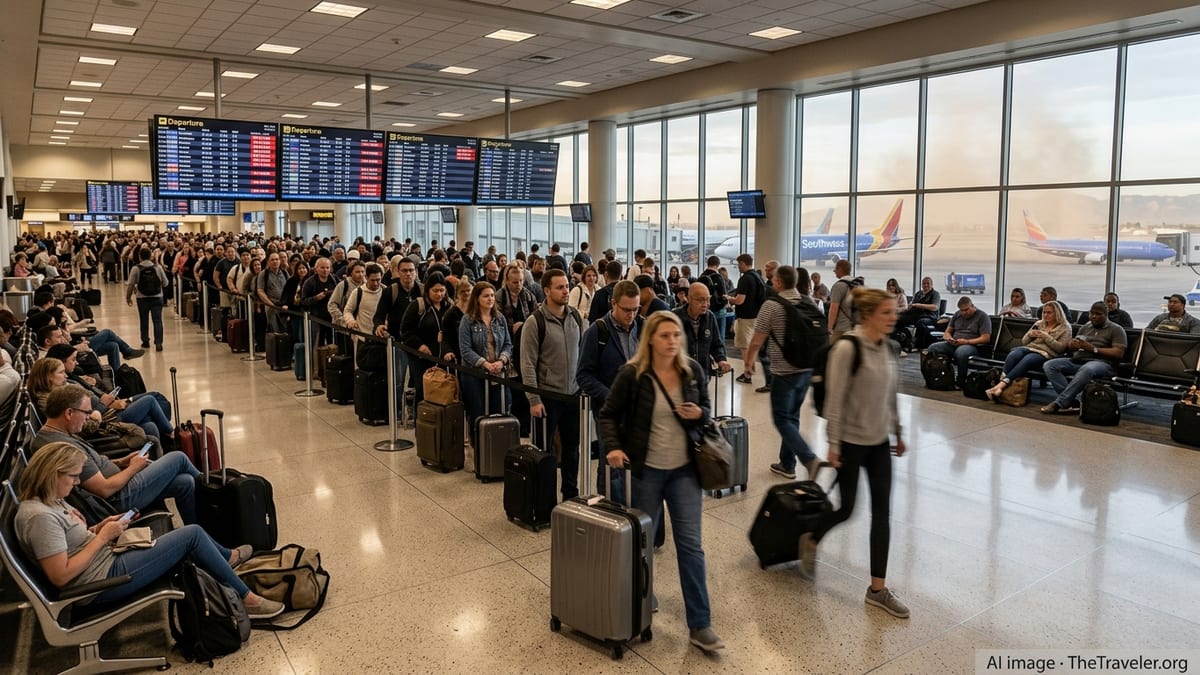
Dozens of Flights Scrubbed as Operations Ripple Nationwide
Publicly available flight-tracking data and local media coverage indicate that Las Vegas’ primary airport experienced a sharp spike in cancellations and extended delays over several days, with dozens of mainline and regional flights removed from the schedule at short notice. The disruption affected both inbound and outbound routes, particularly heavily traveled connections to major hubs in California, the Mountain West and the Midwest.
The timing of the disruption coincided with a broader North American storm system that has upended air travel nationwide. Recent weather analysis shows that the sprawling March storm has triggered thousands of cancellations and delays across multiple hubs, creating a cascading effect that reached Las Vegas even during periods of clear local weather. Airlines responded with rolling schedule changes, resulting in clusters of canceled flights at KLAS throughout the day.
As aircraft and crews failed to arrive on time, carriers began consolidating flights and trimming frequencies, leaving some departure boards showing multiple consecutive cancellations on the same route. Travelers reported abruptly updated status boards that shifted from “on time” to “canceled” within minutes, often with limited immediate rebooking options.
The operational strain was compounded by aircraft repositioning challenges. When large storms hit the central and eastern United States, Las Vegas, a key leisure and convention destination, often sees equipment shortages as airlines prioritize restoring connectivity at their primary hubs. This pattern appeared to repeat during the latest disruption, with aircraft and crews stranded in other regions, further limiting options for KLAS travelers.
Travelers Stranded, Connections Lost and Vacations Cut Short
The wave of cancellations quickly translated into crowded concourses and long customer-service lines. Social media posts from passengers at Harry Reid International described packed gate areas, improvised sleeping arrangements near charging stations and mounting frustration as departure times were repeatedly pushed back before being canceled outright.
Many travelers had booked Las Vegas as a key connecting point or as the outbound leg of time-sensitive trips, including cruises, weddings and business meetings. When their early-morning or late-night flights were canceled, they faced the prospect of missing cruise departures, corporate events or onward international flights. With alternative flights selling out quickly, same-day or even next-day rebooking was not guaranteed.
Families and group travelers appeared particularly vulnerable. Reports described groups being split across multiple replacement flights departing hours or even a full day apart, increasing both stress and out-of-pocket expenses for meals and overnight stays. Some travelers chose to abandon air rebooking altogether and instead sought one-way rental cars to drive to regional hubs such as Los Angeles or Phoenix in hopes of salvaging their itineraries.
For visitors ending vacations in Las Vegas, the disruptions meant unexpected extra hotel nights and rearranged ground transportation. While some resorts offered distressed rates, others were near capacity due to ongoing conventions and events, adding another layer of complexity for stranded visitors trying to secure last-minute accommodation.
Harry Reid International Struggles With Heavy Volume and Weather Fallout
Harry Reid International is one of the busiest airports in the western United States and regularly manages dense banks of departures in the morning and late afternoon. Aviation data and previous incident summaries show that when national weather or system issues hit, Las Vegas can quickly become congested, with gate space, baggage handling and taxiway capacity all under pressure.
In the latest episode, the airport’s role as a major leisure and conference gateway amplified the impact. Flights with high leisure demand tend to operate with fewer spare seats, leaving less flexibility when cancellations require mass reaccommodation of passengers. Once the initial wave of flights was removed from the schedule, subsequent services also departed nearly full, limiting options for standbys and same-day rebookings.
Operationally, even when Las Vegas itself is not experiencing severe weather, national air traffic management decisions can slow or halt flights into and out of KLAS. Ground delay programs, reroutes and flow restrictions introduced elsewhere in the network can leave aircraft waiting for new departure slots, which in turn increases the risk that crews will exceed their regulated duty limits before completing scheduled turns.
Airport performance during earlier high-impact events has shown that these systemic constraints can quickly lead to a backlog of flights, crowded aprons and late-night banks of delayed departures. The most recent disruptions followed a similar pattern, with some passengers reporting late-night delays that ultimately turned into overnight cancellations.
Airlines, Policies and What Travelers Can Do Now
Publicly available advisories from multiple carriers show that airlines activated weather-related travel waivers for large parts of the United States as the March storm unfolded. These waivers generally allow affected passengers to change travel dates without standard change fees, though fare differences and specific eligibility windows vary by carrier and routing.
In practice, passengers at KLAS encountered the usual constraints that surface during widespread disruptions. With limited spare seats in subsequent days, free changes did not always translate into practical same-week alternatives, especially for travelers with fixed event dates or cruise departures. Some travelers also reported confusion about their eligibility for hotel or meal support, as airline obligations differ depending on whether the disruption is classified as within the carrier’s control or related to weather.
Travel advisers note that during major network events, travelers may benefit from proactively monitoring airline apps, setting up push notifications and checking flight status before heading to the airport. Same-day alternatives, including connections through secondary hubs or flights at inconvenient hours, often disappear quickly once a cancellation wave begins.
For those still scheduled to fly through Las Vegas in the coming days, industry guidance suggests arriving at the airport earlier than usual, preparing for long lines at check-in and security during peak periods, and having contingency plans for lodging and ground transport if overnight disruption becomes unavoidable.
Lingering Impact on Las Vegas Tourism and Future Trips
While the immediate focus for travelers is simply getting to or from Las Vegas, the broader implications for the city’s tourism sector are significant. Large conventions, weekend getaways and entertainment events are highly sensitive to air connectivity. When dozens of flights are canceled in a short window, thousands of potential visitors may arrive late, spend fewer nights in hotels or miss events entirely.
Tourism analysts monitoring recent storms and disruptions have noted that even short-lived aviation problems can ripple through local economies. Reduced gaming revenue, lower restaurant bookings and missed show attendance are common side effects when visitors lose a night or more of their planned stays. In the latest Las Vegas disruption, compressed trip lengths and missed first nights are likely to show up in tourism statistics for March.
For future travelers planning trips to Las Vegas, recent events underline the value of building buffer time into itineraries, especially during months when major winter and spring storms are more frequent across the country. Booking daytime flights instead of very late-night departures, choosing routings with multiple daily frequencies and considering travel insurance that covers weather disruptions can all help reduce the risk of being stranded.
As aviation operations gradually normalize after the latest round of cancellations, Las Vegas will continue to rely on the resilience of its air links to sustain convention traffic and leisure demand. For now, travelers passing through KLAS are reminded that even a blue-sky day in the desert can be overshadowed by network-wide disruption far beyond the city’s skyline.