

More news on this day
Dozens of flights at Las Vegas’ Harry Reid International Airport were canceled or severely delayed this week, leaving frustrated travelers stranded in terminals, missing connections, and scrambling to rebook as disruption rippled across the national air network.
Get the latest news straight to your inbox!
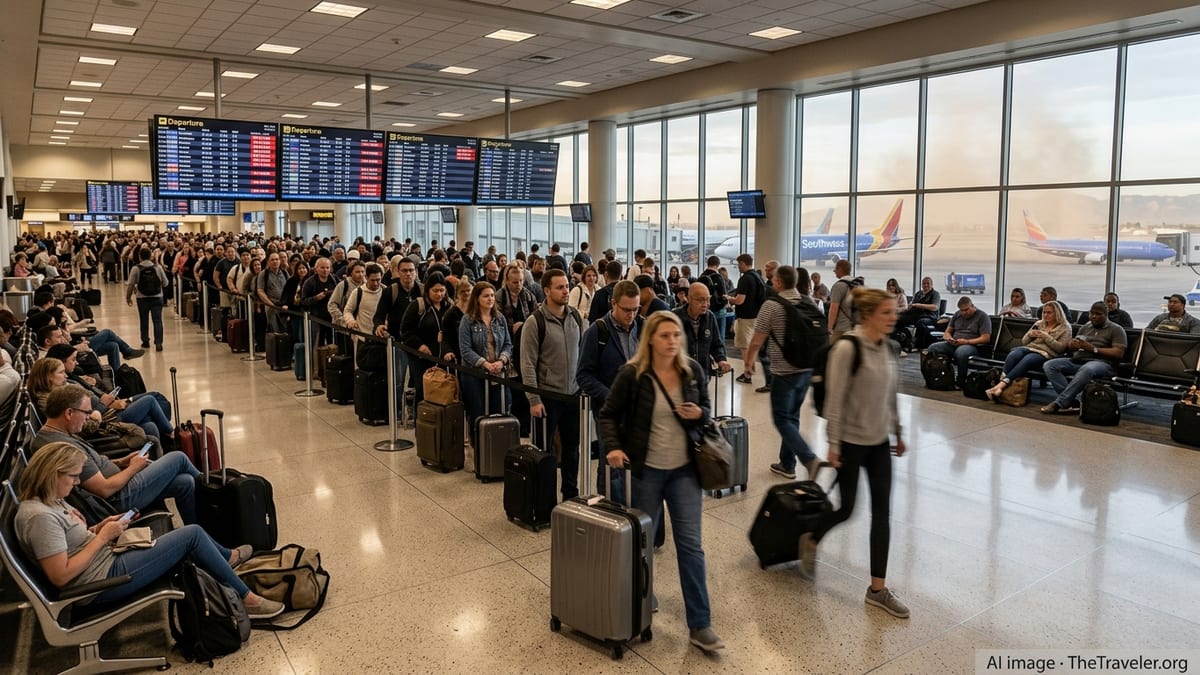
Weather Turmoil Triggers Sudden Operational Meltdown
Publicly available flight-tracking data and regional weather reports indicate that a powerful storm system affecting large parts of the United States contributed to significant disruption at Las Vegas’ Harry Reid International Airport, known by its ICAO code KLAS. Strong winds and rapidly changing visibility in the Las Vegas Valley forced air-traffic managers to slow arrivals and limit departures, quickly backing up operations at one of the country’s busiest leisure gateways.
Reports from local media in Nevada describe periods of gusty crosswinds and low ceilings around the airport, conditions that can compel controllers to reduce runway throughput for safety reasons. When the number of aircraft able to land and depart falls sharply over a short window, airlines begin canceling flights outright rather than allowing hours-long ground delays to accumulate.
National aviation coverage shows that the same broader system has also upended schedules across multiple hubs, with thousands of flights affected in recent days. In that context, the disruptions in Las Vegas are one piece of a much larger weather-driven shock to the U.S. air travel network, but the concentration of tourist traffic through KLAS has amplified the impact on leisure travelers and convention attendees.
Dozens of Major Flights Scrapped as Schedules Unravel
According to widely referenced flight-status aggregators, dozens of departures and arrivals at KLAS were canceled across several major domestic carriers as the operational day progressed. What began as scattered delays in the early hours evolved into waves of cancellations once it became clear that weather and airspace constraints would persist.
Travel industry analysts note that when an airport such as Las Vegas experiences extended arrival spacing or temporary ground holds, airlines must make rapid decisions about which routes to protect and which to trim. High-frequency shuttles to nearby hubs may be favored, while point-to-point routes or late-evening departures are often cut first. That triage appeared to play out in Las Vegas, where reports indicate that both short-haul regional flights and long-haul services to major coastal markets were affected.
The impact did not stop at Nevada. Every KLAS cancellation represents a flight that never reaches its next city, creating aircraft and crew imbalances that can echo into the next day’s schedule. Aviation data specialists emphasize that these knock-on effects are particularly acute during already busy travel periods, when spare aircraft and standby crews are in short supply.
Stranded Passengers Face Lost Connections and Overnight Delays
Travelers passing through Las Vegas reported long lines at check-in counters and customer service desks, with many passengers seeking rebooking after missed connections. Accounts shared across social media platforms describe families sleeping on the floor near departure gates, travelers waiting hours to reclaim checked baggage from canceled flights, and confusion about when replacement services might depart.
Passengers on complex itineraries, including those connecting in Las Vegas on their way to international flights out of other hubs, appear to have been among the hardest hit. When a KLAS departure is canceled, those travelers often lose onward segments as well, prompting a full rework of their trip. Consumer advocates point out that, in such situations, travelers may need to negotiate with multiple airlines and third-party booking sites, adding to the stress and delay.
Some visitors to Las Vegas opted to abandon air travel altogether, turning to one-way car rentals or intercity buses to reach nearby cities such as Los Angeles or Phoenix where flight options remained more stable. Others extended hotel stays on the Strip or near the airport, pushing up last-minute room demand in an already tight market.
Airlines Under Scrutiny for Communication and Recovery Efforts
As the disruption unfolded, attention increasingly shifted from the weather itself to how airlines handled rebooking, compensation, and passenger communication. Consumer-rights commentators and travel bloggers tracking the situation noted inconsistencies in how carriers applied their own policies, with some travelers reporting proactive text alerts and no-fee changes, while others described surprise cancellations and limited guidance.
Publicly accessible airline notices framed the schedule cuts as a necessary response to factors beyond carrier control, including air-traffic management initiatives and safety constraints. Even so, passenger reaction online has been sharply critical, particularly where travelers said they were not informed of cancellations until after arriving at the airport or waiting at the gate.
Industry observers also highlighted the strain on airline call centers and digital platforms during the Las Vegas disruption. High call volumes led to extended hold times, and popular rebooking tools frequently showed limited availability, reflecting how quickly spare seats evaporate when multiple flights from a single hub or focus city are withdrawn.
Questions Raised Over Airport and Network Resilience
The latest wave of cancellations at KLAS has renewed debate over how well U.S. airports and airlines are equipped to cope with increasingly volatile weather patterns. Aviation experts quoted in national coverage argue that while safety-focused ground stops and flow restrictions are essential, the scale of recent disruptions underscores the vulnerability of tightly scheduled networks.
Las Vegas occupies a unique position in that network. It is both a major origin-and-destination market for vacationers and convention travelers and an important spoke in several airlines’ route maps. When operations there seize up, thousands of visitors can find themselves marooned far from home, often without the fallback options available at larger connecting hubs.
Travel analysts suggest that in the wake of this latest disruption, more passengers may consider building extra buffer time into itineraries involving Las Vegas, especially during seasons prone to high winds or severe storms across the West. Flexible booking options, travel insurance with robust trip-interruption coverage, and careful attention to real-time airline alerts are likely to remain key tools for travelers hoping to avoid the worst effects of sudden airport meltdowns.