

More news on this day
Hundreds of travelers were left waiting in terminals at Harry Reid International Airport in Las Vegas on Monday as publicly available flight-tracking data showed roughly 180 delays and at least seven cancellations, disrupting operations for major carriers and severing key links to cities including New York, Chicago and Orlando.
Get the latest news straight to your inbox!
Widespread Disruptions Across Major U.S. Routes
Published data from aviation tracking services on March 23 indicated that the spike in disruption at Harry Reid International affected a broad mix of domestic routes, with particular pressure on departures and arrivals connecting Las Vegas to large population centers in the Northeast and Midwest. Flights to and from New York area airports, Chicago and Orlando experienced some of the heaviest knock-on effects, with schedules sliding by hours as aircraft and crews fell out of position.
Carriers most visibly affected included Southwest Airlines, Delta Air Lines and United Airlines, all of which operate dense point to point and hub connections through Las Vegas. Additional delays were recorded among other U.S. carriers serving the Nevada gateway, compounding congestion on departure boards and making it more difficult for passengers to rebook to later services.
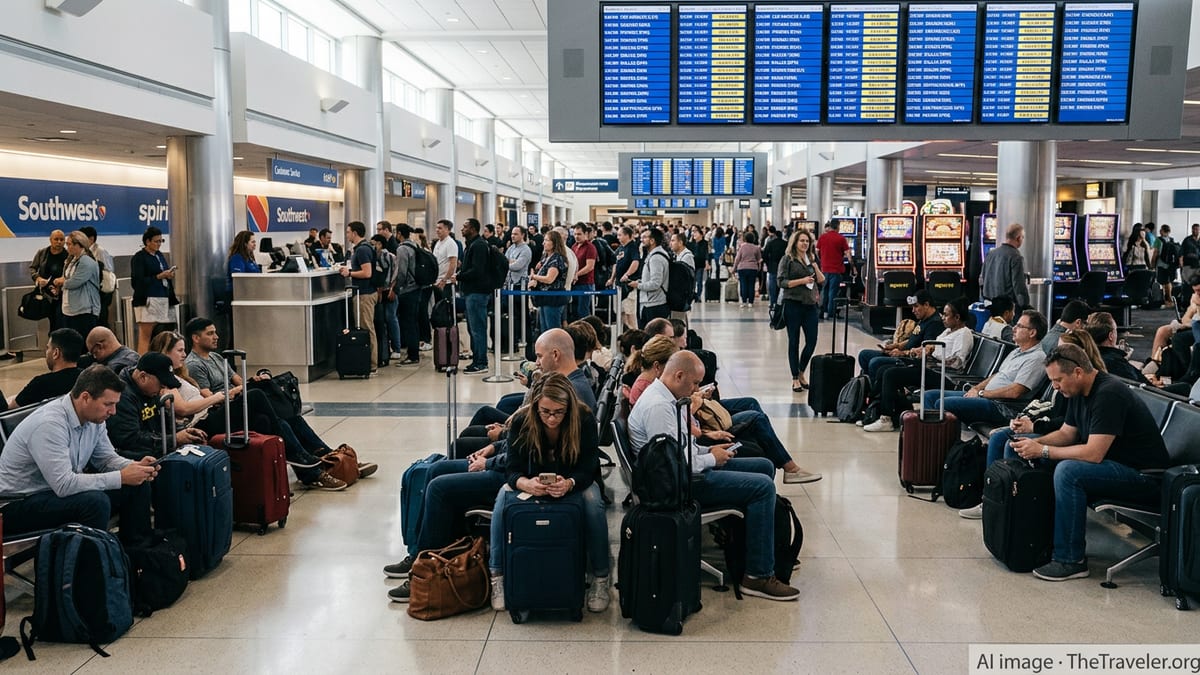
Reports from passenger forums and social media showed images of crowded gate areas and long queuing lines at customer service desks as travelers tried to secure alternative itineraries. Many described missed connections at onward hubs and unexpected overnight stays, illustrating how even a relatively modest number of outright cancellations can translate into far wider disruption across the network.
The timing of the operational problems, arriving during a busy spring travel period and overlapping with continued weather related turbulence across other parts of the country, heightened the impact on those attempting to move between leisure destinations and major business centers.
Operational Strain at a Growing Desert Hub
Harry Reid International has become one of the United States’ busiest passenger gateways, handling millions of travelers each month and functioning as both a tourism access point for the Las Vegas Strip and a critical regional hub for residents of southern Nevada. Recent airport traffic reports show volumes that remain near or above pre pandemic levels, reflecting the city’s enduring pull as a convention and entertainment destination.
That growth means even short lived disruptions can quickly translate into gate and runway congestion. When aircraft are held on the ground or slowed on approach, later flights must be resequenced, with crews and aircraft rotating out of their planned patterns. Publicly available contingency planning documents for the airport highlight how delays in one segment of the system can cascade into others, particularly during peak travel hours.
The latest wave of delays and cancellations followed a string of recent weather and air traffic related events that have periodically slowed operations in Las Vegas. Earlier high wind advisories over the Mojave Desert have, at times, triggered ground delay programs, temporarily restricting inbound traffic and forcing airlines to stack flights or revise departure times from other cities.
While Monday’s disruption at Harry Reid was not on the scale of major national meltdowns seen in previous years, the impact on several hundred passengers underscored the sensitivity of modern airline schedules to even localized strains at a busy hub.
Passenger Experience: Long Waits, Missed Plans and Limited Options
For travelers already inside the terminal, the immediate effect of the delays was an extended wait. Accounts shared via travel message boards described passengers camped out near power outlets and clustered in food courts, monitoring departure screens as departure times repeatedly updated by increments of 30 minutes or more.
With at least seven flights cancelled outright, affected customers faced the additional challenge of finding available seats on already crowded services later in the day or on subsequent dates. During popular travel periods, spare capacity can be limited, making same day rebooking difficult and forcing some passengers to accept itineraries that connect through alternate hubs far from their original plans.
The disruption was particularly frustrating for travelers bound for events and time specific commitments in cities such as New York and Chicago, where missed evening arrivals can translate into lost workdays, forfeited hotel nights or extra ground transport costs. Families returning from Las Vegas vacations also reported concerns about school and work schedules being thrown off by overnight delays.
Consumer advocates frequently point to such episodes as reminders of the importance of flexible planning, travel insurance and awareness of passenger rights, especially when itineraries depend on tight same day connections or involve travel during seasons that are prone to weather instability across multiple regions.
Ripple Effects on Airline Networks and Regional Travel
Although the headline numbers at Harry Reid centered on approximately 180 delayed and seven cancelled flights, the broader effect extended across airline systems as carriers attempted to reposition aircraft and crews. Flights outbound from cities such as New York, Chicago and Orlando toward Las Vegas often feed aircraft that then continue on to secondary destinations, meaning an initial delay in Nevada can reverberate into late arrivals and departures several legs away.
For Southwest, Delta and United, all of which rely on efficient aircraft utilization, hours lost to weather or traffic management constraints in one location can strain crew schedules and maintenance windows at others. According to performance data released after previous nationwide disruptions, carriers typically require at least a full day of normal operations to fully recover from a bout of widespread delays, even when cancellation numbers remain relatively contained.
The disruptions at Las Vegas also landed at a time when airlines across the United States have been recalibrating schedules in response to changing demand patterns, infrastructure constraints and ongoing staffing challenges in some operational roles. Industry observers note that thinner buffers in timetables and tight aircraft rotation plans can make systems more vulnerable to surprise bottlenecks at key nodes like Harry Reid.
Regional tourism officials monitor such incidents closely, as flight reliability is a critical factor in encouraging repeat visitation and maintaining confidence among meeting and convention planners who depend on predictable air access for large groups.
Advice for Travelers Using Harry Reid in the Coming Days
Travel industry analysts recommend that passengers scheduled to fly through Las Vegas in the near term monitor their flight status frequently, particularly in the 24 hours before departure. Airline mobile applications and airport information feeds typically provide the earliest indication of rolling delays as carriers work through the backlog created by an earlier disruption.
Given the recent strain, many commentators advise adding extra time for connections at Harry Reid, especially for travelers linking from shorter domestic flights onto longer haul services, and for those unfamiliar with the layout of the terminals. Arriving at the airport earlier than usual can also help mitigate any unexpected congestion at check in or security during peak periods.
Travel planners further suggest that passengers build contingency options into their itineraries where possible, such as flexible hotel bookings and awareness of alternative routing through other hubs if schedules begin to slip. Maintaining digital copies of boarding passes, receipts and reservation details can assist travelers if they need to seek compensation or reimbursement later under applicable airline policies.
While Monday’s disruption is expected to ease as airlines gradually reset their operations, the episode at Harry Reid International highlights the continuing fragility of busy air travel corridors in a period marked by volatile weather patterns, packed schedules and sustained demand for flights into and out of Las Vegas.