

More news on this day
Hundreds of travelers were left stranded at Harry Reid International Airport in Las Vegas today as at least 124 flights were delayed and seven were canceled, with disruptions reported across major hubs including New York and Chicago.
Get the latest news straight to your inbox!
Delays Mount Across Major U.S. Carriers
Publicly available flight-tracking data for Harry Reid International Airport show that a combination of delayed and canceled services affected departures and arrivals throughout the day, with Southwest Airlines, Delta Air Lines, United Airlines and other major carriers among those experiencing significant schedule disruptions. The imbalance between delayed and canceled flights left large numbers of passengers waiting for aircraft, crews and updated departure times rather than receiving outright cancellations.
Reports from airline status boards indicate that, at one point, more than one hundred flights linked to Las Vegas were operating behind schedule. While only a small number were formally canceled, the knock-on effect forced many travelers into missed connections and lengthy rebooking processes. Passengers describing their experience online referred to extended waits at gates and crowded seating areas as they monitored rolling time changes.
Data trends in recent airport traffic reports for Harry Reid International show that Southwest, Delta and United rank among the busiest operators at the Las Vegas hub. With these airlines carrying a substantial share of domestic traffic into and out of the city, even a relatively modest rate of disruption can quickly translate into hundreds of affected travelers when schedules slip over the course of a single busy travel day.
Ripple Effects Felt In New York, Chicago And Other Hubs
The impact of the Las Vegas disruptions extended well beyond Nevada. According to live route maps and carrier status pages, flights linking Harry Reid International with major hubs such as New York and Chicago were among those running significantly late. That pattern contributed to further delays for passengers attempting to connect onward to smaller regional destinations.
In the New York area, delays on services between Las Vegas and airports serving the region added pressure to already congested evening schedules. Travelers arriving from Nevada faced reduced options for same-day onward connections, increasing reliance on standby lists and overnight accommodation. Some passengers described online how even relatively short initial delays out of Las Vegas cascaded into missed red-eye flights and lost workdays on the East Coast.
Chicago, another key connecting point for both United and Southwest networks, also experienced strain as late inbound flights from Las Vegas disrupted carefully timed banked departures. Aircraft and crews arriving behind schedule forced airlines to adjust departure times for subsequent legs, affecting travelers who had no direct link to Las Vegas but whose itineraries were tied to the same planes and flight crews.
Weather, Congestion And System Strain Form A Familiar Pattern
While specific causes vary by flight, publicly accessible aviation data and recent federal analyses highlight a recurring mix of factors behind large-scale delay days in the United States. Weather patterns over key hubs, air traffic control constraints and high airport utilization are frequently cited contributors, especially during weekends, holidays and major events that draw visitors to Las Vegas.
Government transportation reviews published over the past two years point to a broader national trend of frequent, large-scale disruptions that can strand passengers even when formal cancellation rates appear modest. Those reports note that when storms, low visibility or operational bottlenecks hit a major hub, airlines often struggle to reposition aircraft and crews quickly enough to prevent delays from spreading across their networks.
Harry Reid International, which routinely handles millions of passengers each month on domestic routes alone, is particularly sensitive to these strains. When key carriers experience a cluster of delayed flights at Las Vegas, the high volume of origin-and-destination traffic combines with connecting passengers to rapidly crowd departure areas, customer service counters and baggage claim halls.
Travelers Confront Long Waits, Limited Alternatives
As delays built through the day, travelers reported long lines at rebooking desks and customer service counters in the Harry Reid International terminal complex. Some passengers described turning to mobile apps and airline websites to search for alternatives after learning that same-day rebooking options were scarce or required extensive detours through multiple hubs.
In addition to extended time in the terminal, stranded travelers faced challenges securing nearby hotel rooms at short notice. With Las Vegas regularly hosting large conventions, entertainment events and weekend crowds, sudden spikes in stranded passengers can quickly tighten same-night accommodation availability and drive up last-minute prices.
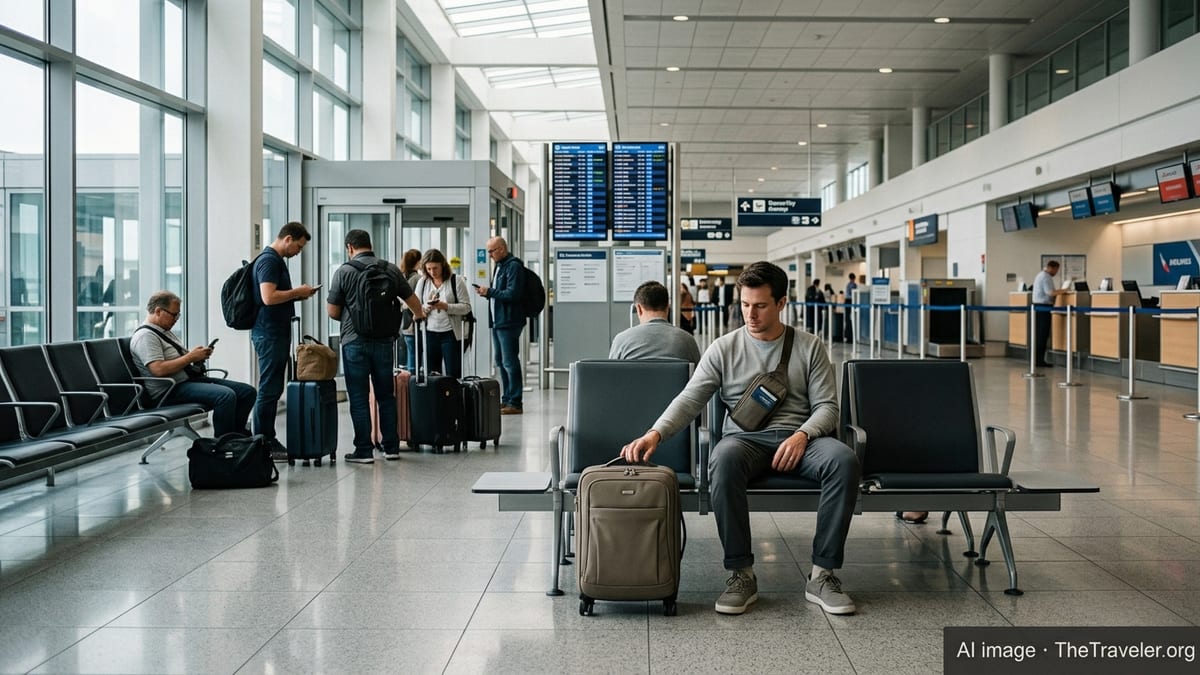
Social media posts from the airport showed crowded seating areas and passengers attempting to rest in gate zones while waiting for updated departure information. Travelers mentioned uncertainty over when aircraft would arrive from other cities and expressed frustration at rolling departure estimates that shifted in 15- to 30-minute increments for several hours.
What Today’s Disruptions Mean For Upcoming Travel
Today’s situation at Harry Reid International fits into a broader pattern that aviation analysts and consumer advocates have highlighted in recent months. As major airlines work with tight schedules and high aircraft utilization, any single point of failure can rapidly ripple through national networks, leaving travelers with limited flexibility when things go wrong.
Recent federal rulemaking and policy discussions have focused on clarifying passenger rights during large-scale disruption events, including compensation, refunds and access to basic services such as food and lodging when delays or cancellations are deemed avoidable. While each carrier maintains its own customer service commitments, watchdog reviews note that travelers often struggle to understand what assistance they are entitled to in the middle of an evolving disruption.
For travelers planning to pass through Las Vegas or other major hubs in the coming days, publicly available guidance from aviation and consumer groups continues to emphasize strategies such as building longer connection windows, traveling earlier in the day when possible and monitoring flight status closely before leaving for the airport. Today’s mass delays at Harry Reid International illustrate how even a limited number of cancellations, when paired with widespread late departures, can upend plans for hundreds of passengers across the country.