

More news on this day
Hundreds of air travelers found themselves stranded in Las Vegas as operations at Harry Reid International Airport were heavily disrupted, with around 180 delays and at least seven cancellations affecting major U.S. carriers and routes to New York, Chicago, Orlando and other key destinations.
Get the latest news straight to your inbox!
Major Carriers Hit as Disruptions Ripple Across the Network
Publicly available flight-tracking data for Sunday and Monday in Las Vegas show a sharp spike in operational disruptions at Harry Reid International Airport, with roughly 180 delayed departures and arrivals and a cluster of outright cancellations concentrated among major domestic carriers. The impact has been particularly visible for airlines such as Southwest, Delta and United, which collectively handle a significant share of the airport’s domestic traffic.
Reports indicate that Southwest, the airport’s largest operator by passenger volume, absorbed many of the schedule changes as delays stacked up across its point-to-point network. Delta, United and other legacy carriers also experienced pushed-back departure times and cancellations, complicating connections for travelers heading to and from the East Coast and Midwest.
According to published coverage and airline status boards, the disruption extended across the day rather than being confined to a single peak period. Morning delays created a knock-on effect into the afternoon and evening, as aircraft and crews arrived late into Las Vegas, narrowing the margin for on-time turnarounds and increasing the likelihood of missed connections for onward flights.
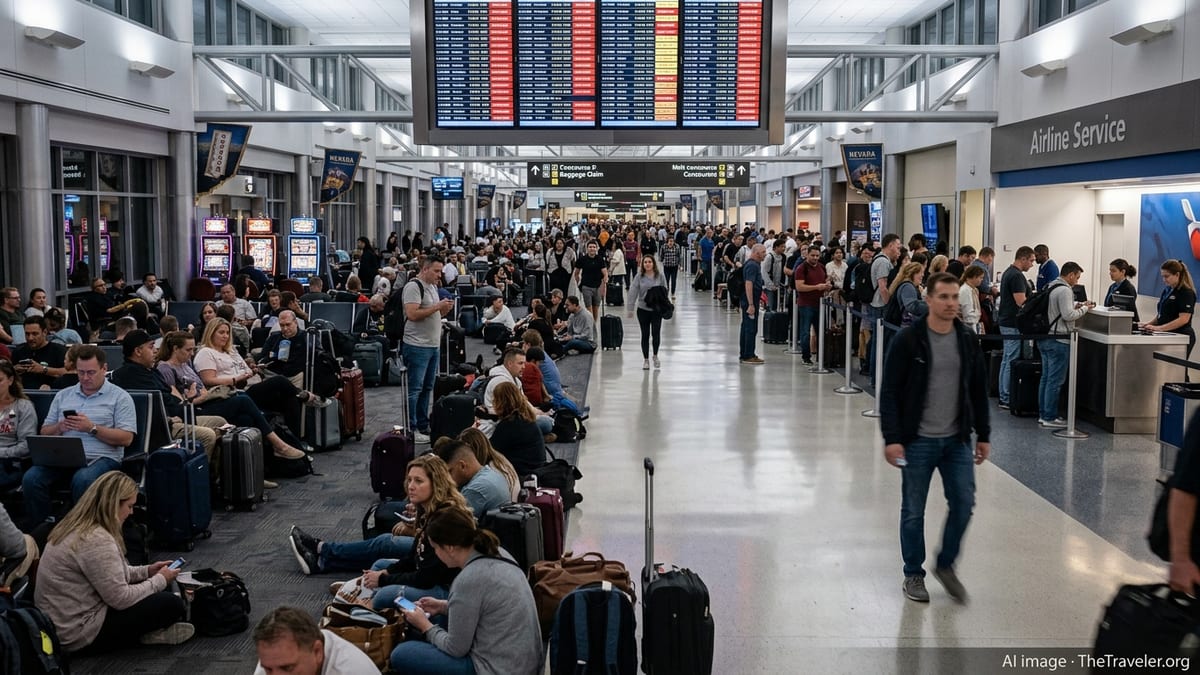
The cumulative effect left gate areas crowded and departure boards dominated by revised times, with many services showing delays of an hour or more. For some travelers, same-day rebooking was no longer possible, forcing unplanned overnight stays in Las Vegas or lengthy multi-stop routings to reach their final destinations.
Key Routes to New York, Chicago and Orlando Disrupted
The delays and cancellations were felt most acutely on high-demand routes linking Las Vegas with major hubs including New York, Chicago and Orlando. Publicly accessible schedules and status updates show multiple services on these corridors facing extended holds, particularly during the mid-morning and late-afternoon travel waves when planes are heavily booked.
Flights between Las Vegas and New York area airports, which are critical for both business travelers and tourists, saw some of the longest delays. Aircraft arriving late from the Northeast struggled to depart on schedule for return legs, further compressing available capacity and leading to long queues at customer-service desks as passengers sought alternate options.
Chicago-bound operations were also affected, compounding broader disruptions linked to unsettled spring weather and air-traffic constraints in the Midwest. Passengers connecting through Chicago to secondary cities in the Great Lakes and Upper Midwest reported extended journey times and, in some cases, overnight layovers as remaining seats on later flights quickly sold out.
Leisure routes to Orlando and other Florida destinations faced similar pressure, with families and vacationers attempting to adjust itineraries at short notice. Travel-industry analysts note that such disruptions at a major leisure gateway like Las Vegas can reverberate across the country, as full flights and tight schedules leave airlines with limited flexibility to absorb operational shocks.
Passengers Face Long Lines, Rebookings and Unexpected Overnight Stays
For travelers caught in the middle of the disruption, the experience translated into long lines at ticket counters, crowded gate areas and uncertainties about when they would be able to depart. Social media posts from the terminal showed extended queues at customer-service desks for multiple airlines, with passengers attempting to secure seats on later flights or reroute through alternative hubs.
Reports from travelers indicate that some were offered hotel and meal vouchers, particularly when overnight delays became inevitable, while others scrambled to arrange last-minute accommodation on their own as nearby properties filled up. Ride-hailing staging areas and baggage-claim zones saw heavier than usual traffic as passengers weighed whether to wait at the airport or leave and return once their new departure times were confirmed.
For those with fixed commitments, such as cruises, conferences or international connections from other cities, the timing of the delays created added anxiety. Travel advisers often recommend building extra time into itineraries when connecting through major hubs, and the situation in Las Vegas served as a reminder of how quickly a local disruption can upset tightly planned travel.
Some passengers reported turning to alternative options such as same-day car rentals or long-distance buses to reach nearby cities with more available flights. However, with school vacations and spring travel demand running high, last-minute alternatives were limited, especially for larger groups and families traveling together.
Operational Pressures at a Growing Desert Hub
Harry Reid International Airport has experienced sustained growth in passenger numbers over the past several years, according to airport and county data, reflecting Las Vegas’s status as both a convention powerhouse and a year-round leisure destination. This growth has brought infrastructure improvements and new routes, but it has also increased sensitivity to operational strains when weather, air-traffic constraints or mechanical issues arise.
Published airport planning documents highlight ongoing projects aimed at improving passenger flow, including upgrades to escalators, concourses and gate areas. Even so, peak travel periods, including weekends, holidays and major events, can push terminal facilities and airfield operations close to capacity, leaving little slack when multiple flights are delayed at once.
Analysts note that Las Vegas’s desert location presents its own challenges, from high winds and dust reducing visibility to summertime heat placing additional stress on aircraft performance. While the latest disruptions were driven by a combination of factors, the situation reflects a broader pattern in which localized weather or air-traffic constraints can quickly back up departures and arrivals across an already busy schedule.
Industry observers suggest that airlines operating through Las Vegas may continue to adjust schedules, aircraft rotations and staffing in the months ahead to build in more resilience. However, with strong leisure demand and tight margins, the balance between efficiency and flexibility remains a constant challenge.
What Travelers Can Do When Las Vegas Flights Are Disrupted
For passengers planning to fly through Las Vegas in the coming days, travel experts recommend monitoring flight status frequently and checking in as early as possible on airline apps. Publicly available guidance from carriers emphasizes that same-day schedule changes can often be completed digitally, which may be faster than joining long lines at airport counters when disruptions occur.
Travel-advice publications also suggest building additional time into connections when routing through busy hubs such as New York, Chicago or other major transfer points. Booking longer layovers, particularly during seasons prone to storms or high winds, can help reduce the risk of missed flights if delays develop at Harry Reid International or elsewhere along the route.
Passengers who find themselves stranded are often encouraged by consumer advocates to document their expenses and keep records of all communications with airlines. Policies on vouchers, refunds and rebooking vary by carrier and by cause of the disruption, so travelers may benefit from reviewing the specific contract of carriage and any relevant federal consumer-information materials after their trip.
Despite the latest wave of delays and cancellations, travel analysts expect demand for Las Vegas flights to remain strong through the spring and summer. For now, the scenes at Harry Reid International provide a snapshot of how quickly a busy desert hub can become a choke point in the national air-travel system, leaving hundreds of passengers temporarily grounded even as flights continue to crisscross the skies above.