

More news on this day
LATAM Airlines is set to deepen connectivity between Europe and South America with a new nonstop route linking Amsterdam Schiphol and São Paulo Guarulhos from March 30, 2026, with services ramping up to six flights per week by mid-April in response to strong demand.
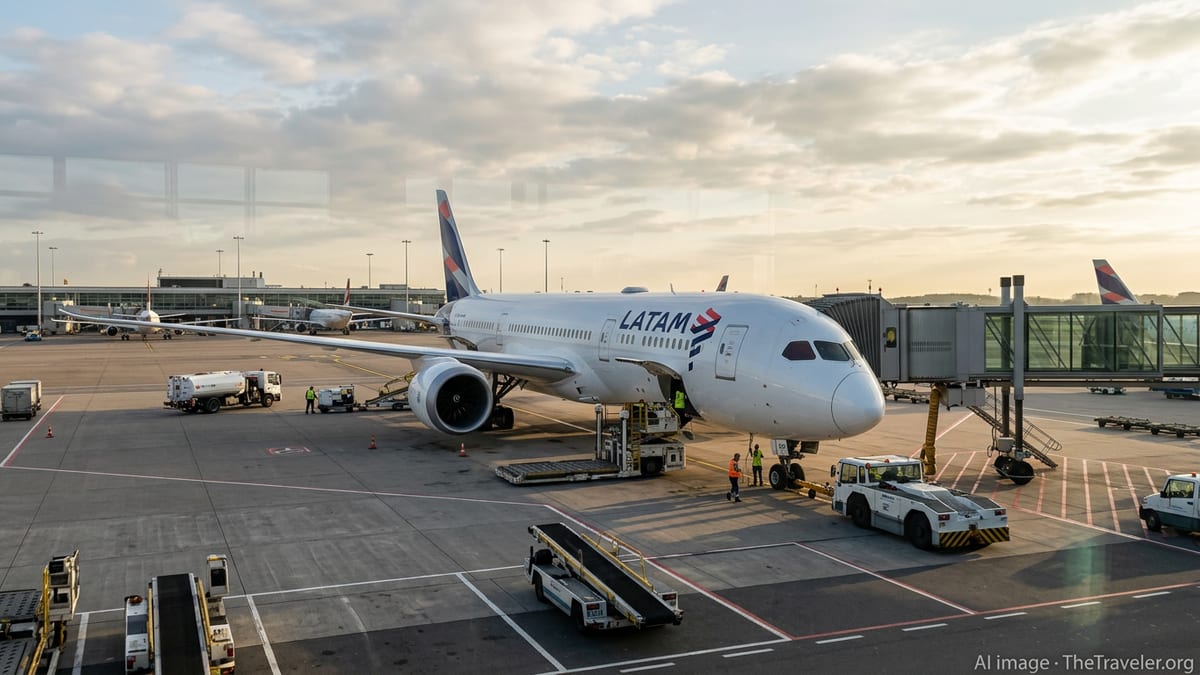
New Amsterdam–São Paulo Link Targets Growing Demand
The new service will connect Amsterdam Schiphol, one of Europe’s busiest transfer hubs, with São Paulo Guarulhos, LATAM’s largest South American gateway. The route is scheduled to begin with four weekly flights from March 30, 2026, before increasing to six weekly rotations by mid-April, positioning the carrier to capture both point-to-point and connecting traffic.
Industry schedules indicate that LATAM had initially filed a more conservative launch with four frequencies, but an early decision to boost capacity underlines robust interest from corporate customers, leisure travelers and cargo shippers. The step-up to near-daily operations within weeks of launch places the route among LATAM’s key long-haul services between Europe and Brazil.
For Amsterdam, the arrival of LATAM adds another full-service intercontinental link to Latin America, complementing existing network options and opening additional one-stop connections to secondary cities across Brazil, Chile, Argentina and beyond via Guarulhos.
For São Paulo, the Amsterdam flights expand the city’s role as a primary South American entry point for travelers from Northern and Western Europe, creating new competition and itinerary options alongside established services to major European capitals.
Strengthening LATAM’s European Network Strategy
The Amsterdam launch reflects LATAM’s broader strategy of rebuilding and diversifying its European footprint with a focus on high-yield corporate flows and strong tourism markets. In recent years the group has consolidated operations at key hubs and selectively added new cities where O&D demand and connecting potential justify long-haul capacity.
By choosing Amsterdam, LATAM gains a gateway that is highly attractive to business travelers in the Netherlands and neighboring countries, while offering convenient onward links across Northern Europe on partner and interline carriers. The schedule is expected to be optimized for connections to major financial and technology centers, as well as to key inbound markets traveling onward to destinations in Brazil and the wider region.
The carrier’s move into the Dutch market also diversifies its exposure beyond traditional strongholds such as Madrid, Paris and Frankfurt. It aligns with a trend among South American airlines to balance their European portfolios between primary capitals and secondary hubs that can feed a wide catchment area through efficient intra-Europe connections.
Analysts say the Amsterdam–São Paulo route will likely become a cornerstone of LATAM’s transatlantic offering from Brazil, especially if strong initial performance paves the way for a future move to daily operations or larger aircraft during peak seasons.
Schedules, Capacity and Expected Aircraft
While detailed timetables and flight numbers have yet to be widely published, industry filings point to an evening departure from São Paulo and an early afternoon or evening departure from Amsterdam, designed to maximize connectivity at both ends. Such timings would allow travelers from across Brazil and the Southern Cone to connect in Guarulhos onto the Amsterdam service with one-stop itineraries.
The route is expected to be operated by LATAM’s long-haul widebody fleet, likely Boeing 777-300ER or Boeing 787 aircraft, offering a mix of business class, premium economy and standard economy cabins. The choice of aircraft will be crucial to balancing premium demand from corporate accounts with strong leisure and visiting-friends-and-relatives traffic.
By ramping up to six flights per week shortly after launch, LATAM will provide near-daily frequency, an important factor for business travelers who value schedule flexibility. The additional rotations should also enhance reliability for connections onwards within South America, ensuring more options if disruptions occur.
On the cargo side, the bellyhold capacity of widebody passenger aircraft is expected to support exports such as pharmaceuticals, automotive components, electronics and perishable goods moving between Brazil, the Netherlands and wider European markets, further improving the economic case for the new service.
Implications for Europe–South America Competition
The Amsterdam–São Paulo launch adds a fresh competitive element to the Europe–Brazil market, historically dominated by European network carriers and a small number of South American operators. With LATAM entering the Dutch market directly, travelers will gain additional choice in both fares and schedules on one of the region’s most important intercontinental flows.
For European travelers, the ability to fly nonstop from Amsterdam to São Paulo on a South American carrier may prove attractive, particularly for those continuing to secondary cities across Brazil where LATAM’s domestic network is strongest. The new route also offers more one-stop options to destinations in Chile, Peru and Argentina, where LATAM serves major capitals and regional centers.
For Brazilian travelers, Amsterdam becomes a new one-stop gateway into much of Northern and Eastern Europe, complementing existing routes to traditional leisure and business destinations. That expanded access may stimulate additional outbound tourism and business travel as travelers take advantage of improved connectivity and competitive pricing.
Industry observers will be watching how quickly LATAM can build brand recognition in the Dutch market and how its schedules and pricing compare with incumbent carriers that already serve Brazil from other European hubs.
What Travelers Can Expect From the New Route
Passengers booking the Amsterdam–São Paulo service can expect a full-service long-haul product, including lie-flat seating in business class, enhanced in-flight entertainment and Wi-Fi on most aircraft, and a range of South American and international meal options. LATAM’s premium cabins are pitched at corporate and high-yield leisure travelers looking for comfort on the roughly 11- to 12-hour transatlantic crossing.
Economy and premium economy cabins are expected to feature modern seating, individual entertainment screens and USB power, in line with the carrier’s refitted long-haul fleet. The near-daily schedule once the route reaches six weekly flights should make it easier for passengers to find itineraries that match their preferred travel days and connection windows.
Travel agencies and corporate travel managers in both Europe and South America are likely to begin promoting the route heavily in the coming months, emphasizing the combination of a major European hub at Amsterdam and LATAM’s extensive South American network via São Paulo. Early promotional fares typically accompany such launches, giving price-sensitive travelers a window of opportunity to secure competitive deals.
With its start date set for late March 2026 and a rapid increase to six flights per week by mid-April, the Amsterdam–São Paulo route positions LATAM to capture early-summer traffic in the Northern Hemisphere and ongoing business demand year-round, reinforcing the airline’s ambitions as a leading bridge between Europe and South America.