

More news on this day
LATAM Airlines is preparing a fresh boost to its Europe–Brazil network, planning higher frequencies on its São Paulo–Amsterdam service for the peak northern summer 2027 season as demand on the young route continues to build.
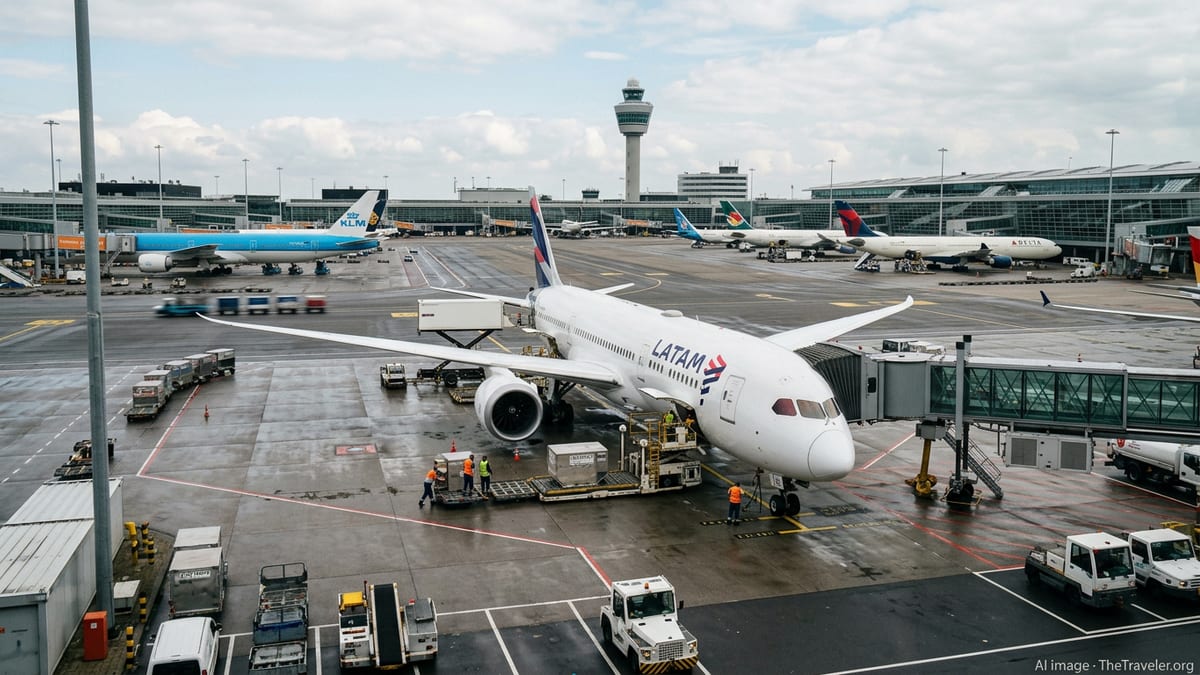
Summer 2027 Capacity Lift on a Young Transatlantic Route
While the nonstop link between São Paulo/Guarulhos and Amsterdam only launches in late March 2026, LATAM has already signalled that additional capacity is planned for the following summer season. Industry schedules and forward-planning data indicate that the airline intends to operate more weekly flights in summer 2027 than in the inaugural season, moving the route closer to daily service as it consolidates its position in the Dutch market.
The service is currently scheduled to ramp up from its initial launch phase of four weekly flights in late March 2026 to six weekly frequencies by mid-April 2026, reflecting stronger-than-expected bookings in both leisure and corporate segments. For the IATA summer 2027 schedule, the airline is working to retain that higher baseline and add at least one more weekly rotation when peak travel months begin, subject to slot and fleet allocation decisions.
The São Paulo–Amsterdam route is operated from LATAM’s main long-haul hub at Guarulhos, giving the carrier significant flexibility to add frequencies as new aircraft join the fleet and other markets mature. The airline has already highlighted Europe as a key growth vector from Brazil, with Amsterdam set to join Brussels, Rome, Milan, Barcelona and Madrid in a dense European network fed by domestic and regional traffic.
For passengers, the planned uplift in 2027 will translate into more departure-day choice and tighter connection windows at both ends, particularly for travellers heading onward to secondary cities in Europe or to domestic and regional destinations within Brazil and South America.
Strengthening Europe–Brazil Connectivity via Amsterdam
Amsterdam Schiphol is emerging as a strategic northern European gateway for LATAM, complementing its existing presence in hubs such as Madrid, Barcelona and Rome. The Brazilian carrier’s entry into the Dutch market in 2026 introduces an additional non-European competitor on a corridor historically dominated by European airlines, particularly KLM and its alliance partners.
With the planned increase in service for summer 2027, Amsterdam will gain more direct capacity into South America’s largest aviation market, improving options not only for point-to-point traffic but also for connecting itineraries between Northern Europe and cities throughout Brazil. Through coordinated schedules at São Paulo/Guarulhos, LATAM can time arrivals from Amsterdam to feed onward flights to destinations such as Rio de Janeiro, Brasília, Belo Horizonte and key leisure markets in the Northeast.
For Dutch travellers and residents of neighbouring countries who use Schiphol as a regional hub, a more frequent São Paulo link deepens access to Brazil’s tourism destinations and to corporate centres tied to sectors such as energy, agribusiness, technology and finance. Increased frequencies in summer 2027 are expected to reduce pressure on peak-season flights and open more opportunities for both advance and last-minute bookings.
The move also supports broader connectivity between continental Europe and the southern cone of the Americas. By adding capacity at Amsterdam, LATAM can better balance flows across its European network, combining northern and southern gateways to mitigate seasonal swings and diversify demand.
Fleet, Schedule and Product on the Amsterdam Route
The São Paulo–Amsterdam route is being flown by widebody aircraft configured for long-haul operations, with LATAM deploying its Boeing 787-9 Dreamliner and, on some rotations, Boeing 777-300ER capacity from the Brazilian fleet. These aircraft offer a three-class layout, including a fully flat business cabin, premium economy seating and a high-density economy section tailored to both leisure and visiting-friends-and-relatives traffic.
For the 2026 launch, schedules show a daytime departure from Amsterdam and an overnight return to Brazil, matching common transatlantic patterns designed to optimise connections on each side. As frequencies rise for summer 2027, LATAM is expected to fine-tune timings to reduce ground time and improve aircraft utilisation, while keeping key connections in São Paulo and Amsterdam intact.
Increased service will give the airline more flexibility to space flights across the week, smoothing demand on traditionally busy days and adding capacity where corporate traffic is strongest. For Schiphol, additional Latin American widebody movements in the 2027 summer season will contribute to long-haul diversity at a time when airports across Europe are reviewing slot use and prioritising routes that demonstrate sustained demand.
Onboard, LATAM has been positioning its long-haul product as a competitive alternative for European travellers used to flying with regional network carriers. Expanded service on the Amsterdam route for 2027 is expected to be accompanied by incremental improvements in inflight services and connectivity, part of a wider programme to standardise the experience across its transatlantic network.
Tourism and Trade Benefits for Brazil and the Netherlands
The increase in São Paulo–Amsterdam capacity for summer 2027 is expected to have knock-on benefits for tourism boards, airports and businesses in both countries. For Brazil, more seats into a northern European hub create new opportunities to attract higher-spending visitors from the Netherlands, Germany, Scandinavia and the United Kingdom, many of whom connect through Schiphol on single-ticket itineraries.
Brazilian tourism stakeholders have been aggressively courting European travellers with campaigns highlighting beach destinations, nature reserves, cultural festivals and major events. A more frequent Amsterdam service during the European summer, when holiday travel peaks, should help convert this interest into bookings, especially for multi-destination itineraries combining major cities with coastal or Amazonian experiences.
Trade flows are also likely to benefit. The Netherlands is already a key partner for Brazil in sectors such as agribusiness, energy and logistics, with Rotterdam serving as a major gateway for Brazilian exports into Europe. Increased passenger capacity between São Paulo and Amsterdam often correlates with higher-value belly cargo volumes, providing a supplementary benefit for exporters and importers relying on time-sensitive freight.
For the Netherlands, stronger links to Brazil’s commercial capital may support outbound investment and corporate travel tied to infrastructure, technology and renewable energy projects. As daily or near-daily service becomes available in summer 2027, corporate travel planners gain more flexibility in scheduling meetings, site visits and project launches across time zones.
Competitive Dynamics and Outlook Toward 2027
LATAM’s decision to reinforce São Paulo–Amsterdam service into summer 2027 positions the airline as a more assertive competitor on long-haul traffic between Europe and Brazil. The route adds a new non-European alternative to existing Amsterdam–Brazil links, giving travellers additional choice in both schedule and onboard product.
Industry observers note that the move fits a broader pattern of Latin American carriers reclaiming long-haul market share as they emerge from restructuring and capitalise on stronger demand. In LATAM’s case, the combination of a powerful domestic and regional network in Brazil and growing long-haul capacity allows it to channel traffic efficiently through São Paulo and to challenge European incumbents on fares and connectivity.
Looking ahead to the 2027 summer season, further adjustments remain possible as demand forecasts are refined and aircraft deliveries progress. However, the airline’s willingness to plan more capacity on a route that will still be relatively new suggests confidence in the long-term viability of Amsterdam as a strategic European gateway.
For travellers, the practical outcome will be more seats, more choice of travel days and potentially sharper pricing in peak months. For the wider market, the São Paulo–Amsterdam build-up reflects how airlines are reconfiguring their networks to follow shifting demand patterns between Europe and South America well into the second half of the decade.