

More news on this day
Travelers flying between Peru and major international hubs faced fresh disruption this week as more than a dozen Latam and United Airlines flights to and from Lima and Cusco were cancelled, triggering missed connections, overnight airport stays, and growing concern about the reliability of key regional routes.
Get the latest news straight to your inbox!
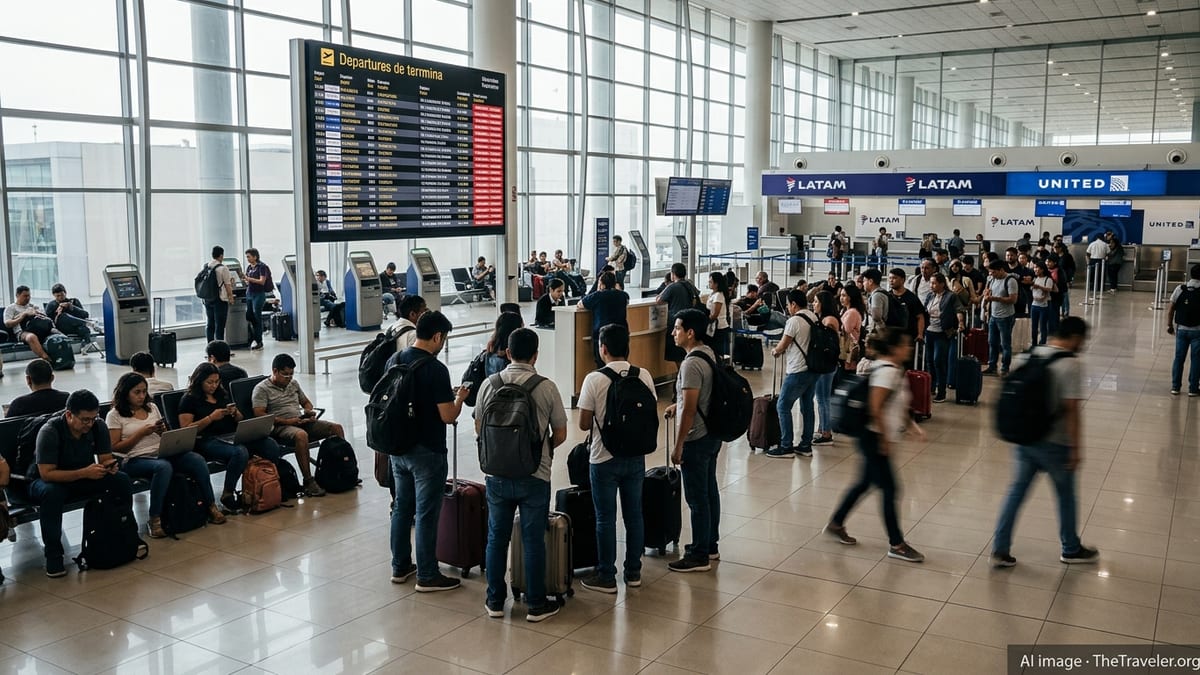
Wave of Cancellations Hits Key Peru Gateways
Published airline schedules and flight-tracking data show a cluster of Latam and United Airlines cancellations on routes linking Peru’s Jorge Chávez International Airport in Lima and Alejandro Velasco Astete International Airport in Cusco with major cities including Houston and other regional hubs. The latest disruption adds to a pattern of operational volatility that has unsettled travelers during one of the busier periods for tourism and business travel in the country.
Multiple services between Lima and Cusco were withdrawn at short notice, forcing passengers to rebook on later departures or reroute through alternative cities. On international sectors, cancellations on the Lima to Houston corridor, a critical link for North American travelers heading to and from Peru, also contributed to missed onward connections across the United States.
Publicly available reports highlight that these cancellations do not stem from a single cause, but rather a combination of operational factors that can range from local weather and airport constraints to broader network imbalances as airlines attempt to reposition aircraft and crew. For travelers on the ground, however, the result was the same: longer lines, uncertain rebooking options and itinerary changes often announced only hours before departure.
Operational Strains at Lima and Cusco Airports
Lima’s Jorge Chávez International Airport remains Peru’s primary gateway, funnelling both domestic connections to Cusco and long-haul flights to North America and Europe. Recent operational adjustments connected with the transition to expanded infrastructure, along with peak-hour congestion, have increased sensitivity to any irregular operations. When one or two flights cancel at short notice, knock-on delays and gate constraints can ripple across the schedule, particularly in the early morning and late-night banks when most international connections occur.
In Cusco, the mountain location and challenging weather conditions often translate into narrow operational windows, especially during periods of low visibility or afternoon storms. Historical travel forums and traveler reports frequently describe last-minute schedule changes on the Lima–Cusco route, underscoring how quickly conditions can shift in the Andean region. When several departures are dropped in a single day, local capacity can become tight, limiting same-day rebooking options and forcing some passengers to remain overnight.
The interplay between these two airports means that a cancelled flight in Cusco can strand passengers who were due to connect onto long-haul services in Lima, and conversely, a cancellation on an incoming international flight can reduce feed for domestic sectors. This week’s pattern of cancellations from Latam and United again exposed how sensitive Peru’s air network can be when multiple operations falter at once.
Impact on Passengers and Regional Hubs
The immediate impact on travelers has been acute, particularly for those using Lima as a transfer point between North America and popular destinations such as Cusco, Arequipa, or the Sacred Valley. With a cluster of Latam domestic cancellations and at least one United flight to or from Houston removed from the schedule, some passengers reported long waits at customer-service counters, extended layovers in Lima, and additional hotel and meal costs that were not part of their original plans.
For Houston and other U.S. hubs, the disruption has manifested as gaps in expected arrival and departure patterns, affecting connecting itineraries onward to cities across the United States and beyond. A cancelled Lima–Houston service can mean missed links to destinations as far apart as New York, Chicago, or Los Angeles, as well as reduced options for travelers originating in secondary U.S. markets who rely on a single daily Peru connection.
Travel experts note that, while large airlines typically attempt to consolidate passengers from cancelled flights onto the next available service, limited daily frequencies on some routes and high seasonal demand can make same-day recovery difficult. In practice, that has meant some travelers having to accept reroutes via alternate hubs, extended travel times, or, in a smaller number of cases, multi-day delays in reaching their final destination.
Underlying Challenges for Latam and United
Latam and United have both been managing complex operational environments that extend beyond Peru. Latam, as the dominant carrier in several South American markets, continues to adjust its network and fleet deployment in response to shifting demand, infrastructure changes and economic pressures across the region. United, for its part, is balancing its long-haul schedule with evolving fleet maintenance needs and the broader operational realities facing large North American carriers.
Industry analyses suggest that constraints in aircraft availability, crew rostering, and maintenance slots can converge to create localized pockets of disruption, especially on routes that depend on specific aircraft types or tight rotation schedules. When irregular operations occur earlier in the network day, they may propagate into evening departures from hubs like Houston and key outstations like Lima.
Observers also point to the particular vulnerability of high-altitude and weather-sensitive airports such as Cusco, where even minor schedule changes can trigger significant downstream effects. If a single aircraft planned to operate multiple roundtrips between Lima and Cusco is delayed or taken out of service, there may be limited spare capacity to absorb affected passengers, pushing airlines toward cancellations rather than rolling delays that could further destabilize the network.
What Travelers Can Do as Disruptions Continue
With cancellations and schedule shifts remaining a feature of air travel in the region, public advisories and travel commentaries increasingly recommend that passengers build extra time into itineraries connecting through Lima or relying on the Lima–Cusco shuttle. Allowing several hours for domestic-to-international transfers, or planning at least one buffer day before time-sensitive activities such as Machu Picchu visits or cruise departures, can reduce the risk that a single cancelled flight derails an entire trip.
Travel planning resources also emphasize the value of monitoring flight status frequently on the day of departure, including checking both the airline’s website and independent flight-tracking tools. Early awareness of schedule changes can give travelers a head start in requesting alternative routings or same-day standby options, particularly when multiple flights to or from hubs such as Houston, Miami, or São Paulo are still operating.
For those whose flights are cancelled outright, consumer advocates advise documenting expenses, understanding applicable fare rules, and reviewing local and international passenger-rights frameworks that may offer compensation or reimbursement under specific circumstances. While each case depends on the cause of disruption and the ticket type, a clear paper trail and prompt follow-up with the airline can improve the chances of a satisfactory resolution.
As Latam and United work through this latest round of cancellations affecting Peru, travel industry observers expect continued scrutiny of the reliability of routes connecting Lima and Cusco with major hubs. For now, passengers are being urged to stay flexible, plan conservatively around key connections, and brace for the possibility that further schedule changes may be announced with limited warning.