

More news on this day
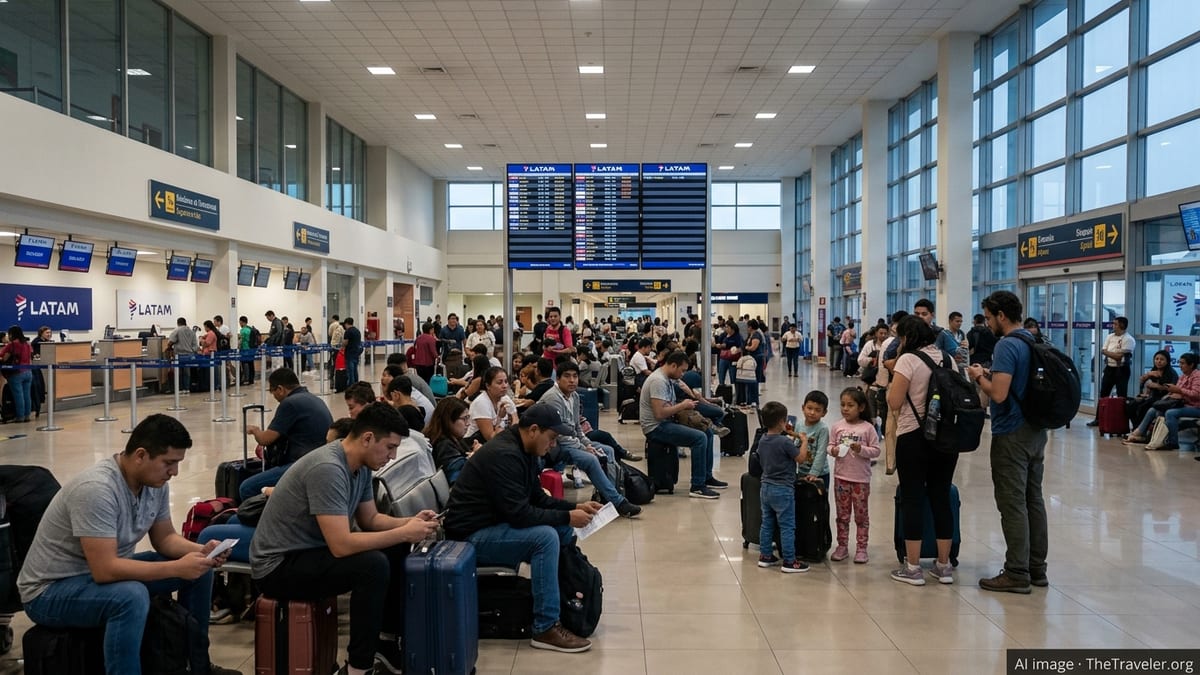
Travelers connecting through Lima’s Jorge Chávez International Airport faced fresh disruption this week after LATAM Airlines canceled a key service to Santiago, stranding passengers across Peru and compounding a broader pattern of regional schedule instability.
Get the latest news straight to your inbox!
Key Lima–Santiago Flight Dropped Amid Network Strains
The canceled service involved one of LATAM’s core Lima to Santiago de Chile rotations, a route that serves as a primary bridge between Peru and Chile and as a vital connection point for onward travel across South America. Publicly available schedules show the airline already operating at high frequency on the corridor, reflecting strong demand between the two capitals and onward links via Santiago’s Arturo Merino Benítez International Airport.
Reports from travelers and schedule trackers indicate that the affected flight was removed from the timetable with limited advance warning, triggering missed connections for passengers heading to destinations beyond Santiago, including southern Chile and other regional hubs. While alternative LATAM departures remain in operation, the loss of a peak-time departure reduced flexibility for passengers and increased pressure on remaining services.
For many travelers, Lima’s role as a transfer hub has made such cancellations especially disruptive. LATAM has grown to become the dominant carrier at Jorge Chávez, channeling traffic between North and South America and within the region. When a single high-demand flight is pulled, the effects cascade across the network, particularly for itineraries stitched together with tight connection windows.
In this latest incident, travelers reported last-minute itinerary changes and unexpected overnight stays as they attempted to rebook onto later departures or reroute through other South American airports. Several accounts describe limited seat availability on subsequent flights to Santiago, reflecting both sustained demand and the ripple effects of earlier operational disruptions in the region.
Passengers Scattered Across Peru as Connections Collapse
The cancellation left some Santiago-bound passengers in Lima, but others were stranded in popular Peruvian destinations such as Cusco, Arequipa, and northern beach towns where domestic legs were meant to connect smoothly into the Lima–Santiago service. According to published coverage and traveler forums, disrupted itineraries have become more common since the start of the southern hemisphere summer season, as carriers adjust schedules and respond to shifting demand.
Travelers routed through Cusco and other regional airports described being rebooked onto later domestic flights to Lima with uncertain onward options, while some chose to remain in place and seek accommodation rather than risk prolonged waits at airport terminals. Social media and community travel channels highlight instances where entire families were split onto separate flights or re-routed through alternative hubs such as São Paulo or Bogotá to eventually reach Chile.
The patchwork of domestic and international services feeding into Lima means that even a single canceled long-haul or regional flight can leave passengers effectively isolated far from their intended transit point. In Peru, where geography often requires air travel between key tourist cities and the capital, the failure of a single connection can translate into days of delay, forfeited tours, and additional expenses for accommodation and meals.
Travelers attempting to salvage complex itineraries have also encountered challenges coordinating between booking platforms, codeshare partners, and frequent flyer programs. Publicly available guidance emphasizes the need for affected passengers to work directly with their issuing airline or agency, but anecdotal reports suggest long wait times and inconsistent solutions, especially when multiple carriers are involved.
Jorge Chávez Airport Under Scrutiny as New Fees and Terminal Changes Bite
The latest disruption has intensified scrutiny of operations at Jorge Chávez International Airport, which is transitioning into a new phase with an expanded terminal and updated fee structure. The introduction of a new Transfer Unified Airport Use Fee, widely covered in Peruvian media, has already unsettled airlines using Lima as a regional hub, and has contributed to adjustments and cancellations on certain routes.
In parallel, the opening of Lima’s new international terminal has reshaped passenger flows, security screening patterns, and ground logistics. According to industry analyses and local reporting, carriers have been recalibrating schedules and aircraft assignments as they adapt to new infrastructure and operational procedures. While these changes are intended to strengthen Lima’s status as a major South American hub, the transition period has brought temporary complexity for both airlines and travelers.
LATAM, as the largest operator at Jorge Chávez, sits at the center of these shifts. The airline has previously adjusted or suspended routes linked to cost pressures and regulatory changes at the airport, including new or revised fees applied to transfer passengers. Aviation analysts note that even modest increases in per-passenger costs can have an outsized impact on transfer-heavy routes, prompting network reviews and, in some cases, cancellations.
For passengers, the combination of evolving airport infrastructure, new charges, and busy peak-season traffic has translated into a less predictable travel experience. Reports indicate that even when flights operate on schedule, longer walking distances, new check-in layouts, and shifting security procedures can tighten effective connection times, making missed flights more likely when preceding segments are delayed or rescheduled.
Regional Travel Disruptions Ripple Across South America
The cancellation from Lima to Santiago is unfolding against a wider backdrop of regional travel disruptions. Industry monitoring in recent months has pointed to periods of elevated delays and cancellations affecting flights across Peru, Chile, Mexico, and the Caribbean, with LATAM and other carriers periodically adjusting services in response to operational pressures, demand fluctuations, and broader geopolitical and economic factors.
Broader aviation summaries for 2026 highlight a patchwork of issues: weather-related disruptions during the southern summer, airspace constraints, and lingering volatility in international travel demand. In Latin America, these factors intersect with local regulatory changes and infrastructure upgrades, producing a landscape in which schedules can shift rapidly.
Travel data aggregators and route trackers show that Lima–Santiago remains one of the region’s pivotal corridors, linking not only two national capitals but also serving as a conduit for long-haul connections to North America, Europe, and Oceania. Any sustained instability on this route has the potential to complicate itineraries far beyond South America, affecting cruise departures, long-planned tours, and onward flights scheduled on tight connections.
Airline-focused publications note that while carriers have generally restored much of their pre-pandemic capacity, the margin for operational disruption remains narrow. Crew availability, aircraft rotations, and maintenance windows all play a role in whether a single cancellation can be absorbed smoothly or triggers a chain reaction of delays and missed connections throughout the day.
What Stranded Travelers Are Being Advised to Do
Publicly available passenger-rights guides and airline policies outline several steps for travelers affected by cancellations at hubs such as Jorge Chávez. The first is to confirm the current status of all segments on an itinerary through official airline channels, as automated rebooking may place passengers on alternative flights or routes without clear notification. Travelers are encouraged to check both their reservation details and real-time departure boards before heading to the airport.
Consumer-protection guidance in Peru emphasizes that travelers should keep thorough records of boarding passes, booking confirmations, and receipts for meals or lodging incurred while waiting for re-accommodation. These documents can be important when seeking reimbursement or submitting claims under airline policies or applicable consumer regulations. Travel insurance providers may also require proof of disruption, such as cancellation notices or updated itineraries, before processing claims.
For those still planning trips through Lima and Santiago in the coming weeks, travel planners and aviation analysts recommend building more generous connection windows, especially when combining domestic Peruvian flights with international departures. Selecting slightly longer layovers, traveling with carry-on luggage where possible, and monitoring flights in the days leading up to departure can reduce the risk that a sudden schedule change will derail an entire journey.
Finally, passengers booking new itineraries are increasingly weighing the trade-offs between lower-cost, tightly timed connections and itineraries with greater buffer built in. With Lima’s airport and LATAM’s network both undergoing a period of adjustment, travelers heading to or through Santiago may find that a bit of extra time on the ground is a worthwhile investment in a smoother trip.