

More news on this day
LATAM Airlines is accelerating its push for stronger links between Europe and South America, upgrading its yet-to-launch Amsterdam to São Paulo route to six weekly flights in April 2026 and positioning the Dutch capital as a new northern European gateway to Brazil.
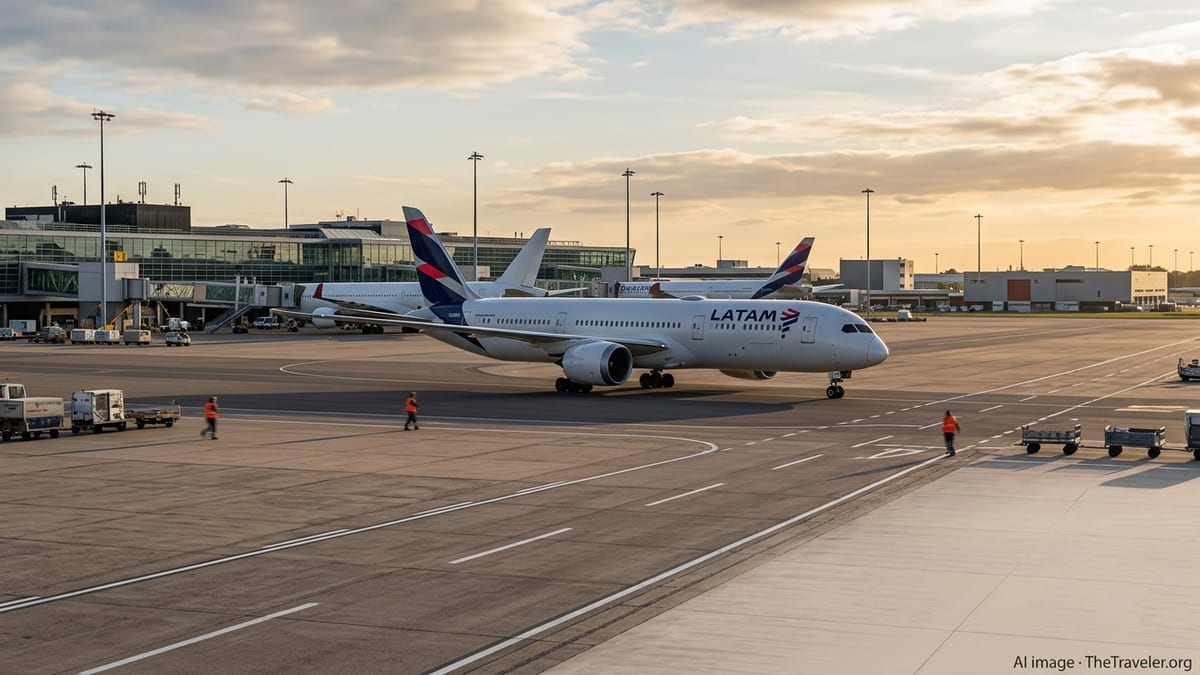
New Amsterdam–São Paulo Service Ramped Up Before Takeoff
The carrier’s non-stop service between Amsterdam Schiphol and São Paulo/Guarulhos is scheduled to begin on March 30, 2026, operated by LATAM Airlines Brasil. Originally filed at four weekly frequencies, the route has already been reinforced, with LATAM confirming that it will step up to six flights a week from April 18, 2026, bringing it close to a daily schedule.
The decision to add capacity before the first flight leaves the ground underlines the airline’s confidence in pent-up demand between the Netherlands and Brazil. It also reflects broader growth in transatlantic travel, with corporate traffic recovering and leisure flows to South America continuing to rise.
Flights will be operated by Boeing 787-9 aircraft, offering a three-cabin configuration that includes a full-flat business class section, premium economy and standard economy seating. This widebody choice supports both premium corporate travellers and the growing number of long-haul leisure passengers heading to or connecting via São Paulo.
The boosted frequencies are part of LATAM’s wider capacity expansion for 2026, as the group targets double-digit growth in its international network and looks to consolidate São Paulo’s role as its principal long-haul hub.
Strategic Northern Gateway Into South America
Amsterdam’s addition to LATAM’s map strengthens the airline group’s European footprint, which already includes Madrid, Barcelona, Paris and Frankfurt. By opening a non-stop corridor from the Dutch capital to São Paulo, LATAM gains a northern European anchor that can draw traffic from Scandinavia, the Benelux region and parts of Central and Eastern Europe.
The move is closely aligned with the airline’s existing partnerships in Europe. Amsterdam is a major hub for Air France-KLM, and the new service is expected to tap into extensive feeder traffic via interline and codeshare arrangements, channeling passengers onward to Brazil and across South America.
For travellers, the route reduces the need to connect via traditional southern European gateways and offers more schedule options into Brazil’s largest city. The six-times-weekly pattern also improves resilience in case of disruptions, as passengers gain additional rebooking possibilities on nearby departure dates.
São Paulo/Guarulhos remains LATAM’s primary long-haul platform, with onward connections to key Brazilian cities such as Rio de Janeiro, Brasília, Salvador and Porto Alegre, as well as to other South American capitals. The Amsterdam link is designed to feed that network, while also supporting point-to-point demand between the two markets.
Boost for Brazil–Netherlands Trade and Tourism
The route expansion carries clear economic overtones. Brazil and the Netherlands have deep trade ties, particularly in commodities, logistics, energy and agribusiness, and two-way investment has grown steadily in recent years. Additional non-stop capacity is expected to support executive travel, project work and high-value cargo flows.
On the tourism side, Dutch and northern European travellers gain a new direct option into Brazil just ahead of the Southern Hemisphere winter, traditionally a strong period for long-haul leisure trips. São Paulo acts as both a cultural destination in its own right and a key staging point for beach, eco and adventure tourism across Brazil.
For Brazilian travellers, Amsterdam’s extensive short-haul network opens easier access to destinations across Europe, from Scandinavian cities to regional capitals that previously required multiple connections. The near-daily schedule from April 2026 should simplify itinerary planning for both leisure and visiting-friends-and-relatives segments.
Industry observers expect the additional capacity to sharpen competition on Europe–Brazil corridors, which are already contested by European majors as well as regional rivals. However, LATAM’s growing scale and its focus on São Paulo as a super hub are likely to reinforce its position on northbound traffic from Brazil.
Product, Schedule and Passenger Experience
LATAM plans to deploy Boeing 787-9 Dreamliner aircraft on the Amsterdam–São Paulo route, aligning the new service with its broader long-haul strategy. The twin-aisle jets feature a modern cabin, lower cabin altitude and improved humidity, aimed at reducing fatigue on overnight flights across the Atlantic.
In business class, passengers can expect full-flat seats with direct aisle access, complemented by updated inflight entertainment and an expanded dining offering tailored to both European and South American tastes. Premium economy provides additional space and priority services, while the main economy cabin is configured to balance density with comfort on the roughly 12-hour sector.
Although detailed schedules are still being refined, industry filings indicate an evening departure pattern from Amsterdam, arriving in São Paulo early in the morning to maximize connectivity to domestic and regional flights. Southbound and northbound timings are designed to facilitate same-day connections while minimizing overnight layovers.
On the ground, the new service will plug into LATAM’s developing premium footprint at São Paulo/Guarulhos, including upgraded lounges and streamlined connections. This is intended to support higher-yield corporate travellers, a key target segment for the expanded Amsterdam service.
Part of a Wider LATAM Growth Push
The acceleration of the Amsterdam–São Paulo route sits within a broader growth trajectory for LATAM Airlines Group, which has been steadily rebuilding and expanding its international network. The airline has signaled that its capacity on long-haul routes will continue to grow in 2026, backed by fleet renewal and rising demand.
Across Europe, LATAM has already increased frequencies on routes such as São Paulo to Madrid and Barcelona, while also reinforcing services to Paris and Frankfurt. The Amsterdam launch and subsequent upgrade to six weekly flights further consolidates that strategy, creating more options for passengers choosing South America as a leisure or business destination.
For travel buyers and corporate travel managers, the expanded service gives additional flexibility in constructing itineraries between northern Europe and Brazil, especially for itineraries that rely on consistent long-haul capacity and strong regional connectivity. The near-daily pattern may also make the route more attractive for corporate deals and volume contracts.
As airlines globally position for the next phase of long-haul recovery, LATAM’s decision to boost Amsterdam capacity ahead of launch illustrates a calculated bet on sustained demand between Europe and South America. Travellers in both regions can expect more seats, more frequencies and a tighter web of connections linking the Dutch capital to one of Latin America’s principal aviation hubs.