

More news on this day
Travel across Peru and between Lima and major United States hubs has been disrupted this weekend after a string of cancellations by LATAM Peru and United Airlines, affecting routes to Jaén, Arequipa, New York JFK, Newark and San Francisco and leaving passengers scrambling for alternatives.
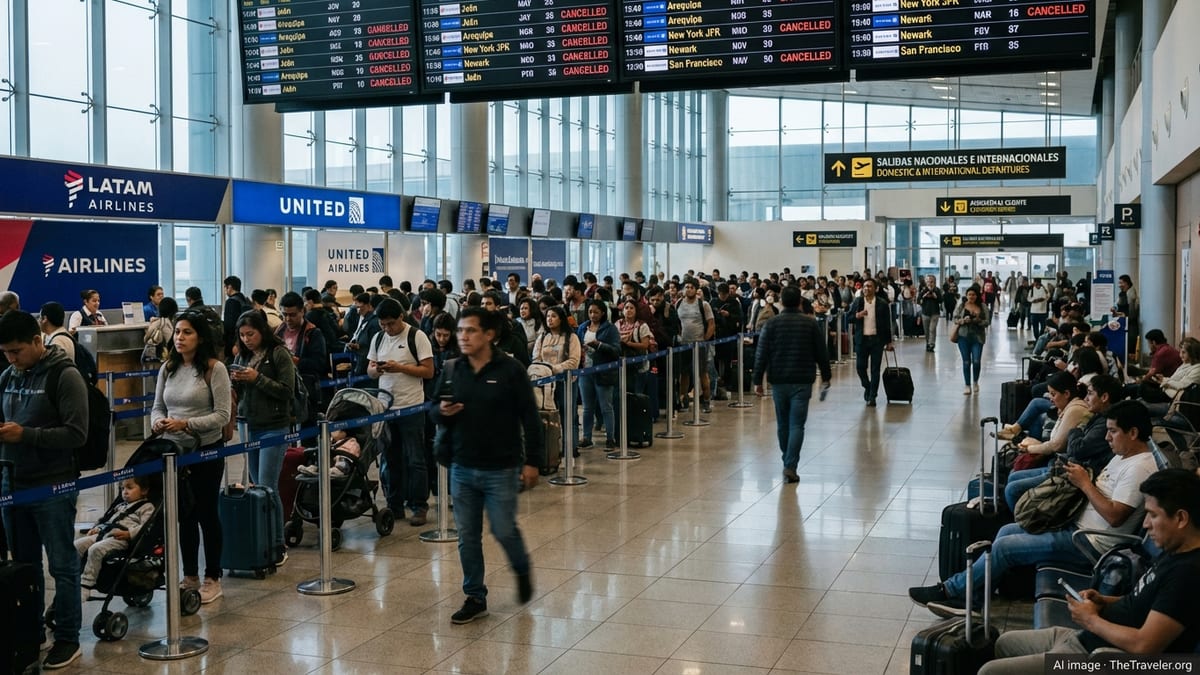
New Wave of Cancellations Hits Peru–US Connectivity
The latest disruption began to crystallize between February 21 and 23, 2026, as a combination of infrastructure issues in northern Peru and operational decisions by major carriers converged to cancel more than a dozen flights. LATAM Peru grounded services on its Lima–Jaén route following an emergency declaration at Jaén’s airport, while United Airlines scrubbed and reshuffled several long‑haul services linking Lima with US hubs including Newark and San Francisco.
Data from real‑time flight tracking platforms on February 22 and 23 show multiple LATAM operations to secondary Peruvian cities either canceled outright or removed from sale, alongside at least one United Airlines service between San Francisco and Newark classified as canceled. Passengers reported abrupt itinerary changes within 24 hours of departure and limited rebooking options during a busy late‑February travel window.
Although the overall number of affected flights is modest compared with continent‑wide disruptions, the impact on connectivity is magnified because many of the routes serve as critical links between provincial Peru and international gateways via Lima. Travellers bound for or returning from the United States have faced missed connections, unexpected overnight stays in Lima, and lengthy detours through alternative hubs.
Airline representatives and airport authorities have framed the disruption as a necessary response to safety and technical concerns, stressing that flight operations will normalise once maintenance and schedule adjustments are completed. For now, however, passengers on both sides of the Andes are dealing with a patchwork of cancellations, rolling delays and shifting departure times.
Jaén Airport Shutdown Extends LATAM Peru Groundings
The most acute disruption inside Peru is centred on Jaén, a gateway city in the Cajamarca region. On February 21, Peru’s state airport operator CORPAC confirmed a 30‑day suspension of commercial flights at Jaén’s Fernando Belaunde Terry Airport to carry out corrective maintenance on the runway, taxiway and aircraft apron under an emergency resolution issued by the Ministry of Transport and Communications.
LATAM Airlines had already halted its Lima–Jaén services earlier in February, citing the need to accommodate the planned works and ensure that safety standards remained within regulatory limits. Flight status data for LATAM’s Lima–Jaén service scheduled over the weekend of February 22 showed the rotation listed as canceled, reinforcing that no commercial traffic would be permitted on the route during the maintenance window.
In public statements, LATAM has advised affected Jaén passengers that they may request refunds without penalty or reroute their journeys to alternative northern Peruvian airports such as Chiclayo, Cajamarca or Piura. However, such reroutes often require lengthy overland connections and can add significant travel time, particularly for passengers originally connecting onward to international flights out of Lima.
Local tourism businesses in Cajamarca and neighboring regions have voiced concern that the extended suspension of flights could dampen late‑summer tourism and complicate travel for residents who rely on the Lima–Jaén air link for business, medical appointments and family visits. With no clear option to operate limited or partial service during the works, Jaén effectively drops off Peru’s domestic air map for at least a month.
Arequipa and Other Domestic Routes Face Secondary Disruptions
While Jaén faces a full shutdown, other Peruvian cities, including Arequipa, have experienced more sporadic schedule adjustments and delays as LATAM Peru reshuffles its domestic network. Flight performance data for the busy Lima–Arequipa corridor over the February 22–23 period show operations continuing but with a mix of late arrivals and minor schedule changes as aircraft and crews are repositioned to cover gaps elsewhere in the network.
Arequipa’s Alfredo Rodríguez Ballón International Airport, one of Peru’s top tourism and business destinations, has remained open and handling traffic. Several LATAM flights between Lima and Arequipa operated on February 22, albeit with varying levels of punctuality. Industry analysts note that while these flights are technically running, even modest delays can cascade for travellers with tight connections onto evening long‑haul services out of Lima to North America and Europe.
Passengers on coastal and highland routes to and from Lima, including those serving Cusco, Tarapoto and Trujillo, have reported longer waiting times at check‑in and boarding as carriers juggle last‑minute aircraft substitutions and adjusted departure slots. For many, the knock‑on effect of the Jaén closure is less about outright cancellations and more about eroded reliability on routes that normally function as predictable feeders into Lima’s international bank of flights.
Domestic disruptions also complicate logistics for airlines themselves, which must meet crew duty‑time limits, perform scheduled maintenance and keep aircraft cycling through hubs efficiently. As long as Jaén remains offline and northern traffic patterns stay distorted, Peru’s domestic network is likely to feel intermittent pressure.
United Airlines Cancellations Ripple Through Newark and San Francisco
On the US side of the disruption, United Airlines passengers have faced their own set of challenges on key transcontinental and international links. Flight records for February 22 list United flight UA2626, a scheduled Boeing 757‑200 service from San Francisco to Newark, as canceled ahead of departure, with passengers advised to seek updates and assistance directly from the airline.
Although the cancellation appears to stem from operational or fleet‑management reasons rather than weather, it comes at a time when United has been intermittently grappling with schedule constraints and rolling delays at several major hubs. Newark and San Francisco are among the airline’s most critical nodes, with dense banks of flights feeding onward services to Latin America, Europe and Asia.
Travelers booked on UA2626 and similar services have reported being rebooked onto later departures or rerouted through other hubs, often resulting in missed connections or overnight layovers. For Peru‑bound passengers or those returning from Lima, the cancellation of a single transcontinental leg can unravel a carefully timed itinerary, especially when onward seats in economy and premium cabins are already heavily booked.
United’s current schedule continues to advertise nonstop services from Lima to US hubs, including Newark and San Francisco, but recent operational history suggests that travelers should expect potential day‑of‑departure adjustments. The airline has encouraged passengers to monitor their bookings via mobile apps and to arrive at airports earlier than usual in case of reissued boarding passes or security re‑screening.
Impact on Lima–New York JFK and Wider North American Links
The disruptions have also affected connections to New York’s John F. Kennedy International Airport, an increasingly important entry point for travelers between Peru and the US East Coast. While LATAM and partner carriers continue to operate Lima–JFK and connecting services, the reliability of feeders from provincial Peru has been undermined by the Jaén shutdown and broader schedule volatility.
Passengers originating in cities like Jaén or connecting through Arequipa and Cusco have faced scenarios where a canceled or delayed domestic leg causes them to miss an overnight departure from Lima to JFK. In such cases, rebooking often involves limited alternatives, such as detouring through Miami, Houston or Panama City, adding many hours and additional border formalities to the journey.
Travel advisors say that, during periods of network stress, travellers bound for New York should consider building in longer connection times in Lima or booking through itineraries that include more than one transcontinental option. Some are steering clients toward itineraries that combine Lima with hubs like Newark or Houston, where multiple daily departures increase the odds of securing a same‑day rebooking if one flight is scrubbed.
For airlines, the priority remains keeping long‑haul aircraft productively deployed even as feeder traffic becomes less predictable. This can lead to difficult decisions about which regional flights to cancel or consolidate when aircraft or crew shortages arise unexpectedly.
Passenger Experiences: Long Queues, Uncertain Answers
At airports in both Peru and the United States, travellers caught up in the latest disruption wave describe crowded check‑in halls, long queues at customer service desks and sometimes conflicting information from different representatives. Some passengers in Lima reported being notified of cancellations or significant delays only after arriving at the airport, while others received email or app alerts with limited guidance on rebooking options.
In cases where tickets involved multiple carriers or were issued through partner frequent‑flyer programs, passengers have faced additional complexity as airlines coordinate who holds responsibility for rebooking and fare differences. Travelers connecting between LATAM and United have highlighted instances where each carrier pointed to the other for resolution, particularly when flights were booked using miles or through third‑party agencies.
Accommodation and meal support has varied depending on ticket type, route and the reason cited for the disruption. Passengers whose flights were affected by the Jaén runway works have generally been offered refunds or rebooking without additional charges, but hotel coverage remains at the discretion of airlines and is not guaranteed. Those hit by last‑minute United cancellations on US domestic legs have likewise encountered differing levels of goodwill compensation.
Consumer advocates urge travelers to keep detailed records of boarding passes, receipts and communication with carriers, arguing that documentation is vital when seeking refunds, vouchers or, in some jurisdictions, statutory compensation. In Peru and the US, formal complaint channels exist through civil aviation authorities, though resolution often takes time.
What Airlines Are Advising Affected Travelers Now
LATAM Peru is urging passengers booked to or from Jaén during the 30‑day airport closure window to contact the airline as soon as possible to discuss options. These typically include full refunds, travel credits or rerouting through nearby cities, with no change fees applied. The carrier stresses that all changes are subject to seat availability and that peak days may offer limited alternatives.
For other domestic routes, LATAM advises travellers to verify their flight status within 24 hours of departure and again on the day of travel, using official channels such as the airline’s website, mobile application or airport information screens. Passengers with tight same‑day connections from provincial cities into Lima for onward international flights are being encouraged to consider earlier departures where feasible.
United Airlines, for its part, has reminded customers of its rebooking and same‑day change policies in the event of cancellations or significant delays. When a flight such as the San Francisco–Newark service UA2626 is canceled for operational reasons, the airline typically attempts to rebook passengers automatically onto the next available service. However, travellers may obtain better options by proactively checking alternative routings, including connections through other hubs like Chicago or Houston.
Both airlines underscore that travellers who purchased tickets through travel agencies or partner carriers should coordinate changes with the original point of sale, as this entity usually controls the ticket and must initiate any refund or rerouting process.
How to Navigate Peru–US Travel During the Disruption
With the situation in Jaén set to continue for at least a month and operational pressures persisting on some United routes, travel planners recommend a more cautious approach to itineraries linking Peru and the United States over the coming weeks. One key strategy is to build longer buffer times between domestic and international legs, particularly when flying from secondary Peruvian airports into Lima for an overnight departure to the US.
Where possible, travellers may also want to prioritise nonstop or single‑connection itineraries on a single ticket, rather than piecing together separate bookings. This gives airlines clearer responsibility for rebooking in the event of cancellations and reduces the risk of losing value on independent segments. For trips involving both LATAM and United, booking within alliance or joint‑venture frameworks can help simplify disruption handling.
Travel insurance with robust trip interruption and delay coverage is another safeguard, especially for long‑haul journeys that combine domestic connections, international legs and non‑refundable ground arrangements. Policies that reimburse for additional hotel nights, meals and alternative transportation can soften the financial impact of cancellations like those currently affecting Lima–Jaén and San Francisco–Newark services.
Finally, both airlines and independent experts emphasize the importance of staying informed. Flight statuses can change rapidly, and real‑time tracking tools, airline alerts and airport social‑media feeds can provide early warning of emerging problems. Given the current pattern of disruptions, a proactive stance may be the difference between an inconvenient delay and a fully derailed trip.