

More news on this day
Passengers traveling through Lima’s Jorge Chávez International Airport on February 23 are facing cascading disruptions after LATAM Peru and United Airlines scrubbed multiple services, including key links to Jaén, Arequipa, New York JFK, Newark, and San Francisco, amid infrastructure works in northern Peru and a powerful winter storm hammering the northeastern United States.
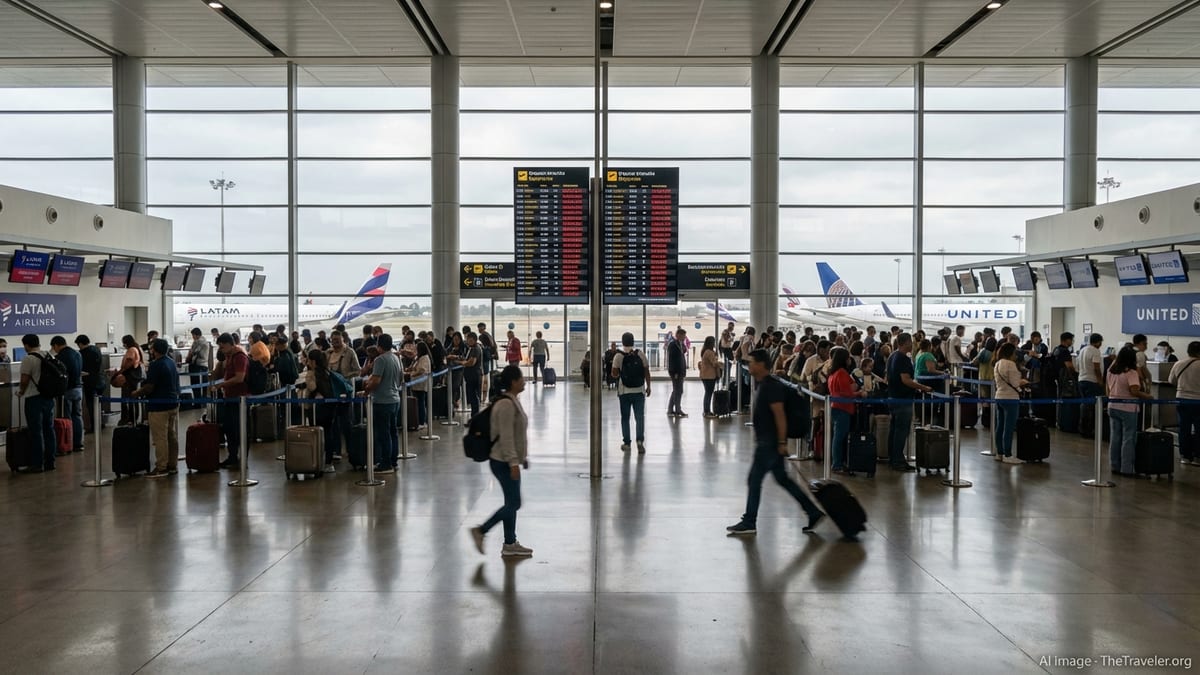
LATAM Peru Leads Cancellations as Lima Feels the Strain
Jorge Chávez International Airport in Lima recorded 11 flight cancellations and 33 delays on Monday, February 23, sharply disrupting domestic and international travel at Peru’s main air hub. LATAM Airlines Peru accounted for the bulk of the problems, with eight canceled flights and 21 delays affecting high-demand routes between Lima and cities including Arequipa, Cusco, and Jaén, as well as long-haul services to North America and Europe.
Airport operations data compiled by industry trackers and reported by regional travel outlets show that Sky Airline was the second most affected carrier with two cancellations and two delays, while United Airlines, Air France, Iberia, KLM, Spirit, Air Canada, and Air Transat all reported delays or isolated cancellations. The disruption comes at a time of strong seasonal demand, magnifying the impact on both domestic travelers and international visitors using Lima as a gateway to Peru.
Queues grew at airline service counters through the morning and early afternoon as frustrated passengers sought rebooking options or refunds. Many domestic travelers attempting same-day connections onward to regional cities such as Arequipa and Cusco found themselves stranded in Lima, while visitors heading to the United States and Europe were left scrambling for alternate routings.
Airport officials emphasized that Jorge Chávez itself remained operational, with runways and terminal systems functioning, but acknowledged that carriers were struggling to recover their schedules in the face of overlapping issues: localized operational constraints in Peru and severe weather in the northeastern United States.
Jaén Shuts for 30 Days, Forcing LATAM Route Suspensions
A major factor behind LATAM Peru’s cancellations is the temporary shutdown of Fernando Belaunde Terry Airport in Jaén, in the northern region of Cajamarca. On February 21, Peru’s state airport operator CORPAC confirmed a 30-day suspension of commercial operations at Jaén to carry out corrective maintenance on the runway, taxiway, and aircraft apron. The announcement followed a government resolution formally declaring the airport’s air service to be in an emergency condition.
LATAM had already halted its Lima–Jaén flights a week earlier, on February 15, citing runway works ordered by the authorities and stressing that the decision was driven by safety requirements. Flight-history data show LATAM’s regular Lima–Jaén service repeatedly listed as canceled through mid and late February, underscoring the extended nature of the disruption for this regional market.
With Jaén effectively offline for at least a month, LATAM has been directing affected passengers toward nearby cities. The airline has offered options to reroute travelers to or from Chiclayo, Cajamarca, or Piura without penalty, as well as full ticket refunds. Even so, local tourism businesses in the Jaén area report sharp drops in advance bookings and warn that the temporary closure, while necessary for safety, risks derailing peak-season plans for both domestic tourists and international visitors exploring northern Peru.
For residents of Jaén, the suspension leaves them dependent once again on lengthy overland journeys. What had become a short domestic flight from Lima is now, for many, an overnight bus trip. Regional authorities are urging the national government and CORPAC to ensure that runway and drainage works finish within the announced window so that regular air connectivity can resume before the next holiday surge.
United Airlines Hit by U.S. Nor’easter as Key Links to Peru Disrupt
On the international front, United Airlines’ operations between Peru and the United States have been disrupted by a powerful winter storm sweeping across the U.S. Northeast. The nor’easter, connected to what forecasters have labeled Winter Storm Hernando, has triggered more than 5,000 flight cancellations across the United States on Monday, with airports in New York, Newark, Boston, and Philadelphia among the hardest hit.
Industry data show that United has canceled at least one Lima-linked service and delayed another at Jorge Chávez International on February 23, while its wider U.S. network has seen extensive groundings from New York and Newark to Chicago and Boston. A San Francisco to Newark service scheduled for Sunday, February 22, for example, was canceled ahead of the worst of the storm, illustrating how transcontinental traffic feeding into United’s East Coast hubs has been impacted.
For Peru-bound passengers, the storm’s knock-on effects have been immediate. Travelers heading from U.S. cities to Lima, or connecting through Lima onward to regional destinations such as Arequipa and Cusco, have faced rebookings, overnight stays, and complicated rerouting via other hubs. Some have opted to delay travel altogether, particularly those headed for leisure trips who can shift plans more flexibly than business travelers.
United has responded with flexible rebooking policies that allow affected customers to change travel dates without change fees, although fare differences may still apply. Given the scale of the storm-related cancellations across multiple airlines, replacement seats on alternative services have been limited for peak-time departures, further extending the disruption window for many travelers between Peru and the United States.
Arequipa, Cusco and Other Domestic Hubs Feel the Ripple Effect
While the most visible impact is at Lima, cancellations and delays have cascaded out to other Peruvian airports, especially major domestic hubs. Arequipa’s Alfredo Rodríguez Ballón International Airport and Cusco’s Alejandro Velasco Astete Airport have experienced schedule knock-ons as aircraft and crews have failed to arrive from Lima on time or at all.
Flight trackers show that while many Arequipa–Lima services operated as scheduled over the weekend and into Monday, some Lima–Arequipa rotations in mid-February were canceled or returned to origin due to technical and operational issues, tightening slack in LATAM’s domestic network. With Jaén flights removed from the roster and weather-related delays affecting certain inbound international services, carriers have had less flexibility to absorb fresh disruptions.
For local passengers, the result has been an unpredictable travel experience. Midday flights from Lima to southern cities have gone out late or with equipment changes, and tight connections in Lima have become riskier. Travelers heading from Cusco to international onward flights via Lima have been particularly exposed, needing longer buffers to ensure they do not miss long-haul departures to North America or Europe.
Airport staff in Arequipa and Cusco have urged passengers to arrive earlier than usual and to maintain close contact with airlines’ digital channels for the latest updates. While runway and weather conditions at these airports have remained largely favorable, their dependence on Lima as a central hub means they are highly sensitive to any operational turbulence at Jorge Chávez.
Storm Hernando Freezes U.S. Northeast, Amplifying Global Disruptions
The travel chaos in Peru is unfolding against the backdrop of one of the most severe winter storms to hit the northeastern United States in nearly a decade. By Monday morning, U.S. data providers were reporting more than 5,300 flight cancellations within, into, or out of the country, a figure that continued to climb as blizzard conditions deepened.
Airports serving New York and Boston have been among the worst affected. At New York’s JFK Airport, roughly three-quarters of all scheduled flights for February 23 have been canceled, while Newark Liberty International and Boston Logan are reporting similarly high cancellation rates. With swathes of the Northeast under blizzard or winter storm warnings, authorities have imposed travel bans and urged residents to stay off the roads.
For airlines like United, which relies heavily on Northeast hubs such as Newark and Washington for its transatlantic and South American networks, the storm has effectively severed many long-haul connections. Flights linking Peru to major U.S. and European destinations via the East Coast have been delayed, rerouted through other hubs, or outright canceled, leading to a tangle of missed connections and extended layovers for passengers already en route.
The storm’s timing is particularly damaging because it hits on a Monday, when business travel demand is traditionally strong and aircraft utilization is high. That increases the risk that delays and cancellations will cascade well into Tuesday and possibly beyond, as airlines work through backlogs and reposition aircraft and crew. Passengers traveling between Peru and the United States over the coming days are being advised to monitor forecasts and airline alerts closely.
What Airlines Are Telling Affected Passengers
In response to the disruptions, both LATAM Peru and United Airlines have activated contingency measures intended to ease the burden on travelers. LATAM has reiterated that passengers holding tickets on canceled Lima–Jaén services can request full refunds without penalty or choose to rebook from alternate airports in northern Peru, including Chiclayo, Cajamarca, and Piura. Customer service channels, both online and at airports, are prioritizing cases linked directly to the Jaén shutdown and associated cancellations from Lima.
For domestic routes such as Lima–Arequipa and Lima–Cusco, LATAM has encouraged travelers to use its app and website to confirm flight status before heading to the airport and to consider voluntary flight changes if flexible. While not all domestic disruptions qualify for fee-free changes, the airline has shown some discretion in waiving charges in cases where delays or aircraft substitutions have materially altered passengers’ itineraries.
United, for its part, has issued a weather waiver tied to the nor’easter affecting the Northeast. Passengers booked on flights to, from, or through storm-hit airports including Newark, New York JFK, Boston, and Philadelphia can typically change to new travel dates within a limited window without incurring change fees. In many cases, United is also permitting rerouting via other hubs where capacity allows, though fare differentials may still apply, and seats remain constrained on popular transcontinental and Latin American services.
Both airlines are urging customers to rely on digital tools rather than airport counters whenever possible, citing the heavy pressure on frontline staff. Mobile notifications, email alerts, and in-app rebooking functions have become the main channels for managing disrupted itineraries, especially for travelers already in transit or those connecting through Lima from smaller regional airports.
Practical Advice for Travelers Moving Through Peru Now
For travelers currently in Peru or preparing to depart in the coming days, aviation and consumer experts recommend building additional flexibility into plans. That includes allowing longer connection times in Lima, particularly for passengers arriving on domestic flights before an international departure to North America or Europe. Given the combination of infrastructure works at Jaén, domestic schedule adjustments, and storm-induced disruptions in the United States, same-day tight connections carry significantly higher risk than usual.
Passengers are also being advised to double-check departure airports and times the day before travel and again a few hours prior to heading to the airport. With some flights canceled at short notice, especially those feeding into or out of U.S. East Coast hubs, schedules published even 24 hours earlier may no longer be accurate. Where possible, travelers with nonessential trips are postponing departures until after the worst of Storm Hernando has passed and airlines have had time to restore more stable operations.
Those who must travel are encouraged to pack essential items, medications, and a change of clothes in their carry-on baggage to better cope with unexpected overnight stays or extended time in terminals. Travel insurance policies that cover weather-related delays and missed connections may provide some financial relief, although coverage varies widely by provider and tariff.
Despite the upheaval, officials in Peru stress that key tourism destinations remain open and accessible, albeit with more complicated logistics than usual. Machu Picchu, the Sacred Valley, and the southern city of Arequipa continue to welcome visitors, and many tour operators are adjusting itineraries on the fly to accommodate rebooked flights and altered arrival times.
How Long the Disruptions Could Last
The outlook for travelers over the next week is mixed. On the one hand, the maintenance-related closure of Jaén’s airport is clearly defined: CORPAC has announced a 30-day window for works, suggesting a provisional reopening date around the third week of March if everything proceeds on schedule. Once the runway and drainage upgrades are complete and regulatory inspections finalized, LATAM should be able to restore regular Lima–Jaén services, gradually easing pressure on alternative northern routes.
On the other hand, the storm-driven disruptions involving United and other international carriers are less predictable. Weather models indicate that Storm Hernando’s most intense phase will pass by late Tuesday, but airline operations are expected to remain fragile for several days as carriers clear backlogs, reposition aircraft, and manage crew rest requirements. For some passengers, especially those on heavily booked transatlantic or U.S.–South America routes, that could mean travel dates slipping by several days rather than hours.
In Peru’s domestic market, airlines are likely to continue fine-tuning schedules in the short term, using larger aircraft on trunk routes such as Lima–Arequipa and Lima–Cusco where feasible, while maintaining the suspension of direct flights to Jaén. Travelers in northern Peru may see a modest increase in capacity to and from Chiclayo, Cajamarca, and Piura as carriers seek to partially compensate for Jaén’s closure, but experts caution that these adjustments will not fully replace the lost connectivity.
For now, the combination of infrastructure work in Jaén, concentrated cancellations at Lima, and a historic U.S. winter storm has created a complex web of disruptions stretching from regional Peruvian airports to major hubs in North America and Europe. Passengers are being urged to stay informed, flexible, and patient as airlines and authorities work to stabilize the network in the days ahead.