

More news on this day
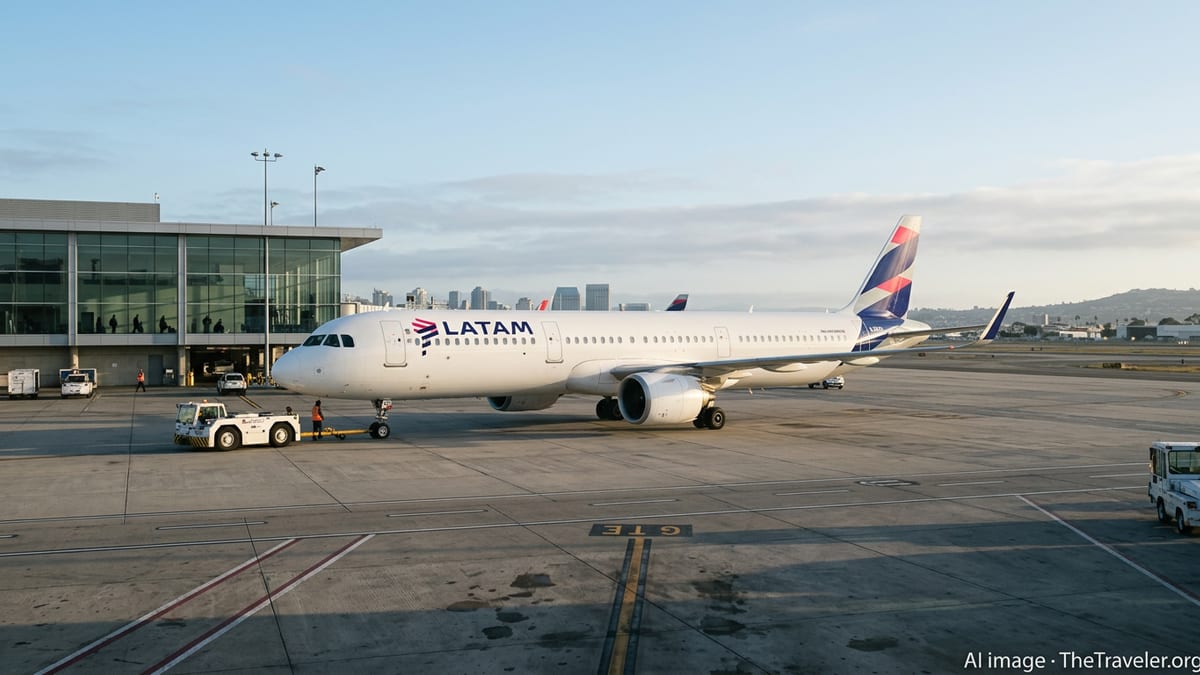
San Diego travelers eyeing Latin America could soon see a quieter, more efficient class of aircraft on their itineraries, as LATAM Airlines deepens its bet on the Airbus A321neo in a move that analysts say will redefine regional connectivity across the Americas.
A Strategic Bet on High-Capacity Narrowbodies
The latest addition of an A321neo to LATAM Airlines’ order and delivery stream underscores how central the single-aisle workhorse has become to the group’s post-restructuring strategy. Airbus data for February 2026 shows LATAM among the carriers still actively growing their A321neo books, even as production slots remain scarce worldwide. The airline has already been inducting the type at pace since taking its first A321neo in late 2023, pairing new deliveries with lease extensions to keep capacity growing.
For San Diego, a market that sits at the crossroads of U.S. West Coast demand and Latin America’s expanding middle class, LATAM’s move matters. While the Chile-based group does not yet serve San Diego directly, its deepening A321neo commitment strengthens key hubs such as Santiago, São Paulo and Lima. Those gateways act as the connective tissue for itineraries that start at San Diego International Airport and continue south via partner or self-connect options.
Industry observers note that LATAM is positioning the A321neo as the backbone of its dense domestic and regional network, freeing up widebodies for long-haul growth. That shift, they say, is part of a broader trend in which large narrowbodies take over routes once flown by older, less efficient jets, opening room for secondary cities like San Diego to plug into Latin America with fewer stops and better schedules over time.
LATAM executives have repeatedly framed the narrowbody expansion as both a growth and resilience play. By 2030, the group expects to have taken delivery of more than 120 aircraft across its fleet, with the A321neo family and upcoming A321XLRs carrying much of the load as demand in South America stabilizes and then rises.
Implications for San Diego’s Growing International Profile
San Diego International Airport is in the midst of its own transformation, typified by the multi-billion-dollar Terminal 1 rebuild that opened in phases starting in late 2025. The project added gates, modern boarding areas and upgraded customs processing, specifically designed to handle more and larger narrowbody aircraft on medium-haul routes. Airport planners have made clear that the long-term vision includes deeper connectivity into Mexico, Central America and South America.
In that context, LATAM’s A321neo push looks particularly relevant. The type’s range and economics make routes from LATAM’s hubs to Southern California increasingly viable, especially when paired with code-sharing and alliance partnerships that can feed traffic beyond San Diego. Aviation analysts say that as the group’s A321neo fleet grows and older A321ceo and A320 aircraft cycle out, LATAM will have both the capacity and efficiency to test new city pairs that were previously marginal.
San Diego has already demonstrated its appetite for Latin American connectivity through the arrival of other carriers serving Panama City and Mexican destinations. Each successful route strengthens the case for further southbound flights. With the A321neo, LATAM could eventually pursue targeted seasonal or year-round services that tap into leisure demand for beaches, wine regions and adventure travel in Chile, Brazil, Peru and Colombia, all reachable from a single connection.
Local tourism officials in San Diego have been vocal about the economic upside of increased international air service, citing higher-spending visitors and stronger business links. A robust, fuel-efficient fleet at LATAM raises the odds that the next wave of new flights to and from Latin America will be operated by aircraft like the A321neo, which fits neatly into the capacity profile that San Diego’s new terminal is built to handle.
Cabin Experience, Sustainability and Cost Dynamics
For passengers connecting from San Diego onto LATAM’s A321neo network, the shift is likely to be felt immediately in the cabin. The aircraft typically seats more than 220 travelers in a single-class configuration, or fewer when a premium cabin is installed, and features modern lighting, quieter engines and larger overhead bins. LATAM has been using the newer narrowbodies to strengthen its premium proposition, adding upgraded business and extra-legroom seating on select routes as it targets higher-yield customers.
From an environmental standpoint, the A321neo offers double-digit fuel burn reductions per seat compared with previous-generation aircraft. That is central to LATAM’s pledge to move toward carbon neutrality by mid-century. As more A321neos enter service, especially on trunk routes out of mega-cities like São Paulo and Santiago, the cumulative emissions savings become a tangible selling point to environmentally conscious travelers starting their journeys in cities such as San Diego.
Cost dynamics are just as critical. With jet fuel still volatile and competition intense across Latin America, the A321neo’s economics can make or break the viability of new routes. Higher seat counts spread fixed costs across more passengers, allowing airlines to sustain thinner yields while still turning a profit. This can encourage experimentation with new one-stop itineraries that link U.S. secondary markets to Latin America via regional hubs.
Airline strategists note that the A321neo also offers operational flexibility. Depending on demand, LATAM can deploy the type on short, high-density domestic segments in Brazil one day and on longer transcontinental legs the next. That versatility increases the odds that any future San Diego-linked itineraries will see consistent, modern equipment rather than aging aircraft shuffled around the network.
How the A321neo Fits Into LATAM’s Next Chapter
The growing A321neo fleet does not exist in isolation. LATAM is layering it alongside a forthcoming Embraer E2 regional jet order and long-range A321XLRs expected to join from 2027. Together, these aircraft give the group a finely tuned range of capacity options, with smaller regional jets feeding hubs and the A321neo family covering everything from dense domestic sectors to thin transcontinental routes.
Financial disclosures and executive commentary over the past year paint a picture of a carrier emerging from restructuring with a sharper focus on profitable growth. The A321neo is a linchpin of that plan, enabling LATAM to grow capacity in markets where demand has proven resilient while keeping a tight grip on costs. Industry analysts argue that the aircraft’s role in this new chapter is as much about network agility as raw numbers.
For U.S. travelers, especially on the West Coast, the implications will unfold gradually. As LATAM takes more A321neos and retires older jets, itineraries that start in San Diego and connect through Latin American hubs should see more consistent product standards, improved punctuality and potentially more competitive fares as efficiency gains are passed on.
In a broader sense, the A321neo deal signals that Latin America’s largest airline group is preparing for a decade of disciplined expansion. If San Diego continues to elevate its international profile and demand for southbound travel stays strong, the city is well positioned to benefit from LATAM’s powerful new narrowbody chapter, even before a direct route appears on departure boards.