

More news on this day
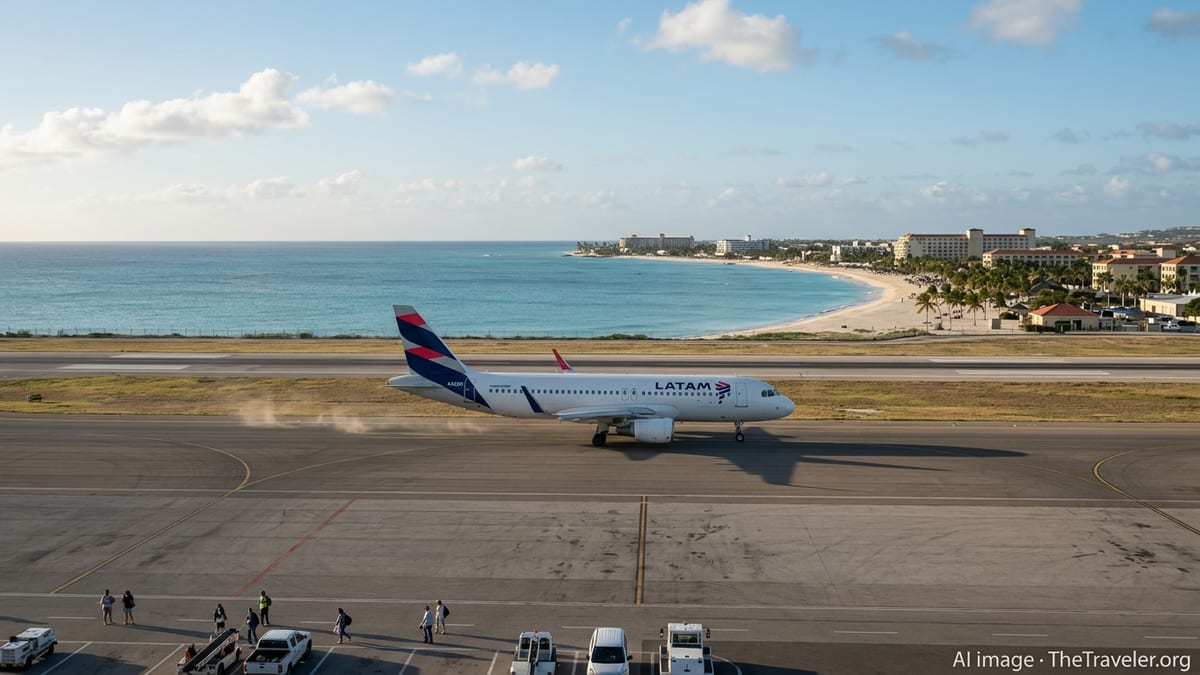
New daily nonstop flights between Lima and Aruba on LATAM Airlines are reshaping Caribbean travel patterns, positioning the Dutch Caribbean island as a rising holiday favorite for South American travelers.
Get the latest news straight to your inbox!
Daily Lima–Aruba Link Cements a Strategic Gateway
Publicly available schedule data shows that LATAM Airlines now operates one daily nonstop flight between Lima’s Jorge Chávez International Airport and Aruba’s Queen Beatrix International Airport, using Airbus A320 family aircraft on the roughly four-hour route. The service builds on an initial launch in December 2023, which started as a limited-frequency connection before being ramped up in stages to meet demand from Peru and wider South America.
Previous announcements from Aruba Airport and the Aruba Tourism Authority indicated successive increases in weekly frequencies, first from three to four flights in mid 2024 and then to five from October 2024 as load factors strengthened and bookings out of key Latin American markets accelerated. The evolution to a daily operation reflects that growth trajectory and underscores the strategic role of Lima as a hub for connecting passengers from Chile, Argentina, Brazil and other countries seeking nonstop access to the southern Caribbean.
Route mapping platforms and airline timetable aggregators currently list LATAM as the only carrier offering nonstop service on the Lima–Aruba pairing, giving the airline a de facto monopoly on this particular flow while also simplifying routing decisions for travelers who might otherwise connect through Panama City, Bogotá or North American gateways.
For LATAM, the consolidated daily schedule helps optimize aircraft utilization on its short and medium haul network from Lima, while allowing better connectivity with banked arrivals from major South American cities. For Aruba, it means consistent, year round access to high yielding leisure travelers who are increasingly willing to look beyond traditional Caribbean islands.
Aruba Rides a Wave of Latin American Demand
Official tourism documents and corporate plans from the Aruba Tourism Authority point to Latin America as one of the island’s fastest growing source regions, with seat capacity from the region reported to have expanded by more than forty percent and load factors also trending upward in 2024. The Lima–Aruba route is highlighted in those materials as a cornerstone of that growth, providing a direct pipeline from multiple South American markets that funnel through LATAM’s Lima hub.
This focus is already spilling over into additional connectivity. Recent press releases from Aruba Airport describe the launch of seasonal flights between Bogotá and Aruba on LATAM, initially operating three times per week, further bolstering the island’s reach into Colombia, one of Latin America’s most active outbound travel markets. Together with Lima, Bogotá gives Aruba exposure to both Andean and Southern Cone travelers who might previously have opted for closer beach destinations in Colombia, Brazil or the Dominican Republic.
Industry analysis suggests that Aruba’s appeal to South Americans lies in its combination of stable year round weather, high category all inclusive resorts, and a perception of safety and ease of access relative to some mainland destinations. The strengthening of airlift from Lima adds a practical dimension to that appeal, cutting out extra connections and overnight layovers that can deter families and higher spending travelers.
Tour operators in Peru and neighboring countries have already begun packaging Aruba stays around the nonstop flights, promoting long weekend and five night itineraries that align with the daily LATAM schedule. This bundling further anchors Aruba in the minds of South American consumers as a distinct Caribbean alternative to more established favorites such as Punta Cana or Cancun.
Lima’s Hub Role Makes Aruba a One Stop Caribbean Escape
Lima’s positioning as a growing regional hub is central to Aruba’s ambitions. LATAM’s network allows passengers from Santiago, São Paulo, Buenos Aires, La Paz and other cities to reach Aruba with a single connection, often within the same calendar day. Timetabled bank structures at Jorge Chávez International Airport are designed to feed flights such as the Lima–Aruba service, turning what was once a complex multi stop journey into a more straightforward itinerary.
According to airline schedule tracking platforms, the Lima–Aruba sector typically departs in daytime hours, an attractive feature for leisure travelers who prefer to avoid overnight redeyes on vacation. With a flight time of around four hours and ten minutes, it is competitive with many domestic trunk routes within larger countries, yet delivers travelers straight into the heart of the southern Caribbean.
This connectivity also broadens Aruba’s reach into secondary South American markets that lack direct long haul links to the Caribbean. Travelers from cities such as Córdoba, Belo Horizonte or Antofagasta can route via LATAM’s short haul services into Lima, then continue onward to Aruba on the daily flight, using a single airline and through checked baggage. This simplicity is increasingly valued in a market still sensitive to disruption and missed connections.
By centering Aruba within its Lima hub strategy, LATAM is effectively knitting together a South America to southern Caribbean corridor that did not exist at scale only a few years ago. That corridor not only supports leisure travel but may also encourage small scale business and conference traffic, particularly from sectors such as finance and energy that maintain links between the region and Dutch Caribbean jurisdictions.
Growing Competition in the Caribbean, Changing Traveler Choices
The strengthening of Lima–Aruba service comes as airlines across the Americas intensify competition for Caribbean-bound leisure travelers. Analysts note that carriers such as Copa Airlines, Avianca and various North American airlines have historically dominated many South America to Caribbean flows via their respective hubs. LATAM’s daily Aruba operation, complemented by expanded services to other Caribbean points like Havana, Montego Bay and Punta Cana, signals a more assertive push into this segment.
For travelers, this competition manifests as more choices on routes, schedules and fare types. Early promotional campaigns around the Lima–Aruba launch and subsequent frequency increases emphasized package fares and inclusive options, signaling a focus on value conscious families as well as couples and small groups. At the same time, the daily pattern opens opportunities for flexible, flight only bookings that appeal to independent travelers who prefer to assemble their own accommodation and experiences.
Aruba’s hotel and resort sector is adapting to these shifts. Industry reports highlight new marketing collaborations with South American travel agencies, Spanish and Portuguese language campaigns, and targeted promotions during key holiday periods such as Southern Hemisphere summer and Easter. The reliability of a daily flight from Lima allows properties to plan more confidently for these peaks and smooth out occupancy during traditional shoulder seasons.
Observers of regional tourism trends suggest that as South American travelers grow more familiar with Aruba, their preferences may begin to influence the island’s product mix, prompting greater emphasis on culinary experiences, nightlife and shopping that cater to Latin tastes, alongside the established sun and sand offering.
Aruba Poised as South America’s Next Big Caribbean Holiday Spot
With the consolidation of daily LATAM flights from Lima, Aruba finds itself in a favorable position to capture a larger share of South America’s outbound holiday demand. The island’s blend of turquoise waters, desert like landscapes, accessible English and Spanish speaking service culture, and a robust inventory of mid to high end resorts meshes well with the expectations of South American travelers seeking aspirational yet attainable Caribbean escapes.
Air connectivity is often cited by tourism strategists as the decisive factor in transforming emerging destinations into mainstream choices. In Aruba’s case, the Lima–Aruba service functions as both a practical transport link and a powerful marketing message across the continent, signaling that the island is open, reachable and integrated into the region’s dominant airline network.
As additional South American routes come online and existing ones mature, Aruba is likely to see further diversification in its visitor base, reducing reliance on traditional North American and European markets. If current trends in seat capacity, load factors and route performance continue, industry watchers expect the island’s profile as a South American holiday favorite to strengthen, with the daily LATAM connection from Lima serving as the backbone of that rise.