

More news on this day
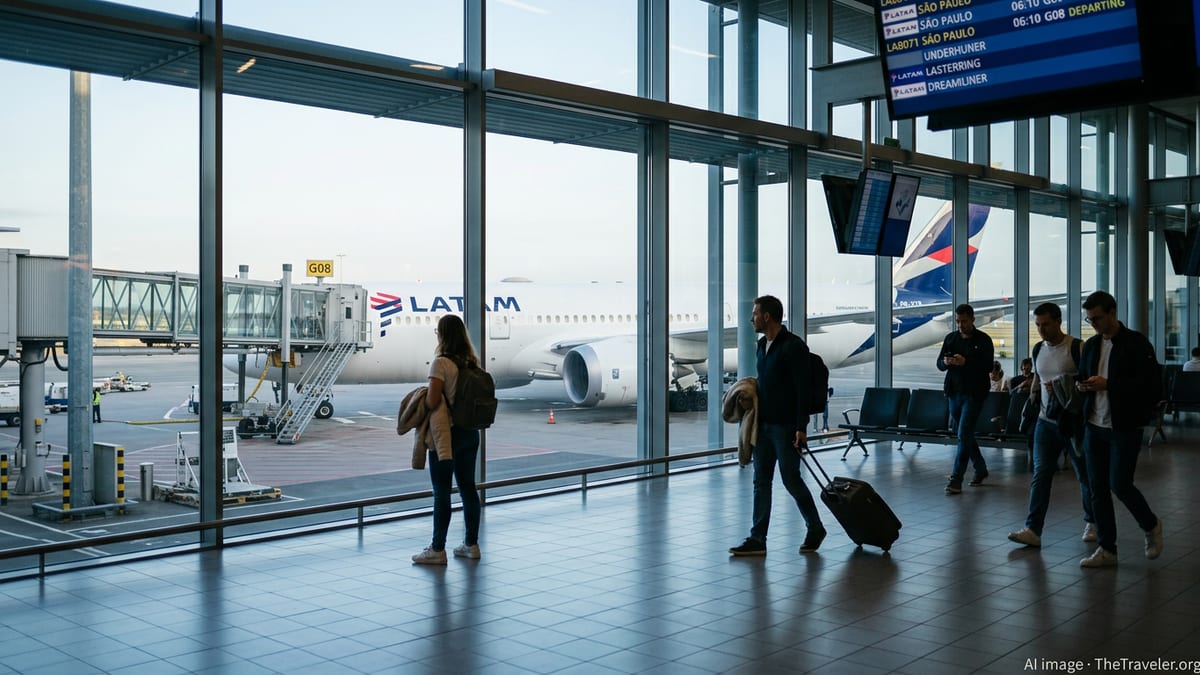
LATAM Airlines will launch a new nonstop route between Amsterdam and São Paulo on March 30, 2026, a move expected to intensify competition to Brazil and ignite fresh demand for hotels and travel across the country.
Strategic New Link Between Europe and Brazil
The new Amsterdam to São Paulo service marks LATAM’s first direct entry into the Dutch market and a significant expansion of its long-haul network from its Guarulhos hub. From March 30, 2026, the airline will initially operate several weekly flights before ramping up to six weekly services by mid-April, sharply improving connectivity between northern Europe and Brazil’s financial capital.
The route positions Amsterdam as an additional European gateway into Brazil alongside existing LATAM services from cities such as Madrid, Milan and Rome, and it plugs directly into the carrier’s wider South American network. For Dutch travelers, it removes the need for a connection through other hubs to reach São Paulo, while for Brazilians it opens a new nonstop option into one of Europe’s most important aviation and tourism centers.
The timing aligns with strong underlying demand for Brazil, where international arrivals have been rising on the back of a weaker local currency, major events and a renewed global interest in South American nature, culture and gastronomy. Airlines and tourism boards alike are looking to capture this growth with additional capacity and new city pairs.
LATAM’s move also adds a new competitor into an Amsterdam–São Paulo corridor that has historically been dominated by European carriers. With a large South American customer base and strong loyalty following, the carrier is betting that nonstop convenience, onward connections and competitive pricing will quickly stimulate traffic in both directions.
Tourism Boom: What It Means for Brazil’s Key Destinations
Brazilian tourism officials have been seeking deeper diversification of source markets beyond traditional North American and regional travelers, and the Netherlands offers high-spending, long-stay visitors who often combine urban stays with nature-focused itineraries. The new nonstop link is expected to benefit not only São Paulo, but also beach destinations and eco-tourism hotspots accessed through LATAM’s domestic network.
From Guarulhos, travelers arriving from Amsterdam will be able to connect the same day to Rio de Janeiro, the northeast coast, the Amazon region and southern wine and mountain routes. This seamless connectivity is likely to encourage more multi-stop itineraries, such as pairing a cultural weekend in São Paulo with beach time in Bahia or a visit to the Iguaçu Falls.
Industry analysts anticipate that group travel, incentives and conference business will quickly capitalize on the new route, given Amsterdam’s strong corporate base and São Paulo’s status as Latin America’s largest business center. Meetings and events planners are already forecasting greater ease in attracting European delegations when a direct, high-capacity route is available.
The shift comes as Brazil continues to invest in tourism infrastructure and promotion, including upgrades to airports and urban areas and targeted campaigns in European markets. More direct long-haul capacity tends to correlate with longer stays and higher per-trip spending, suggesting that the Amsterdam–São Paulo link could play a measurable role in lifting Brazil’s tourism revenue from 2026 onward.
Hotels Brace for Higher Demand From Dutch and Connecting Markets
For Brazil’s hotel sector, the arrival of a new nonstop European route translates directly into expectations of higher occupancy and stronger average daily rates in gateway cities and beyond. São Paulo’s upscale and business-focused hotels are gearing up for additional corporate travelers, trade fair attendees and leisure guests who use the city as a starting point for wider exploration.
Operators in Rio de Janeiro, Salvador, Fortaleza and Recife are also watching closely, anticipating more Europeans will add beach segments to their itineraries. With LATAM’s domestic schedule feeding the new long-haul service, hoteliers in secondary destinations that historically relied on indirect European traffic may now see more consistent arrivals tied to the Amsterdam route.
At the same time, increased capacity can pressure properties to refine their value proposition. In competitive urban markets, hotels are likely to respond with targeted promotions for European guests, more flexible cancellation policies and enhanced digital booking tools. Some brands are already signaling a focus on Dutch and broader Benelux travelers, exploring localized marketing and language support at front desks.
In the medium term, sustained higher demand could accelerate planned hotel renovations and new-build projects, especially near São Paulo’s Guarulhos airport and in popular coastal resorts. Investment groups monitoring air connectivity often cite new long-haul routes as a key indicator of whether to green-light developments in emerging leisure corridors.
Implications for Fares, Competition and Traveler Experience
The Amsterdam–São Paulo launch is expected to intensify fare competition on Europe–Brazil routes, particularly when combined with the increase to six weekly frequencies in April. More seats in the market typically lower average prices or at least slow fare inflation, and travel agents in both regions are already forecasting broader promotional activity once sales open for the full 2026 summer season.
For leisure travelers, especially those booking far in advance, this could mean improved access to Brazil during peak European holiday periods. Early-booking deals, tactical seat sales and dynamic packaging with hotels and tours are likely as LATAM and rival airlines jostle for market share. Corporate clients, meanwhile, gain leverage in negotiating volume-based discounts and preferred-carrier agreements along the corridor.
The traveler experience itself is set to benefit from a reduction in total journey times and fewer connections. Passengers who previously routed through other European hubs or via North America can now fly nonstop and clear immigration in São Paulo before continuing on domestic connections under a single ticket. For many, this will reduce the risk of misconnected bags and simplify visa and transit requirements.
Airports and tourism bodies in both Amsterdam and São Paulo are expected to align marketing campaigns around the new route, highlighting cultural links, city-break potential and sustainability initiatives. With modern aircraft and updated cabin products now standard on long-haul fleets, passengers can anticipate a more comfortable and consistent experience between the two continents than was typical a decade ago.
How Travelers and the Trade Can Capitalize
For individual travelers, the key takeaway is timing. With flights beginning March 30, 2026 and frequencies rising quickly thereafter, those planning major trips to Brazil from the Netherlands or neighboring countries may want to watch for introductory fares and newly released award seats as inventory is loaded into global distribution systems.
Travel advisors and tour operators have an opportunity to design fresh itineraries that take advantage of the route’s schedule, including overnight departures that connect smoothly into morning domestic waves in Brazil. Packages that combine São Paulo’s gastronomy and culture with time in Rio de Janeiro, the Pantanal or the northeast coast could be positioned specifically at the Dutch and Benelux markets.
On the Brazilian side, regional tourism boards are likely to court European visitors with themed campaigns built around nature, culture, sports and events. With easier access through Amsterdam, destinations that were once considered niche or logistically complex for Europeans may now feature more prominently in brochures and online platforms.
Ultimately, LATAM’s new nonstop Amsterdam–São Paulo route underscores how air connectivity continues to shape the global tourism map. For hotels, tour operators and travelers, the coming months leading up to March 2026 will be a crucial window to prepare for, and take advantage of, a fresh chapter in Brazil’s tourism growth story.