

More news on this day
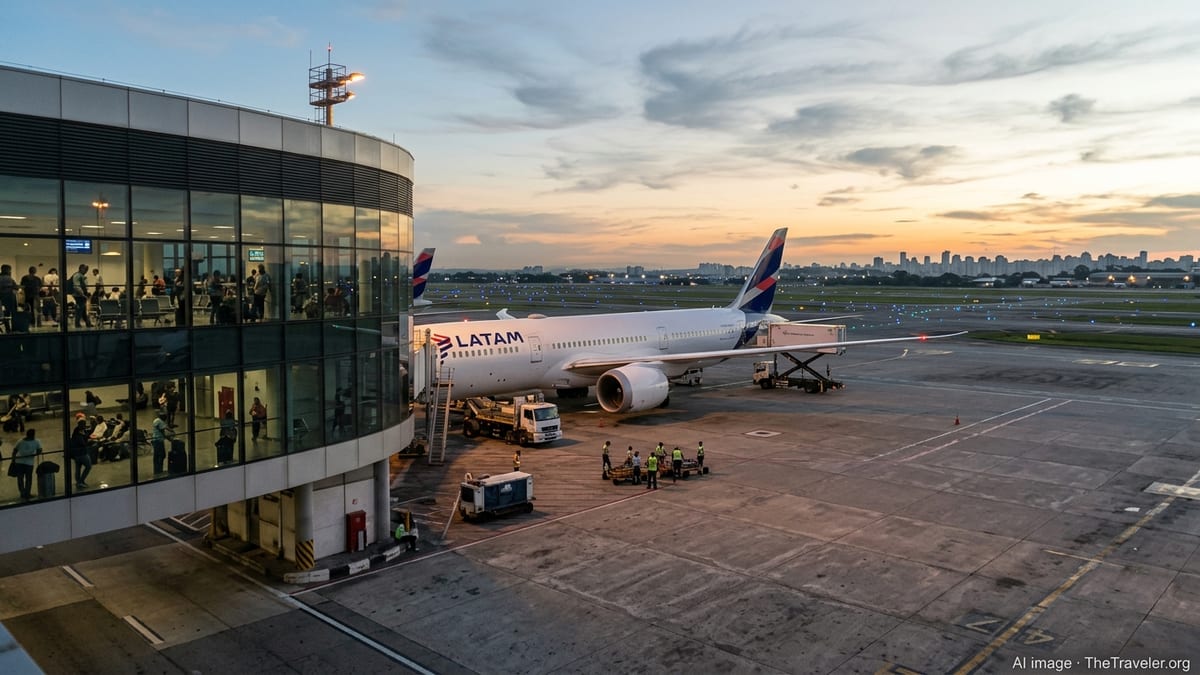
Brazil’s largest city is stepping into a new role on the transatlantic map as LATAM prepares to launch nonstop São Paulo–Amsterdam flights with Boeing 787-9 Dreamliners, reinforcing a broader surge in Brazil–Europe connectivity that now reaches Brasília, Rio de Janeiro, Salvador, Recife, Porto Alegre and a growing list of regional hubs.
Get the latest news straight to your inbox!
New Dreamliner Link Positions Amsterdam as a Northern Europe Gateway
Publicly available schedule data shows that LATAM’s new São Paulo–Amsterdam service is slated to begin in late March 2026 from São Paulo/Guarulhos, initially with multiple weekly flights before ramping up in frequency during the northern summer season. The operation will use Boeing 787-9 aircraft, adding another long-haul Dreamliner route to the airline’s European portfolio and signaling confidence in premium and leisure demand between Brazil and the Netherlands.
Specialist route-tracking outlets report that LATAM has already increased its original plans for the route, moving from a more modest start-up schedule to near-daily service by late April 2026. The decision to add capacity before the first flight departs is being interpreted in industry coverage as a clear vote of confidence in the South America–Europe market and in Amsterdam’s role as a powerful connection point for secondary European cities.
The deployment of the 787-9 is also notable. The type combines lower fuel burn with a cabin layout that allows LATAM to compete for higher-yield traffic, particularly business and long-stay leisure travelers who value nonstop links and modern in-flight amenities on overnight segments between South America and northern Europe.
For passengers, the new route reduces dependence on traditional hubs such as Madrid, Paris and Lisbon for reaching Brazil from Benelux and nearby markets. It also provides a fresh option for travelers heading onward from Brazil to other South American destinations via São Paulo, including domestic connections into Brazil’s fast-growing secondary cities.
Brazilian Cities Build Out a Denser Network to Europe
The São Paulo–Amsterdam debut comes as several Brazilian gateways add or restore direct links to Europe, gradually shifting Brazil from a handful of coastal hubs to a more diversified transatlantic network. Industry updates and aviation forums tracking schedules highlight an expanding web of flights connecting Europe with Brasília, Rio de Janeiro, Salvador, Recife, Porto Alegre and other regional centers.
In Rio de Janeiro and Salvador, European carriers have been increasing capacity during the 2025–2026 high season, particularly from Paris, Madrid and other major hubs. Schedule filings cited in aviation analyses indicate additional weekly frequencies to Rio de Janeiro/Galeão and seasonal boosts into Salvador, with some routes temporarily reaching double-digit weekly flights at peak demand before moderating in the shoulder months.
Recife and Porto Alegre, long considered important but secondary gateways, have also seen renewed attention. Industry tracking suggests an incremental increase in nonstop services from select European hubs, reflecting demand from both outbound Brazilians and inbound European visitors seeking beach, cultural and gastronomic tourism beyond Rio and São Paulo.
Brasília, the nation’s capital, has been gradually consolidating its position as a federal and business hub with better long-haul access. While its intercontinental portfolio remains smaller than that of São Paulo or Rio de Janeiro, schedule data points to a medium-term strategy of layering more international flights on top of a dense domestic network, allowing Brasília to feed additional transatlantic services as demand grows.
South America Travel Boom Underpins Capacity Expansion
The new LATAM route and the broader expansion out of Brazilian cities are unfolding against a backdrop of sustained growth in South American air travel. Recent data from global industry bodies shows that Latin America’s passenger traffic has continued to climb through 2024 and 2025, with Brazil consistently among the strongest performers in domestic and regional markets. Reports indicate that Brazil’s domestic traffic alone posted double-digit growth in 2025 compared with the previous year, underlining the depth of the home market.
Regional aviation associations report that Latin America and the Caribbean reached new passenger records in 2025, with intra-regional traffic accounting for the majority of growth and Brazil, Argentina and Peru leading the domestic surge. At the same time, extra-regional segments, including routes linking the region with Europe, have recorded solid gains in both passenger volumes and seat capacity.
Analysts note that this expansion is occurring even as airlines remain cautious about overcapacity, focusing new long-haul routes where strong point-to-point demand can be combined with connecting traffic. In Brazil’s case, São Paulo and Rio de Janeiro remain the primary magnets for European capacity, but the performance of leisure-focused markets such as Salvador and Recife during peak months has encouraged airlines to test additional frequencies and new seasonal links.
Industry outlooks for 2026 suggest that Europe–South America traffic will continue growing in line with or slightly above global averages, driven by economic stabilization in key Latin American markets and a steady rebound in long-haul tourism. Brazil’s large population and improving connectivity from secondary cities are expected to keep the country at the center of this trend.
Dreamliner Power and Competitive Dynamics on the Atlantic
LATAM’s choice of the Boeing 787-9 for São Paulo–Amsterdam reflects a broader shift toward next-generation aircraft on South Atlantic routes. Airlines on both sides of the ocean have been steadily replacing older widebodies with more fuel-efficient jets, allowing them to open thinner routes, adjust capacity seasonally and maintain competitive fares while managing operating costs.
For LATAM, the 787-9 has become a workhorse on links between São Paulo and major European capitals, where it competes with widebody fleets from European carriers and with other South American operators. The type’s range and economics support routes that might have been harder to justify with older aircraft, such as a new northern European gateway like Amsterdam that must compete with established hubs in Iberia and France.
The Dreamliner’s cabin environment is also part of the competitive equation. Passengers on overnight flights between Brazil and Europe often compare airlines not just on schedule and price but also on comfort. Features such as higher humidity, lower cabin altitude and larger windows have been heavily promoted in airline marketing, and travel agents report that cabin experience has become a more visible differentiator on long-haul leisure itineraries.
As LATAM adds capacity into Amsterdam, observers expect competitive responses from European carriers that already serve Brazil, potentially in the form of tactical frequency adjustments or targeted fare promotions. The result is likely to be a more contested but ultimately more dynamic market for travelers moving between Europe and South America.
What the New Route Means for Travelers and Tourism
For travelers in Europe, the São Paulo–Amsterdam link provides a new nonstop option into Brazil’s main international hub, with onward connections across the country and to neighboring South American nations. Amsterdam’s role as a major transfer airport means that passengers from secondary European cities can now reach São Paulo with a single connection, potentially reducing total travel time compared with routings via southern Europe.
For Brazilian travelers, especially those based in São Paulo, the new route opens a convenient path to the Netherlands and to northern Europe more broadly. It also spreads demand across a wider mix of European gateways, which may help relieve pressure on some of the busiest hubs while offering more choice in schedules and fares.
Tourism boards and airport operators in cities such as Salvador, Recife and Porto Alegre are watching these developments closely, as each additional transatlantic flight can translate into greater visibility in key European source markets. Recent data from Brazilian airports has highlighted record seat capacity and frequency growth for the 2025–2026 high season, particularly out of Salvador, as operators seek to capture both international and domestic leisure demand.
With São Paulo now adding Amsterdam to its long-haul map, Brazil’s network to Europe is becoming more multipolar, balancing established flows to Iberia and France with emerging links to Benelux and beyond. As aircraft like the Dreamliner continue to reshape what is operationally and commercially viable on long-haul routes, travelers on both sides of the Atlantic are likely to see even more choice in how they cross between Europe and South America.