

More news on this day
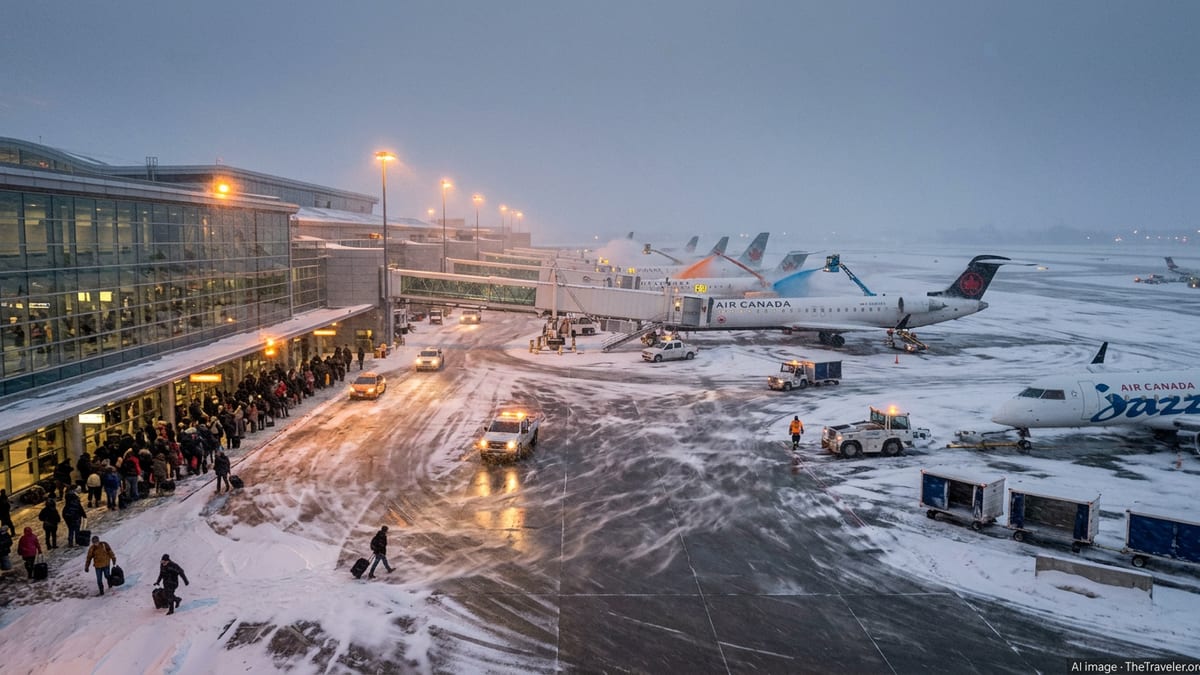
A powerful late winter storm sweeping southern Ontario on March 13, 2026 has plunged Canadian air travel into fresh turmoil, with Toronto Pearson International Airport reporting 101 flight cancellations and 486 delays as airlines struggle to keep operations moving through heavy snow, gusting winds and freezing slush.
Get the latest news straight to your inbox!
Toronto Pearson Becomes Epicenter of Fresh Disruptions
The latest blast of wintry weather arrived just as many travelers were beginning to look ahead to spring, catching airlines and passengers in an already stretched winter season. By midafternoon, operational data from Toronto Pearson indicated that roughly one in five scheduled movements had been either canceled outright or pushed back, creating long queues at check in counters, security lanes and departure gates across the sprawling hub.
Arriving aircraft were forced to slow approaches and hold for extended periods while runways were cleared, while outbound flights waited for de icing and ramp crews to safely maneuver around accumulating snow and slush. The resulting knock on effects rippled through regional and transborder networks, with delays on early morning flights cascading into missed connections throughout the day.
Airport officials reiterated that safety remained the overriding priority, noting that runway clearing, low visibility protocols and de icing requirements inevitably limit the number of takeoffs and landings the airfield can safely handle in such conditions. Passengers were urged to arrive early, remain patient and rely on official airline channels for the latest information, rather than assume previously posted times would hold.
The storm’s timing on a busy Friday travel window compounded the difficulties. Leisure travelers headed to March break holidays and business passengers returning from midweek trips converged at the airport just as snow bands intensified over the western Greater Toronto Area, reducing visibility on road and air approaches alike.
Jazz Aviation and Air Canada Bear Brunt of Schedule Cuts
Among the hardest hit carriers were Air Canada and its regional partner Jazz Aviation, which together account for a significant share of Toronto Pearson’s daily movements. The two operators scrubbed dozens of departures and arrivals between Toronto and smaller Canadian markets as well as short haul U.S. destinations, focusing remaining capacity on trunk routes and long haul services where rebooking options are more constrained.
For Jazz Aviation, which flies many of Air Canada’s feeder routes under the Air Canada Express brand, the conditions posed particular challenges. Smaller regional jets and turboprops are more vulnerable to high crosswinds and runway contamination, and flights to shorter runways at secondary airports are often among the first to be proactively canceled when weather deteriorates. That left passengers bound for mid sized cities across Ontario, Quebec and Atlantic Canada facing last minute itinerary changes or overnight stays in Toronto hotels already busy with storm related bookings.
Air Canada, meanwhile, activated its winter weather waiver, allowing affected customers to rebook without change fees where space permitted. However, with aircraft and flight crews already heavily utilized after a string of earlier winter storms this season, spare seats were limited on many routes. Lines formed at rebooking desks in both domestic and international terminals as travelers weighed whether to wait for a later flight, re route through a different hub or abandon air plans altogether in favor of rail or road travel where conditions allowed.
The disruptions further underscored how dependent Canada’s aviation network is on Toronto Pearson functioning smoothly. Even moderate schedule cuts at the country’s main hub quickly cascade into broader national and cross border disruption, particularly in the heart of winter when poor weather can simultaneously affect multiple alternate airports.
US Regional Partners Also Snarled by Weather and Congestion
While most of Friday’s cancellations and delays were tied to Canadian operators, U.S. regional affiliates were also drawn into the disruption. PSA Airlines and Endeavor Air, which operate flights on behalf of large American carriers into Toronto, recorded a growing list of delayed departures and arrivals as the day progressed, reflecting both the deteriorating conditions in Toronto and weather related slowdowns at their own U.S. hubs.
Some crossborder routes were hit twice, first by restrictions at on route air traffic control centers and then by de icing or runway backlogs at Pearson. Travelers on short haul connections between Toronto and northeastern U.S. cities such as New York, Boston and Philadelphia reported being held on the tarmac while ground crews cleared taxiways and lined up aircraft for spraying. The resulting delays meant that even flights that ultimately departed were often several hours behind schedule, pushing travelers into overnight connections or forcing missed onward flights.
Several U.S. carriers issued travel advisories linking the Toronto disruptions with wider late season winter systems tracking across the Great Lakes and northeastern United States. While major American hubs remained open, capacity reductions and slower ground handling meant fewer options for rerouting stranded passengers from Toronto, prolonging the ordeal for many caught mid journey.
With aircraft and crews out of position on both sides of the border, operations teams warned that residual delays would likely persist into Saturday, even if snowfall tapered off overnight. Airlines stressed that on time performance would remain fragile while they worked to reposition planes and synchronize crew schedules disrupted by the storm.
Passengers Confront Long Queues, Uncertainty and Limited Options
Inside the terminals, the human impact of the numbers was immediately visible. Snaking lines formed at airline service counters as passengers sought new itineraries, meal vouchers and hotel accommodations for missed connections. Families returning from school break holidays, international students trying to make connections to campus towns and business travelers racing weekend deadlines all competed for scarce rebooking options.
Many travelers described receiving multiple rolling delay notifications on their mobile devices before flights were ultimately canceled, leaving them scrambling to adjust plans. Others recounted sitting on board aircraft for extended periods while crews waited for de icing slots or runway clearances, only to taxi back to the gate when operating windows closed. For those traveling with young children or elderly relatives, the combination of uncertainty, crowded gate areas and limited seating proved especially stressful.
Ride hailing queues and public transit links were also affected as road conditions deteriorated around the airport. Passengers who decided to abandon air travel and return home or to downtown Toronto hotels encountered slow traffic on the 401 and 427 highways, while bus and train services into the city center operated with weather related delays of their own. The result was a day in which almost every step of the passenger journey, from check in to baggage claim to onward ground transport, was slower and more unpredictable than usual.
Consumer advocates reminded affected passengers to keep all receipts for out of pocket expenses and to review their rights under both airline policies and federal air passenger protection regulations. While severe weather is generally categorized as an extraordinary circumstance that limits compensation obligations, carriers are still required to provide care in the form of food, accommodation and rebooking assistance in many situations.
Prolonged Winter Raises Questions About Resilience
The latest disruption comes on the heels of a punishing winter marked by multiple storms, deep freezes and heavy snowfall across Canada. Operational data and industry reports have highlighted mounting strain on airport infrastructure, de icing capacity and staffing levels, particularly during multi day weather events that leave little time for systems to reset before the next storm arrives.
For Toronto Pearson, the late season blast has renewed scrutiny over how Canada’s busiest airport manages peak winter operations. Aviation analysts note that even with substantial investment in snow clearing fleets, de icing pads and runway lighting, there are physical and safety limits that constrain how many flights an airport can handle when visibility drops, winds increase and runway surfaces become contaminated with snow and ice. When combined with tight airline scheduling and high aircraft utilization, small disruptions can quickly snowball into days of irregular operations.
Airlines and airport authorities have indicated that they will review Friday’s performance alongside earlier storms this season to identify bottlenecks and potential improvements, ranging from staffing models and de icing procedures to passenger communication tools. However, they also stress that no amount of planning can fully eliminate disruption when severe winter weather intersects with complex, tightly timed aviation networks.
With more snow and freezing rain still in the forecast for parts of central and eastern Canada in the coming days, industry officials are warning travelers that conditions may remain challenging through the final stretch of the winter season. For passengers passing through Toronto, the message is clear: check flight status repeatedly, build in extra connection time and be prepared for plans to change at short notice when the weather does not cooperate.