

More news on this day
U.S. travelers heading to Mexico are facing fresh warnings this week as Baja California joins Puerto Vallarta and wider Jalisco on a growing list of high-risk areas, while long‑troubled states such as Guerrero remain effectively off‑limits under some of the strictest security guidance in the country.
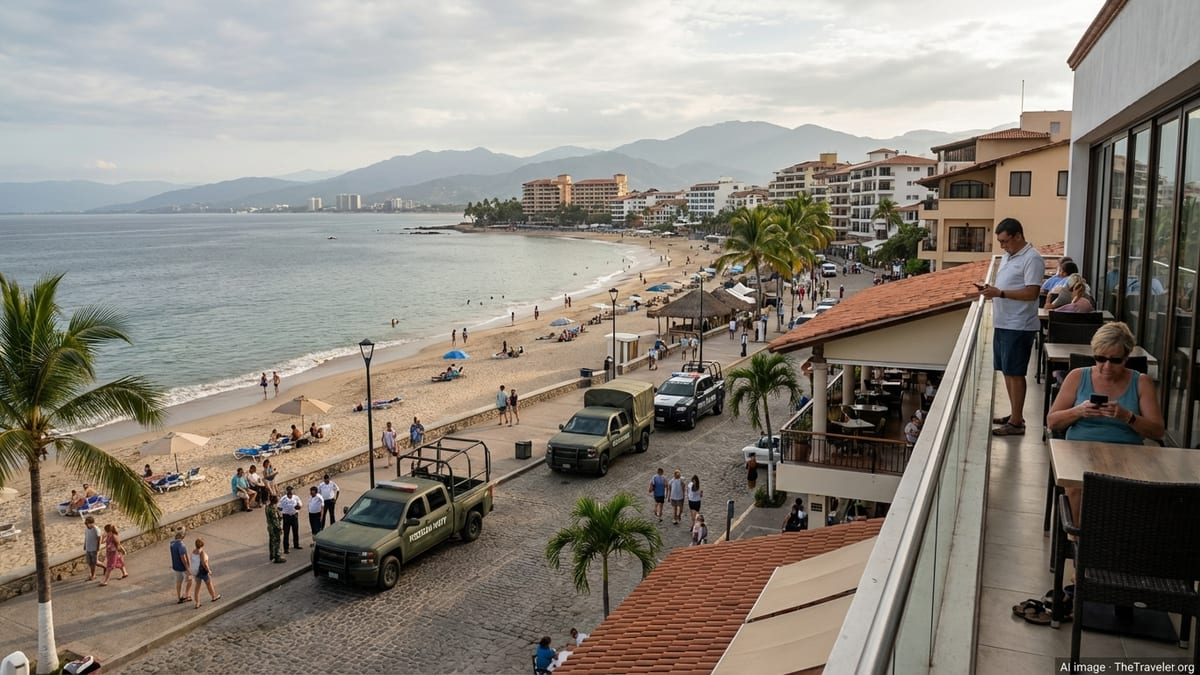
New Security Alerts Put Baja California in the Spotlight
The latest security alert from the U.S. Embassy in Mexico, updated February 25, expands a web of restrictions that now stretches from the Pacific border city of Tijuana down through Puerto Vallarta on the Jalisco coast. The advisory urges U.S. citizens in Baja California, including Tijuana, Tecate and Ensenada, to remain sheltered in place amid ongoing security operations, road closures and criminal activity.
The alert followed days of turbulence triggered by a Mexican military operation that killed Nemesio “El Mencho” Oseguera Cervantes, the fugitive leader of the Jalisco New Generation Cartel. The operation, carried out on February 22 with U.S. intelligence support, unleashed retaliatory violence across several western states, snarling road traffic and disrupting flights at key tourist gateways.
For Baja California, the advisory is particularly significant because it affects Tijuana, one of the busiest land border crossings in the world, as well as coastal resort areas favored by California travelers. While many businesses remain open and cross‑border traffic continues, U.S. officials stress that the shelter‑in‑place guidance for government personnel is a strong signal for tourists to rethink nonessential movement in the region until conditions stabilize.
Local tourism operators in Baja California have been quick to distinguish their situation from the cartel flashpoints around Puerto Vallarta and inland Jalisco. Yet the inclusion of Baja California in the same high‑risk bulletin underlines how far‑reaching the security operation and its criminal backlash have become, effectively placing wide swaths of the Pacific corridor under heightened caution at the outset of the spring travel season.
Puerto Vallarta’s Rapid Disruption and Uneven Recovery
Among Mexico’s resort cities, Puerto Vallarta has been at the epicenter of the latest wave of unrest. On February 22, images of burning vehicles and road blockades on key routes into the city circulated widely, prompting the U.S. Embassy to advise Americans in Jalisco, including Puerto Vallarta and nearby Chapala and Guadalajara, to shelter in place until further notice.
Air travel was hit almost immediately. Officials reported that road blockages and security operations forced the cancellation or delay of most domestic and international flights into Guadalajara and Puerto Vallarta, temporarily stranding visitors and disrupting outbound travel for residents. Some ride‑share services and local businesses in Puerto Vallarta’s tourist zone also suspended operations as authorities worked to clear highways and secure major intersections.
By February 24, airport operators and tourism authorities said flights into Puerto Vallarta and Guadalajara were largely back to normal, with airlines resuming regular schedules and travelers once again able to reach the coast. Restaurants, hotels and tour companies reopened their doors under a heavy but largely discreet security presence, and state officials emphasized that the destination was safe for visitors who follow local guidance.
Even as operations recover, however, U.S. officials have kept in place curfews and movement restrictions for government staff in Jalisco, underscoring that the underlying risk has not disappeared. Travelers are being urged to monitor local news, stay in close touch with their hotels or rental hosts and avoid any areas where security forces are conducting operations, particularly in and around Puerto Vallarta’s outskirts and highway approaches.
Why Jalisco and Guerrero Remain Among Mexico’s Highest-Risk States
The current turbulence has sharpened the spotlight on Jalisco and Guerrero, two states that have long carried some of the most severe U.S. travel warnings in Mexico. Even before the February 22 operation, Jalisco was home base for the Jalisco New Generation Cartel, one of the country’s most powerful and expansionist criminal groups. The cartel’s reach across western Mexico has repeatedly drawn large‑scale security deployments and sporadic flare‑ups of violence.
In its overarching country guidance, the U.S. State Department has consistently urged Americans to reconsider travel to Jalisco outside major tourist zones, while advising that essential trips to cities like Puerto Vallarta should be undertaken with heightened vigilance. The latest wave of violence, triggered by the death of the cartel’s leader, reinforces the rationale for those warnings and illustrates how quickly conditions can deteriorate, even in popular beach destinations.
Guerrero, home to Acapulco and smaller coastal enclaves, has for years been subject to even tougher restrictions. Large parts of the state remain under a standing “do not travel” recommendation because of persistent criminal activity, kidnappings and clashes between rival groups and security forces. U.S. government personnel are barred from many areas, which in practice makes most leisure travel to Guerrero effectively off‑limits for Americans seeking to align with official risk assessments.
In the latest alert, U.S. officials again singled out Guerrero as one of the states where government staff must remain at home until further notice, reinforcing the state’s status as one of Mexico’s most volatile regions. The decision underscores that, while the immediate trigger for the new bulletins was the operation in Jalisco, deeply rooted security challenges in Guerrero continue to make it a no‑go zone for most U.S. travelers.
Mixed Picture Across Mexico as Some Destinations Operate Normally
Despite the high‑profile unrest in western Mexico, the broader travel picture remains uneven. The U.S. Embassy has emphasized that conditions have returned to normal in many parts of the country, including key Caribbean destinations such as Cancun, Cozumel, Playa del Carmen and Tulum, as well as parts of Sinaloa and Tamaulipas where an earlier shelter‑in‑place message was lifted.
Tourism authorities in Los Cabos, located in Baja California Sur at the southern tip of the peninsula, have also stressed that operations there remain unaffected. Flights into and out of Los Cabos International Airport are running on schedule, and resorts, restaurants and tour operators report normal activity. Officials have gone out of their way to explain that Cabo is geographically distant from the cartel violence around Puerto Vallarta and the security operations in inland Jalisco.
Even within the states flagged in the latest alerts, risk levels can vary markedly from one city or corridor to another. While some highways and rural areas remain vulnerable to blockades or opportunistic crime, heavily policed resort zones can see a rapid return to normalcy once immediate threats subside. U.S. guidance, however, tends to treat entire states as units for advisory purposes, meaning that a flare‑up in one part of Jalisco or Guerrero can cast a long shadow over otherwise calm tourist pockets.
For travelers, this patchwork underscores the need to distinguish between the overall State Department advisory level for a state and the on‑the‑ground reality in specific destinations. It also means that conditions can change quickly, especially in the days and weeks following a high‑profile security operation, and that yesterday’s “all clear” does not guarantee tomorrow’s safety in the same region.
What the Latest Bulletins Mean for U.S. Travelers Now
The immediate effect of the new bulletins is a clear message of caution for anyone planning or currently undertaking trips to Baja California, Jalisco, Guerrero and other affected states. Travelers already on the ground in cities like Tijuana or Puerto Vallarta are being urged to respect any local curfews, avoid unnecessary nighttime travel and stay in accommodation that can provide timely updates on security conditions.
Prospective visitors weighing upcoming vacations face more complicated decisions. Some travel advisers are recommending that clients with flexible plans consider shifting to destinations that have not been swept up in the current alerts, such as Cabo or the Caribbean coast, while encouraging those who choose to keep their bookings in high‑risk areas to maintain robust travel insurance and remain ready to adjust itineraries.
Officials also continue to highlight practical steps that can help mitigate risk, including enrolling in government traveler programs to receive real‑time security updates, sharing detailed itineraries with friends or family and building extra time into airport transfers in case of renewed road disruptions. While these measures cannot eliminate danger in places facing organized criminal activity, they can improve the chances that visitors receive timely information and avoid stumbling into active operations.
For now, the State Department’s sharpened focus on Baja California, Jalisco and Guerrero sends a clear signal: even as many of Mexico’s beaches and cultural cities remain open and eager to welcome visitors, U.S. travelers need to approach parts of the country with a level of caution more often associated with conflict zones than with classic sun‑and‑sand escapes.