

More news on this day
As global travel rebounds and becomes more digitized, 2026 is shaping up as a year when preparation and digital awareness matter as much as passports and boarding passes. Recent alerts, new scam tactics and updated health guidance are prompting travelers to revisit how they plan, book and move through airports, cities and remote destinations.
Get the latest news straight to your inbox!
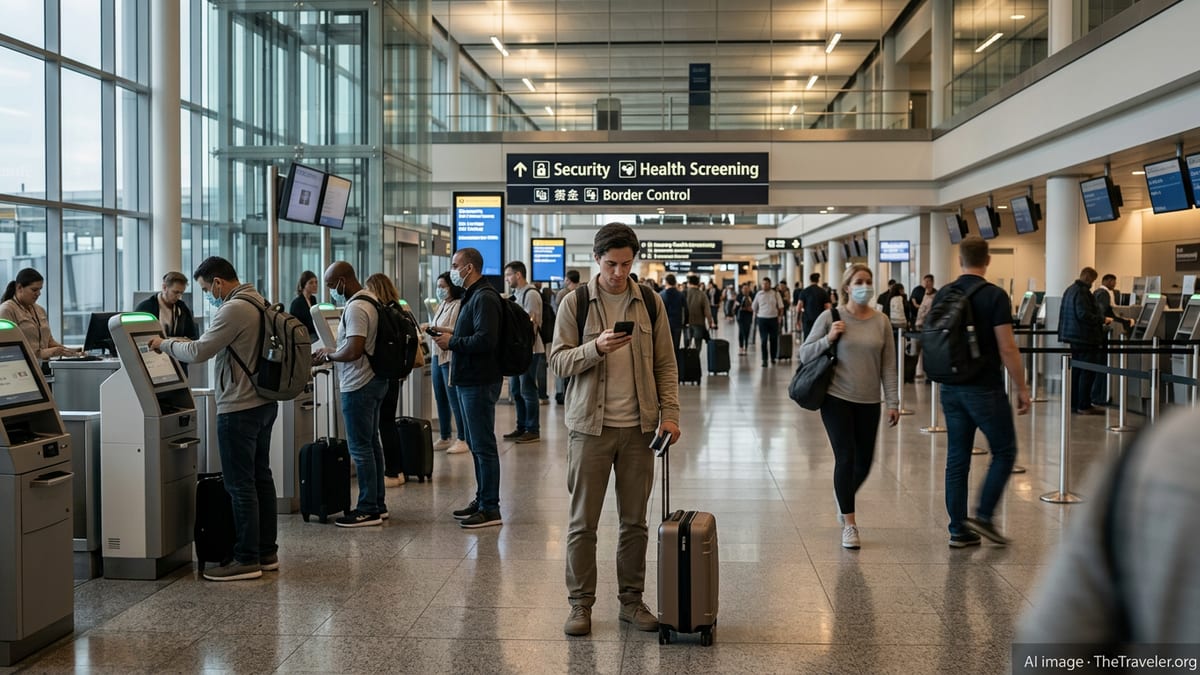
Global Alerts Are Shaping How Travelers Plan Trips
International travel in early 2026 is unfolding against a backdrop of heightened security messaging. A recently updated worldwide caution from the U.S. State Department in late February 2026 urges travelers to pay closer attention to destination-specific advisories and evolving regional risks, particularly in areas affected by armed conflict or political tension. The notice underscores a broader trend: governments are asking citizens to monitor conditions more actively before and during overseas trips.
Publicly available information indicates that risk levels can change quickly in response to security incidents, diplomatic developments or natural disasters. Travelers are increasingly advised to review official advisories for each country on their itinerary, register with their consular service when available and keep a record of local emergency contacts. Trip planners are also watching how airlines, airports and major hotel chains adjust operations or add security measures in response to these shifts.
Analysts say that the pattern of alerts is not intended to deter travel altogether, but to push visitors toward more informed decision-making. That includes reassessing transit routes, avoiding crowded demonstrations, staying away from sensitive sites and factoring in additional time for security checks at border crossings.
Travel providers, from tour operators to insurance firms, are updating their materials to reflect this environment. Many now highlight flexible booking policies, evacuation support add-ons and real-time risk monitoring tools as standard parts of trip planning, signaling a shift from purely leisure-focused marketing toward a more preparedness-oriented message.
Digital Scams and Fraud Are Evolving With the Travel Boom
Alongside traditional pickpocketing and street scams, digital fraud is emerging as one of the defining safety concerns for travelers in 2026. Industry surveys and government data releases over the past two years point to sharp increases in travel-related fraud, including fake booking sites, compromised accommodation platforms and phishing campaigns that mimic airlines or hotel brands.
Recent coverage of holiday and peak-season fraud patterns shows that U.S. consumers reported hundreds of millions of dollars in travel-related losses, with financial watchdogs warning that many cases go unreported. Cybersecurity firms and travel insurers describe a shift from one-off fake listings to more sophisticated schemes using deepfake audio or synthetic chat agents to impersonate legitimate booking channels. Alerts in late 2025, for example, highlighted steep rises in scams linked to major online travel brands, prompting fresh calls for stronger account security and verification practices.
Digital safety organizations recommend that travelers rely on official apps or known platforms, avoid clicking on booking links sent by unsolicited messages and confirm reservations directly with airlines or hotels through trusted channels. Updated guidance for 2025 and 2026 emphasizes using multi-factor authentication on travel accounts, creating unique passwords and monitoring payment cards closely around trip dates.
Fraud research published in 2025 also indicates that the booking phase has become a prime target, even before travelers set foot in an airport or hotel. As more payments move through digital wallets and mobile apps, experts suggest using secure networks, scrutinizing the spelling and design of websites and being wary of deals that require immediate payment via wire transfer, cryptocurrency or gift cards.
Cybersecurity Becomes a Core Part of Personal Safety
Travel cybersecurity is increasingly being framed as a core safety measure rather than a niche concern for business travelers. Tech and security organizations reported in 2025 that the travel and hospitality sector ranks among the industries most affected by data breaches and cyberattacks, with incidents affecting millions of customers worldwide. These trends are continuing into 2026 as hotels, airlines and booking platforms remain attractive targets.
Updated digital safety checklists for travelers now recommend steps such as installing security software, turning on automatic updates and considering the use of virtual private networks when using public Wi-Fi. Guidance from cybersecurity alliances in 2025 stresses the importance of limiting sensitive logins on shared networks, turning off automatic Bluetooth and file sharing, and traveling with devices that contain only the data that is strictly necessary.
Experts also advise treating phones and laptops as valuable assets that can expose more than just photos if lost or stolen. Backing up devices before departure, enabling remote-wipe features and setting strong device passcodes are now standard recommendations. Travelers are urged to avoid plugging into unknown charging stations, where so-called “juice jacking” risks have been highlighted, and to use their own chargers connected to traditional power outlets instead.
Privacy has emerged as another dimension of travel safety. Security blogs and travel tech commentators suggest that sharing real-time location updates and detailed itineraries on social media can inadvertently signal when homes are empty or reveal predictable routines. Many now encourage posting updates with a delay, limiting public audience settings and being cautious about tagging locations while still on-site.
Health Preparedness Extends Beyond Pandemic Concerns
While global attention has shifted away from emergency pandemic restrictions, health agencies continue to update travel health advice as new data emerges. The latest edition of the CDC Yellow Book, released for the 2026 cycle, highlights how chronic conditions, weakened immune systems and specific allergies can affect trip planning, especially for international journeys. Public health guidance stresses consulting healthcare professionals well before departure to discuss vaccines, medications and fitness for long flights or high-altitude destinations.
Recent advisories from regional health departments in the United States also show that travel-related diseases, including mosquito-borne infections and respiratory illnesses, remain a concern during peak seasons. Travelers are encouraged to check destination-specific health pages, verify routine immunizations and understand any recommended vaccines or prophylactic medications, such as those used to prevent malaria in certain regions.
Airline and airport policies around masking, sanitation and air circulation have largely stabilized, but some carriers continue to adjust requirements based on regional outbreaks or regulatory decisions. Observers note that travelers with higher health risks are increasingly choosing flexible tickets and travel insurance products that cover medical evacuation and trip changes prompted by illness.
Preparation now often includes assembling a compact travel health kit with basic medications, copies of prescriptions, proof of insurance and a list of local medical facilities. For longer stays or remote destinations, health experts suggest identifying nearby clinics in advance and reviewing how local healthcare systems handle payment and emergency care.
Practical On-the-Ground Awareness for 2026 Trips
Despite the growth of digital and systemic risks, many of the most effective travel safety practices in 2026 remain grounded in everyday awareness. Crime statistics and anecdotal reports continue to show that tourists who appear distracted, heavily loaded with luggage or unfamiliar with local customs are more likely to be targeted by opportunistic thieves.
Security briefings for international study tours and corporate travel programs in 2025 highlight simple measures such as minimizing displays of expensive jewelry, keeping bags zipped and in front of the body in crowded areas, and using money belts or interior pockets for passports and primary bank cards. Travelers are also advised to carry photocopies or digital scans of key documents stored separately from the originals.
Urban mobility tools are playing a larger role in route planning and situational awareness. New research into AI-based “danger mapping” demonstrates how real-time data can be used to flag areas with higher reported crime or safety incidents, helping visitors adjust routes or avoid certain locations at particular times. While such tools are still emerging, they form part of a broader shift toward blending technology with traditional street smarts.
Local etiquette and cultural norms also intersect with safety. Travel educators suggest that learning a few basic phrases, understanding dress expectations at religious or government sites and observing how residents move through public spaces can help visitors avoid misunderstandings and stand out less as targets. Combined with updated digital security habits and attention to official advisories, this mix of preparation and awareness is shaping how many travelers hope to stay safe on the road in 2026.