

More news on this day
Latin America and Africa have emerged as the fastest growing frontiers in global air travel, helping drive record passenger numbers and fueling a powerful rebound in tourism to destinations such as Brazil, South Africa and their regional neighbors.
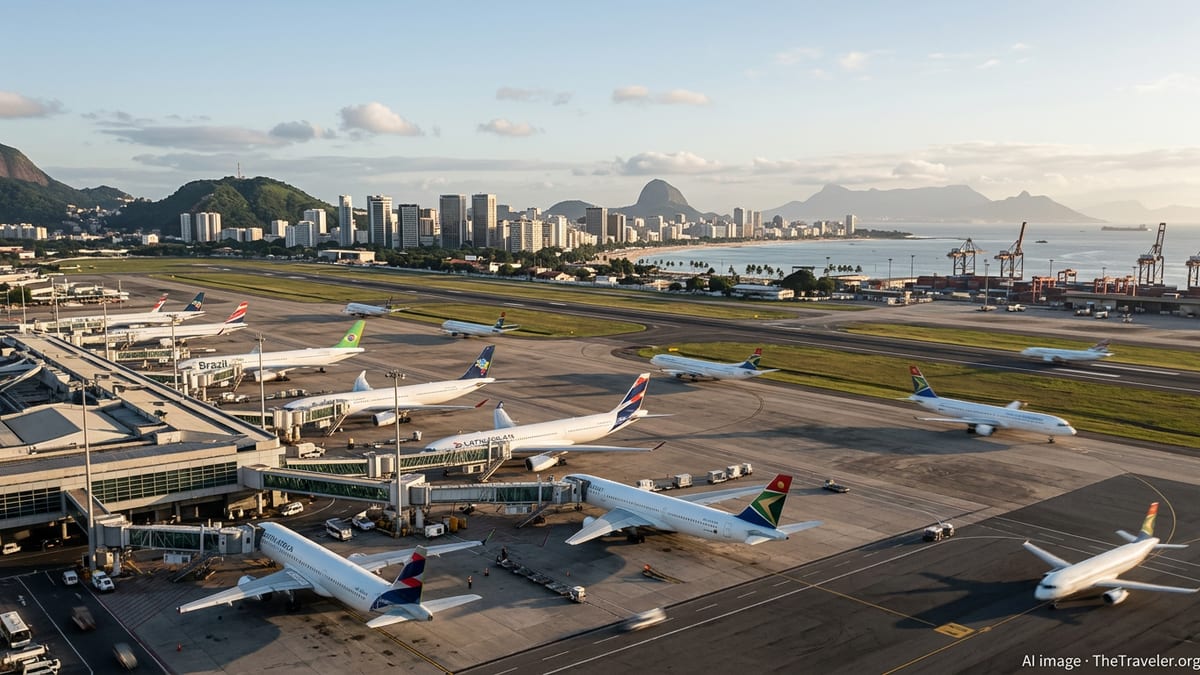
Emerging Markets Take the Lead in Global Air Traffic Growth
New data from international aviation bodies show that carriers based in Latin America and Africa are outpacing much of the world in passenger growth, cementing the two regions as engines of global demand. Industry figures for 2024 and 2025 indicate that while Asia Pacific still holds the largest overall share of travelers, it is Latin American and African airlines that are consistently posting double digit gains in traffic and capacity.
The International Air Transport Association reported that Latin American airlines saw one of the strongest annual increases in international traffic in 2024 compared with 2023, while African carriers also expanded rapidly as networks were rebuilt and new routes were added. Forecasts through the late 2020s suggest that these emerging markets will continue to grow faster than mature hubs in Europe and North America, helped by rising incomes, expanding middle classes and a wave of low cost carriers opening up cross border travel.
Airport industry projections echo this trend. Global passenger traffic is expected to reach close to ten billion journeys in 2025, with growth driven disproportionately by Africa, Latin America and other emerging regions. These markets are benefiting from investments in airport infrastructure, modernization of fleets and a sharp recovery in international tourism after the pandemic.
Although Latin America and Africa together still account for a relatively modest share of global traffic compared with larger markets, analysts say their momentum is reshaping route networks and forcing major airlines and alliances to rethink how they connect long haul travelers with sun and culture driven destinations.
Brazil Posts Record Tourist Arrivals as Air Links Multiply
Brazil has become a prime beneficiary of this surge in regional air travel, with the government reporting record numbers of international visitors over the past two years. Official figures show that the country welcomed around 6.6 million foreign tourists in 2024, surpassing previous highs set during the years of the World Cup and Olympic Games.
The growth accelerated in 2025, when total arrivals climbed to more than 9.2 million, according to data cited by Brazil’s tourism authorities and central bank. That marked a jump of more than one third over 2024 and far exceeded government targets set in the national tourism plan. Spending by international visitors has risen in tandem, injecting billions of dollars into local economies from Rio de Janeiro and São Paulo to secondary cities and beach towns along the northeast coast.
Aviation has been central to this boom. Brazil’s main international gateways, including São Paulo Guarulhos and Rio de Janeiro Galeão, have reported higher passenger volumes as airlines restore and expand long haul services. Government backed initiatives to increase foreign seat capacity, coupled with aggressive destination marketing in North America, Europe and within Latin America itself, are drawing more travelers to Brazil’s beaches, Amazon rainforest, cultural festivals and urban nightlife.
Rio de Janeiro in particular is seeing the impact of new air connectivity and robust demand. City officials say that in 2025 the metropolis hosted more than 12 million visitors, including over two million international tourists, with spending by foreign travelers surging compared with the previous year. Local tour operators report that new flights and more competitive fares have broadened the profile of visitors beyond traditional source markets.
South Africa Rides Continental Demand and Expanded Connectivity
On the opposite side of the Atlantic, South Africa is also capitalizing on Africa’s air travel upswing. Statistics South Africa reports that the country received about 8.9 million international tourist arrivals in 2024, a rise of more than five percent compared with 2023. The African continent remains by far its largest source region, accounting for roughly three quarters of total arrivals as intra African air links deepen.
South African officials say the latest figures confirm that the tourism sector’s recovery is gaining traction after the shocks of the pandemic. Increased frequencies on key regional routes, new connections from East and West Africa and the return of long haul services from Europe and the Middle East have collectively pushed up passenger volumes through Johannesburg, Cape Town and Durban.
Cape Town International Airport recently passed the ten million passenger mark in a financial year, underlining the city’s status as a leading gateway for both leisure and business travelers. Durban’s King Shaka International Airport has also reported steady growth, handling just over five million passengers in the 2024 to 2025 financial year, including more than 300,000 international travelers. Tourism authorities are targeting additional routes from South America and the Gulf to further diversify arrivals.
Industry analysts note that South Africa’s competitive safari offerings, wine tourism and coastal attractions are all benefiting from better air access and rising demand among middle class travelers from across the continent. At the same time, expanded connectivity is positioning the country as a transit hub for journeys between Africa, Latin America and other long haul markets.
New South Atlantic Corridors Connect the Global South
The growth of air travel in Latin America and Africa is not only boosting traffic within each region, it is also redrawing the map of long haul routes across the South Atlantic. Airlines are increasingly deploying widebody aircraft on direct services that bypass traditional hubs in North America and Europe, responding to demand for quicker point to point journeys.
In recent seasons, carriers have added or announced nonstop links connecting major Brazilian cities with hubs in West and Southern Africa, as well as expanding services between African gateways and leisure hotspots in the Caribbean and northern South America. Aviation experts say such routes are still a small slice of global traffic, but they illustrate how rising demand in the global South is starting to support more direct connectivity.
These corridors also have strategic significance for tourism boards seeking to diversify source markets. Brazil is working to attract more visitors from South Africa, Angola, Nigeria and other African nations with historic and cultural ties, while South African tourism officials are courting travelers from Brazil, Argentina and Chile. Joint marketing campaigns, simplified visa regimes for selected markets and code share agreements between Latin American and African carriers are all designed to turn the South Atlantic into a busier, more competitive air bridge.
Travel industry observers say that as aircraft technology advances and fuel efficient long range jets become the norm, more such routes are likely to emerge, knitting together secondary cities on both continents and opening new itineraries for adventure seekers and culturally minded tourists.
Tourism Economies Adjust to a New Center of Gravity
The acceleration of air travel in Latin America and Africa is rippling through tourism dependent economies, from small guesthouses to multinational hotel and cruise groups. In Brazil, tourism spending has become a key pillar of the broader services sector, with foreign visitors contributing several billion dollars in 2025 alone. The sector’s rebound has supported jobs in hospitality, transportation, food and beverage, creative industries and events.
South Africa is seeing similar gains. Rising visitor numbers from neighboring African states, Europe and increasingly Asia are boosting employment and tax revenues, creating momentum for investment in airports, roads, attractions and township and community based tourism initiatives. Authorities in both countries argue that keeping this growth sustainable will require continued improvements in safety, infrastructure and environmental management.
For global airlines and travel companies, the message is that the center of gravity in aviation demand is slowly but decisively expanding beyond the North Atlantic corridor. With Latin American and African carriers posting strong load factors and governments prioritizing tourism as a driver of foreign exchange, industry planners expect these regions to claim a larger share of global capacity and investment over the coming decade.
As millions of new travelers take to the skies from São Paulo, Johannesburg, Lagos or Bogotá, tourism flows to destinations such as Brazil and South Africa are likely to deepen and diversify. For the world’s travel sector, the rise of these markets signals not just a cyclical rebound, but a structural shift in where the growth in global air travel now resides.