

More news on this day
Latvia has endorsed a strategic overhaul of airline incentives at Riga Airport, introducing a refreshed programme aimed at attracting new routes and long-haul carriers as the country works to cement its main gateway as a competitive Northern European hub.
Get the latest news straight to your inbox!
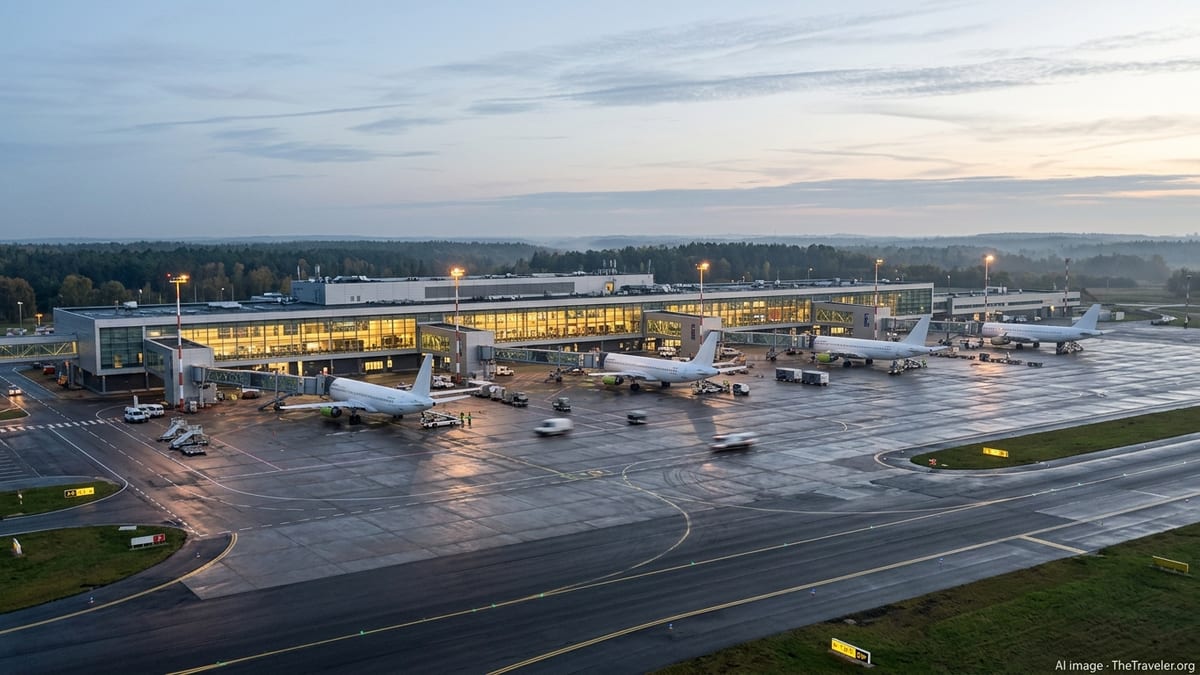
New Incentive Programme Targets Unserved Routes and Growth
Publicly available information from Riga Airport shows that the revised incentive framework focuses on encouraging airlines to open direct services to destinations not currently served from the Latvian capital. The scheme is structured around a “new destination” model in which any carrier operating scheduled flights from Riga can qualify, provided it launches a route that has been unserved for at least two years and meets minimum passenger thresholds within the first months of operation.
Under the updated programme, airlines pay the full schedule of airport charges during an initial launch phase. After six months, the airport recalculates the traffic performance on the new route and refunds incentive amounts if set criteria are met, including a specified volume of departing direct passengers. The incentives then continue to apply on a tapered basis for up to three years after the start of operations on the new route, reducing passenger service fees and, for very long sectors, lowering take-off and landing charges.
According to airport documentation, the new structure widens eligibility beyond earlier versions that focused mainly on very long-haul flights above certain distance thresholds. By opening access to a broader range of markets while still linking support to measurable traffic performance, Latvia is positioning Riga to compete more effectively with rival hubs across the Baltic and Nordic region.
The revised incentive schemes are scheduled to take effect from April 2026, subject to the completion of national approval procedures. This timeline is intended to give airlines sufficient lead time to plan new capacity and schedule changes into their route development for upcoming seasons.
Strengthening Riga’s Role as a Northern European Hub
Riga Airport has long articulated an ambition to act as an international transfer hub connecting Northern Europe with the wider continent and beyond. Strategy documents describe a goal of supporting Latvia’s economic growth by improving connectivity for passengers and businesses, and by expanding employment and commercial opportunities in and around the airport campus.
Official traffic data for 2025 indicate that the airport handled more than seven million passengers in a year described as stable but competitive. The national carrier airBaltic accounted for well over half of the market, followed by low-cost operators such as Ryanair, reflecting Riga’s dual role as both a transfer point and a base for point-to-point travel in the region.
Regulatory reports note that airlines have become more sensitive to airport charges and incentive structures, particularly against a backdrop of delayed aircraft deliveries, tighter fleet utilisation and a renewed focus on profitability. In this environment, airports that can offer clearly defined and performance-based benefits on new routes are considered better placed to secure capacity and attract fresh investment in connectivity.
The refreshed Latvian incentive package is expected to support this strategic direction by making it more attractive for existing and new carriers to place aircraft and frequencies in Riga instead of alternative hubs. The design reflects broader European trends in which medium-sized airports emphasise targeted support for new destinations as a way to diversify route networks and reduce dependence on a single airline or market.
Alignment With airBaltic’s Expansion and New Investment
The incentive overhaul arrives at a time of structural change for Latvia’s flagship carrier. Recent coverage highlights a sequence of capital measures, including additional state-backed funding and a minority equity investment from the Lufthansa Group, aimed at preparing airBaltic for an anticipated stock market listing and supporting its fleet and network expansion.
airBaltic has steadily built up an extensive route portfolio from Riga, Tallinn, Vilnius and other seasonal bases, with nearly 130 routes across Europe, the Middle East, North Africa and the Caucasus reported in recent seasons. New services announced for 2025 and 2026, including additional destinations from Riga, fit into a broader strategy of using the Latvian capital as the primary transfer platform while adjusting capacity from neighbouring Baltic airports in response to competitive pressures.
Industry commentary suggests that the combination of airline growth, fresh shareholder backing and a more flexible incentive programme at Riga Airport may prove mutually reinforcing. The national carrier gains a clearer framework for launching new destinations from its main hub, while the airport improves its prospects of filling a new terminal and commercial areas currently under development.
At the same time, sector analysts point to the importance of ensuring that incentive schemes remain transparent, time-limited and tied to demonstrable economic benefits, particularly in light of earlier public support measures for the airline during and after the COVID-19 crisis. The latest Latvian approach, which links discounts to passenger volumes on new destinations and sets finite periods for support, is being watched as an example of how smaller EU member states balance connectivity objectives with competition and state aid considerations.
Infrastructure Expansion and Long-Haul Ambitions
The new incentive package also dovetails with significant infrastructure projects at Riga Airport. A long-term development plan known as “Runway 2027,” combined with a major terminal expansion and rail link under construction, is intended to increase capacity and improve the passenger experience as the airport targets recognition as a leading regional hub.
Specialist aviation and infrastructure consultancies have been engaged to support the redesign of the airfield and terminal areas, focusing on optimising aircraft movements, transfer flows and commercial space. Recent tenders have invited international operators to bid for retail and food and beverage areas in the expanded terminal from the late 2020s, signalling expectations of higher passenger throughput and more transfer traffic.
Commentary in regional media has also highlighted Riga’s long-term ambition to attract direct intercontinental routes, including potential nonstop services to North America once regulatory and demand conditions are in place. While no specific long-haul launch has yet been confirmed, the reworked incentive programme for new destinations, especially those beyond 6,000 kilometres, is being interpreted as a key instrument for making such services more commercially viable.
By offering additional reductions on take-off and landing charges for ultra-long sectors, the airport aims to narrow the cost gap that smaller hubs often face when competing with large Western European gateways. If matched by sufficient origin-and-destination demand and strong transfer feed from the Baltic and Nordic markets, analysts suggest this could eventually support nonstop transatlantic or Middle Eastern links.
Regional Competitive Pressures and Opportunities
Latvia’s decision to refine its airline incentive framework is also shaped by the competitive landscape across the Baltic Sea region. Nearby airports in Scandinavia and Central Europe have their own bonus schemes for passenger growth and new destinations, and the ability of carriers to reallocate capacity between bases makes them highly responsive to shifts in local cost structures.
For Riga, maintaining and expanding its role as the primary hub for the Baltics has taken on added significance as some low-cost operators have scaled back operations while others expand aggressively from rival cities. Public discussion in the region frequently references the risk of traffic drifting toward larger hubs if smaller airports cannot provide attractive conditions for both home carriers and new entrants.
Supporters of the Latvian programme argue that a clear and performance-based incentive policy can help stabilise and grow the route network, sustaining connectivity for smaller regional cities that rely on transfers via Riga to reach wider European and global destinations. They also emphasise potential spillover effects for tourism, trade and foreign investment, as improved air links make it easier for visitors and businesses to access Latvia.
As airlines finalise their schedules for the second half of this decade, the effectiveness of the new Riga Airport incentives will be measured in tangible outcomes: the number of genuinely new destinations launched, the diversity of carriers operating at the airport, and the extent to which Latvia can convert its geographical position into lasting competitive advantage in Northern European aviation.