

More news on this day
Latvia has taken a decisive step toward cleaner, more modern rail travel with a new contract for Škoda Group battery electric trains, a move expected to phase out diesel traction on key regional lines and accelerate the country’s shift to low-carbon mobility.
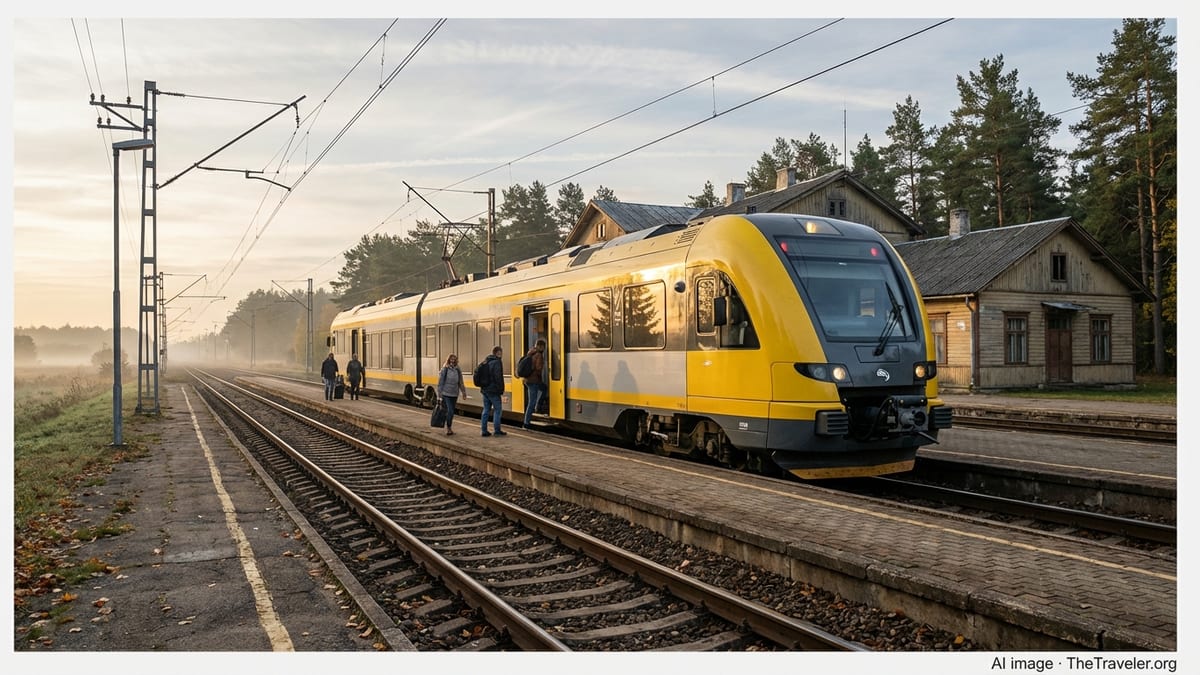
A Landmark Contract to Power Latvia’s Rail Transition
On December 11, 2025, Latvia’s Road Transport Administration signed a contract with the Czech consortium Škoda Transportation – Škoda Vagonka for a fleet of new battery electric multiple units, underscoring a long-planned pivot away from diesel rail services. The base order covers nine battery electric trains, with options for seven additional units that could bring the total to sixteen. The deal, including vehicles, spare parts and training, is valued at nearly 160 million euros, reflecting both the scale of the investment and the ambition behind it.
The trains are scheduled to enter service in the first half of 2029, giving Latvia several years to build out the associated charging infrastructure and adapt operations. Funding will be drawn largely from the European Union’s Cohesion Fund, supplemented by national resources, aligning the project with broader EU priorities on decarbonizing transport and improving regional connectivity. Officials describe the move as a strategic modernization rather than a simple fleet renewal.
The contract also follows earlier decisions at EU level to reallocate transport-sector funds toward rail and sustainable mobility. By channeling those resources into battery-powered trains, Latvia is positioning itself as an early adopter of next-generation regional rolling stock in the Baltic region. The order is one of Škoda Group’s most recent battery train wins, following similar projects in the Czech Republic and Slovakia, further anchoring the manufacturer’s presence in Central and Eastern Europe’s rail transition.
Battery-Electric Technology Tailored to Baltic Railways
The new Škoda battery trains represent an evolution of the single-deck regional platform already developed for Baltic markets, but with several notable firsts. They are the first Škoda Group battery-powered vehicles designed for Latvia’s broad 1,520 millimeter track gauge, a standard inherited from the Soviet era and still used across much of the region. This adaptation ensures that the trains integrate seamlessly with existing infrastructure while delivering a step change in environmental performance.
Each two-car unit is designed to operate on both 3 kilovolt direct current and 25 kilovolt alternating current overhead supply, mirroring the dual-voltage capability of Latvia’s latest electric trains. On electrified sections, the trains can reach speeds of up to 160 kilometers per hour, while in battery mode they are expected to run at up to 120 kilometers per hour. On non-electrified tracks, the trains can cover roughly 80 to 100 kilometers on battery power before needing a recharge, a range sufficient for many of Latvia’s regional links.
Inside, the trains will feature a low-floor layout for easier boarding, 188 seats including 24 in first class, and modern amenities consistent with recent European regional fleets. Energy efficiency measures and improved acceleration compared with legacy diesel trains are intended to shorten journey times and increase schedule reliability. The emphasis on compatibility with both current and future power systems suggests that the battery units are designed as a long-term solution rather than an interim fix.
Replacing Aging Diesel Trains on Key Regional Routes
Latvia’s battery trains are expected to operate primarily on routes from Riga to Daugavpils and Cēsis, two corridors that combine relatively high passenger volumes with substantial stretches of non-electrified track. Today, those lines are largely served by aging diesel rolling stock, including DR1 series trains dating back to the 1970s and 1980s. Their technical condition and emissions profile no longer match modern standards, and maintenance is increasingly complex and costly.
By deploying battery electric units on these routes, Latvian authorities aim to remove a large share of diesel traction from the national network without waiting for full electrification of every line. Charging stations are planned in strategic locations such as Sigulda and Cēsis on the Riga–Cēsis route, and in Līvāni and Daugavpils on the Riga–Daugavpils corridor. As charging infrastructure expands and additional trains are potentially ordered, the network of low-emission services could extend further to destinations including Rēzekne and Valmiera.
The project dovetails with wider efforts to improve station platforms and accessibility along regional lines. Raised platforms continue to be built or upgraded through 2029, matching the floor height of the new rolling stock and reducing barriers for passengers with reduced mobility, parents with strollers and travelers with luggage. Together, the fleet renewal and infrastructure works are intended to make rail a more attractive alternative to private car travel on medium-distance journeys across Latvia.
Building on a Fleet Transformation Already Under Way
The battery train order builds on a broader modernization of Latvia’s passenger rail fleet that is already visible on electrified lines radiating from Riga. In 2019, state-owned operator Pasažieru vilciens, now branded as Vivi, awarded Škoda Vagonka a contract for 32 new electric multiple units, representing the country’s first new electric trains since 1989. Deliveries began in 2022, with passenger services on the new units starting in December 2023 and full delivery reported by late 2024.
These four-car electric units, sporting a yellow and grey livery, now serve routes from Riga to Aizkraukle, Tukums, Skulte and Jelgava. Designed to run on existing 3 kilovolt direct current electrification and future 25 kilovolt alternating current systems, they provided a template for Latvia’s transition to a more flexible and energy-efficient fleet. The new battery trains draw heavily on this platform while adding on-board energy storage so they can operate beyond the reach of overhead wires.
Although the introduction of the electric fleet was not without technical issues, transport officials have emphasized that operational experience with the Škoda units will help smooth the deployment of the battery versions. Lessons learned on winter resilience, maintenance planning and passenger information systems are expected to inform the specification and testing of the battery-equipped trains. The ultimate goal is a more unified, modern fleet across both electrified and non-electrified routes, reducing complexity for the operator and creating a more consistent experience for passengers.
Environmental Gains and Climate Commitments
For policymakers in Riga, the environmental benefits of battery electric trains are central to the investment case. By drawing power from the grid on electrified sections and running on stored electricity elsewhere, the trains eliminate direct diesel exhaust emissions along their routes. This is particularly relevant for communities near busy corridors, where noise and air quality have long been concerns associated with older diesel rolling stock.
The shift also aligns with Latvia’s climate and energy targets under European Union frameworks, which call for deep cuts in greenhouse gas emissions from transport. Rail is already one of the lowest-carbon modes for medium-distance travel, but replacing diesel trains with electric and battery electric units amplifies that advantage, especially as the country increases the share of renewables in its power mix. Officials argue that such investments are essential if Latvia is to meet its obligations under EU climate legislation while maintaining and expanding regional connectivity.
Beyond carbon emissions, the new trains are expected to deliver quieter, smoother rides that improve the overall quality of life for both passengers and residents living near the tracks. Modern regenerative braking systems and smart energy management can further optimize electricity use, capturing some of the energy typically lost in braking and feeding it back into the system or into on-board batteries. Over the lifetime of the fleet, such efficiencies can translate into significant energy savings and lower operating costs.
Financing, EU Support and Strategic Reallocation of Funds
The battery train program rests on a carefully assembled financial package in which European Union funds play a central role. More than 94 million euros of EU money has been reallocated from a program focused on improving rail transport and energy efficiency in public passenger services, specifically to support the purchase of battery electric units. A further sum of just over 10 million euros has been shifted from a road-focused program to fund the charging infrastructure needed for the new trains.
This reallocation emerged from discussions in an EU thematic committee on transport in March 2025, where member states and institutions sought ways to maximize the climate impact of existing funds. For Latvia, the decision to back battery trains allowed it to tackle multiple objectives at once: modernization of aging rolling stock, decarbonization of regional services, and enhancement of long-distance links between Riga and key cities. The total project cost, including local contributions and infrastructure works, is estimated in the low hundreds of millions of euros.
Officials have framed the investment as a long-term contribution to national competitiveness rather than a short-term stimulus. By offering fast, reliable, low-emission services, they argue, Latvia can strengthen economic ties between regions, support tourism growth and make public transport a more attractive option for commuters. The provision in the contract for an additional seven trains, should more funding be secured, offers flexibility to scale the program in response to demand and future EU financing opportunities.
Regional and European Context: Latvia in the Battery Train Vanguard
Latvia’s move to battery electric trains comes as several European countries test and adopt similar technologies for non-electrified lines. In neighboring Central Europe, Škoda Group has already launched battery trains in the Czech Republic and signed a major contract for up to 36 units in Slovakia, while other manufacturers are delivering comparable fleets in Germany, Italy and Scandinavia. Together, these projects signal a growing consensus that battery power can be a practical, cost-effective alternative to diesel where full electrification is not immediately feasible.
In the Baltic context, however, Latvia’s order stands out. It is among the first in the region to commit to a dedicated battery fleet tailored to the broad-gauge network, potentially setting a benchmark for Estonia and Lithuania as they evaluate their own options for decarbonizing regional rail. The 1,520 millimeter gauge, combined with the specific climatic challenges of Baltic winters, makes Latvia an important test case for the durability and performance of battery technology in demanding conditions.
The project also dovetails with wider European objectives to shift freight and passenger traffic from road to rail as part of the Trans-European Transport Network. By improving the reliability and appeal of regional passenger services, Latvia aims to reinforce rail’s role as a backbone for sustainable mobility, complementing high-profile infrastructure schemes elsewhere on the continent. Success with the new trains could encourage further innovation, including hybrid configurations and additional charging locations that extend the reach of low-emission rail services.
What Passengers and Travelers Can Expect by 2029
For travelers, the most visible changes will arrive once the battery trains begin regular service toward the end of the decade. On routes such as Riga–Cēsis and Riga–Daugavpils, passengers can expect quieter journeys, faster acceleration and modern interiors more in line with the latest European standards. Improved accessibility features, clearer audio and visual information, and climate control systems designed for Latvia’s varied seasons should make trips more comfortable and predictable.
Timetables may also benefit as operators take advantage of better performance and reliability to redesign service patterns. Faster turnarounds and fewer technical disruptions could translate into more frequent departures on popular corridors, reducing wait times and making rail a more competitive option against long-distance buses and private cars. As more platforms are upgraded to modern standards, boarding and alighting should become quicker and safer, particularly at intermediate stations.
For international visitors arriving in Riga and exploring the country by train, the battery fleet will help create a more consistent, contemporary impression of Latvia’s railways. Instead of the mix of new electrics and visibly older diesel units, passengers will increasingly encounter a cohesive, branded fleet that reflects the Vivi identity and the country’s sustainability goals. By 2029, if the options in the Škoda contract are exercised, large parts of the regional network could be operated without direct diesel emissions, signaling a profound shift in how Latvians and visitors move across the country.