

More news on this day
Laurel Real Estate Co. has brokered the sale of the Red Roof Inn in Clyde, Ohio, a transaction that reflects steady investor demand for limited-service highway hotels in secondary Midwest markets.
Get the latest news straight to your inbox!
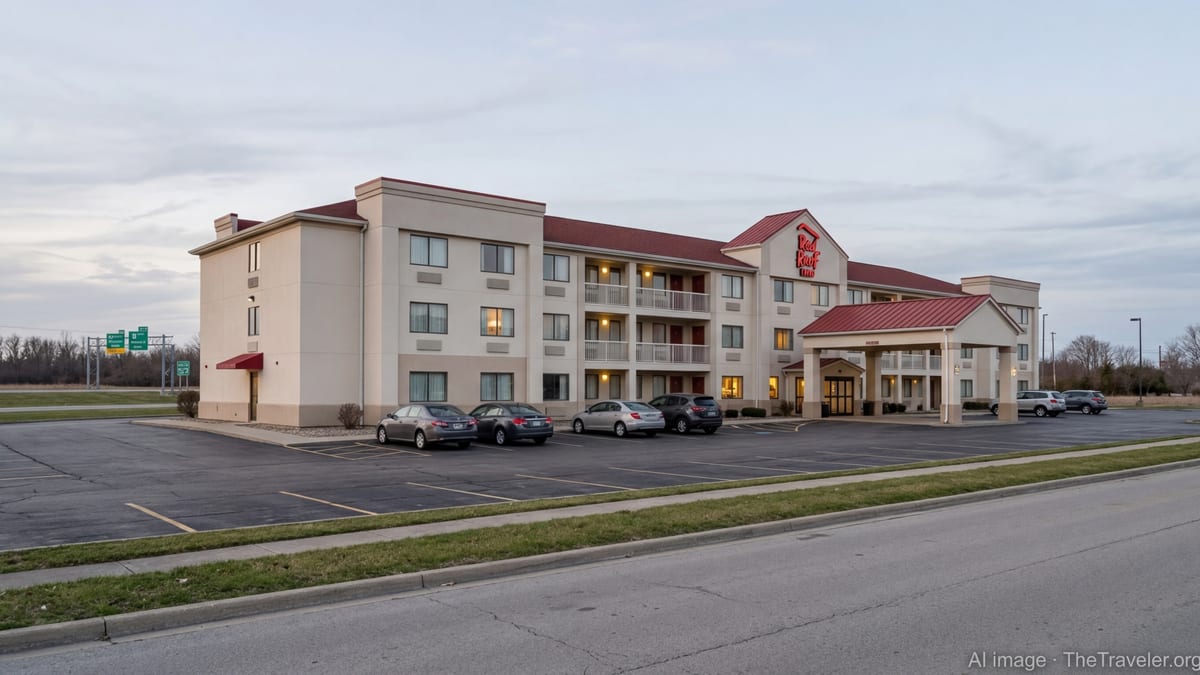
Details of the Clyde Red Roof Inn Transaction
The Red Roof Inn property in Clyde is located at 1363 West McPherson Highway, a corridor that serves both local traffic and regional travelers moving through northwest Ohio. Publicly available marketing materials describe the hotel as a three-story, interior-corridor property with 68 units and an elevator, positioned as a limited-service economy lodging option for motorists and business travelers.
The asset had been actively marketed for sale with an asking price in the mid single-digit millions, reflecting its scale, brand affiliation and market positioning. Information posted on commercial real estate listing platforms indicated guidance around the mid-three-million-dollar range, with the property framed as suitable for an owner-operator or first-time hotel investor seeking an established flag and operational base.
While specific terms of the completed transaction have not been publicly disclosed, the deal fits within a broader pattern of smaller branded hotels trading hands as owners reposition portfolios or exit single-asset holdings. The Clyde property had been presented as having upside potential through more hands-on management and tighter expense controls, a typical theme in value-oriented hotel acquisitions.
Brand affiliation with Red Roof, a long-standing economy chain, was highlighted in prior offering materials as a key driver of occupancy, particularly from transient guests and budget-conscious travelers moving along regional highways. The hotel’s performance was marketed as competitive within its local set, with consistent ranking in the upper half of comparable properties for occupancy and average daily rate.
Laurel Real Estate Co.’s Role and Specialization
Laurel Real Estate Co., based in Ohio, focuses on hotel and hospitality investment brokerage across the state and surrounding region. Company information describes the firm as a boutique brokerage concentrating on hotel sales, hospitality business transfers and related advisory assignments for owners considering disposition or repositioning of their assets.
Industry directories and trade coverage portray Laurel Real Estate Co. as an active participant in the Midwest hotel investment market, handling transactions across the economy, midscale and select-service segments. Recent announcements have referenced successful sales of branded properties in suburban and secondary markets, underscoring the firm’s emphasis on limited-service hotels similar in scale to the Clyde Red Roof Inn.
The brokerage’s positioning within the hospitality niche is supported by partnerships with hotel industry networks and professional associations that connect brokers, lenders and owners. Company materials emphasize experience in evaluating hotel performance metrics, positioning assets for sale and guiding owners through valuation, marketing and closing processes.
By representing the Red Roof Inn in Clyde, Laurel Real Estate Co. extended its track record in smaller Ohio communities that rely heavily on drive-to travel and industrial or agricultural employers. Such assignments typically require a nuanced understanding of local demand drivers, franchise requirements and the expectations of regional lenders active in hotel finance.
What the Sale Signals for Small-Market Ohio Hotels
The sale of the Clyde Red Roof Inn comes at a time when investors are closely watching performance trends for economy and midscale hotels in the Midwest. Industry analyses released over the past year indicate that drive-to markets and interstate-adjacent properties have generally benefited from steady demand, particularly from commercial, logistics and visiting-friends-and-relatives travel, even as urban and gateway markets face more volatility.
Secondary and tertiary Ohio markets, including smaller cities and highway corridors, have drawn attention from private buyers seeking lower price-per-room opportunities compared with larger metropolitan areas. Transactions such as the Clyde Red Roof Inn illustrate how branded, limited-service hotels with manageable key counts can appeal to first-time hotel buyers, family operators and regional investor groups looking for operating businesses rather than purely passive real estate holdings.
The continued trading of economy-branded assets also reflects lenders’ ongoing willingness to finance stabilized properties with recognizable flags, particularly where local demand is diversified across industrial, agricultural and service sectors. In markets like Clyde, where large-scale tourism attractions are limited, investors often focus on steady year-round base business anchored by transportation corridors and local employers.
Observers of the Ohio hospitality market note that older exterior-corridor motels and unbranded properties have faced greater redevelopment pressure, while interior-corridor hotels with national brands, such as the Clyde Red Roof Inn, are more likely to remain in lodging use under refreshed ownership and management structures.
Investor Appeal of Highway Economy Brands
Across the United States, economy and lower midscale hotel brands have maintained a significant share of transaction activity, particularly in regions where drive-to travel dominates. Red Roof, as a legacy economy chain with a strong presence in Ohio, is often viewed by investors as a recognizable option for budget-minded guests, with systems focused on roadside visibility, pet-friendly policies and straightforward limited-service operations.
From an investment standpoint, such properties can be attractive due to relatively modest staffing requirements, limited food-and-beverage exposure and standardized room configurations. The Clyde property’s 68-room count falls within a range often considered manageable for hands-on owners, enabling closer control of labor, maintenance and revenue-management decisions.
Marketing narratives around the Clyde asset have emphasized the potential for new ownership to enhance revenue through dynamic pricing, local sales outreach and capital improvements aimed at refreshing guest rooms and public areas. In many small markets, modest upgrades to bedding, flooring, exterior lighting and signage can improve guest satisfaction scores and online reviews, supporting rate growth without fundamentally changing the operating model.
For regional lenders and buyers, the combination of a familiar brand, interstate access and a limited but stable local demand base can create a relatively straightforward underwriting story. That profile helps explain why assets like the Red Roof Inn in Clyde continue to draw interest even as higher interest rates and construction costs temper enthusiasm for new hotel development in some areas.
Implications for Clyde and the Surrounding Region
The change of ownership at the Red Roof Inn is expected to maintain continuity of lodging supply in and around Clyde, a city situated between larger population centers in northwest Ohio. Highway hotels in this area serve a mix of travelers, including families visiting relatives, workers tied to regional manufacturing and logistics, and motorists seeking an overnight stop between larger destinations.
Maintaining an operational, branded hotel at the West McPherson Highway site supports the area’s ability to host business visitors, small groups and travelers who prefer nationally recognized lodging options. For nearby restaurants, fuel stations and service businesses, continued hotel operations can contribute to steady customer traffic derived from overnight guests.
Depending on the new owner’s strategy, the property may see incremental investment in guest-facing improvements over time. In many similar transactions across Ohio, buyers have implemented phased renovation programs to align with brand standards and evolving guest expectations, often focusing first on exterior appearance, lobby areas and in-room amenities such as bedding, flooring, technology and bathroom fixtures.
The Clyde transaction adds to a series of hotel sales observed across Ohio’s smaller markets, where existing properties are changing hands more frequently than new hotels are being constructed. For local stakeholders, these trades can indicate that investors still see durable value in regional travel corridors, even as the broader hospitality sector navigates shifting demand patterns and financing conditions.