

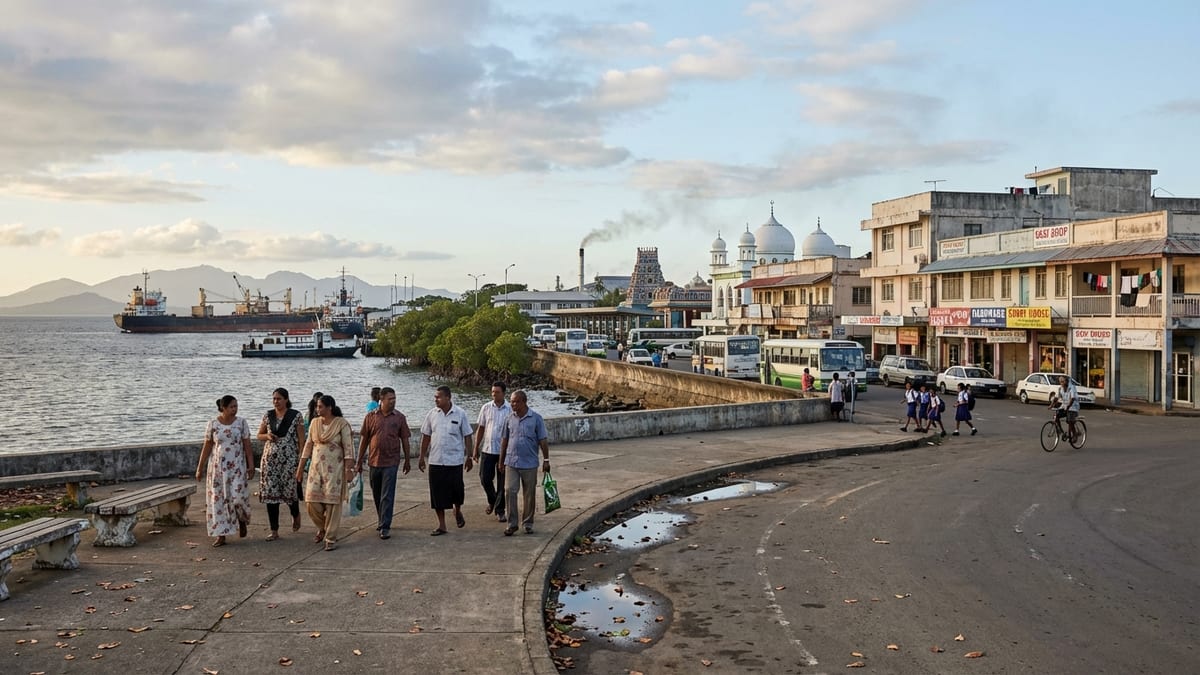
Lautoka rarely makes it onto the glossy brochures that sell Fiji to the world. Many travelers land at Nadi International Airport, transfer straight to Denarau or the Mamanuca and Yasawa islands, and never give Fiji’s second largest city more than a glance from the highway.
Yet Lautoka is one of the country’s most interesting urban areas, with a deep connection to sugar, maritime trade and Indo-Fijian culture, as well as access to some compelling day trips. Whether Lautoka is worth visiting depends very much on what you are looking for from Fiji. This guide takes an honest look at the city’s appeal, its shortcomings, and how it fits into a wider Fiji itinerary.
Lautoka in Context: What Kind of Place Is It?
Lautoka sits on the western coast of Viti Levu, roughly 25 to 30 kilometers north of Nadi and its international airport. The drive typically takes around 30 to 40 minutes by bus or taxi, following the Queens Road along fields of sugar cane and glimpses of the coastline. The city has long been known as the Sugar City, a reflection of the sprawling sugar mill and the extensive cane belt inland that shaped its growth for more than a century.
With a population in the tens of thousands, Lautoka feels less touristy than Nadi or Denarau. This is primarily a working port city, servicing cargo ships, cruise vessels, ferries to outlying islands and the sugar industry. The main streets are busy with local shoppers, schoolchildren, market vendors and office workers rather than visitors with flower leis and resort wristbands. For some travelers this is exactly the attraction: a chance to see everyday Fiji in a compact and walkable downtown, without the layer of resort polish.
The climate on this coast is typically hot and humid year-round, with a pronounced wet season roughly from November to April when tropical downpours and occasional cyclones can affect travel. During the drier months, Lautoka’s waterfront, parks and nearby viewpoints are at their best, with clear skies over the Yasawa and Mamanuca island chains on the horizon. The trade-off is that this is also peak travel season across Fiji, which can push up prices for transport and accommodation in the broader region.
Culturally, Lautoka is one of the most diverse corners of Fiji. A large Indo-Fijian community, descendants of indentured laborers who worked the cane fields, has shaped the city’s food, festivals and religious architecture. You will see Hindu temples, mosques and churches within a compact area, and the markets stock everything from taro and cassava to spices, saris and Bollywood soundtracks. For travelers who value cultural immersion as much as beaches, this alone can make Lautoka worth a detour.
Reasons You Might Want to Base Yourself in Lautoka
The strongest argument for staying in Lautoka is for travelers who prefer local life over gated resorts. Accommodation options are generally more modest than on Denarau, with a mix of midrange hotels, small guesthouses and a few business-oriented properties. Nightlife is limited, but there is an authentic evening scene of cafes, curry houses, kava bars and waterfront strolls. Prices for food in town, especially at the market and small eateries, are typically lower than in resort zones, which can help stretch a longer trip budget.
Lautoka’s position on Viti Levu’s west coast makes it an efficient starting point for certain island trips. Passenger services such as the Tavewa Seabus run from Lautoka’s Kings Jetty to the Yasawa Islands, with daily departures in the morning and returns in the afternoon, cutting the travel time compared with older, slower ferries. For independent travelers targeting budget island stays or homestays in the Yasawas, this can be a practical alternative to the heavily packaged day cruises that leave from Denarau.
The city is also close to Vuda Point and Vuda Marina, a small but scenic harbor set between Lautoka and Nadi. From here, yachties provision, small boats shuttle to nearby islands and travelers can enjoy sunset drinks without the resort atmosphere of Denarau. The marina area has a laid-back, slightly bohemian feel that appeals to travelers who like low-key waterfront environments and the company of long-term sailors and expats.
Another reason to consider Lautoka is if you have specific interest in Fiji’s indenture-era history. The Global Girmit Museum, located near the city at Saweni, documents the story of Girmityas, the Indian laborers brought under indenture contracts to work in the sugar industry. Exhibits and archives cover the period from 1879 to 1916, with artefacts, photographs and oral histories. For visitors of Indian heritage or anyone interested in the social history behind modern Fiji, this museum, combined with the city’s temples and neighborhoods, can be a highlight.
The City Experience: What to See and Do in Lautoka Itself
Most visitors first encounter Lautoka via its port, where cruise ships dock and ferry passengers disembark. The immediate waterfront near the wharf is functional rather than picturesque, but a short walk leads to the heart of the city around the municipal market and main shopping streets. The Lautoka market is one of the best introductions to daily life here, with stalls piled high with tropical fruit, vegetables, yaqona (kava root), fish and handicrafts. It is an easy place to wander, try snacks and chat with vendors, especially in the mornings.
Nearby, the city’s grid of streets mixes hardware stores, sari shops, clothing boutiques, bakeries and curry houses. Architecture is utilitarian, but there are several distinctive religious buildings that give Lautoka character. The Sri Krishna Kaliya Temple is one of the more prominent Hindu temples in the region, with colorful carvings and shrines that welcome respectful visitors. The Lautoka Jame Masjid, a large white marble mosque completed in 2019, stands out with its domes and arched doors and can be appreciated from outside even if you do not enter.
On the waterfront, Churchill Park serves as Lautoka’s primary stadium and a focal point for rugby and football. On match days the atmosphere around the ground is energetic, with fans arriving from surrounding districts. Even if you do not attend a game, the park and nearby seafront provide green space for a walk and a sense of how important sport is to local identity. Public facilities like children’s play areas and simple food stalls make the area a social hub in the late afternoon.
Lautoka is not known for inner-city beaches. The coastline close to the port is more industrial, edged by mangroves and maritime infrastructure, and the water can be cloudy. There are small local swimming spots further away, but if your mental picture of Fiji centers on pure white sand and turquoise lagoons, you will need to travel out of the city. This is an important reality check for travelers expecting Lautoka itself to look like a resort brochure.
Day Trips and Nature: Where Lautoka Really Shines
While the city core is more about culture and commerce than scenery, the wider Lautoka area offers access to some compelling natural and rural experiences. One of the most popular is the Garden of the Sleeping Giant, set inland between Nadi and Lautoka at the base of the Sleeping Giant mountain ridge. Originally established by actor Raymond Burr and since expanded, the garden features thousands of orchids, shaded forest walks and lily ponds. It is an appealing half-day escape for travelers who enjoy botany, photography or simply a cool, quiet environment away from the heat of town.
Close to the garden, various operators offer zipline courses and short hikes that provide views over the Nadi and Lautoka plains. These activities are generally marketed from Nadi, but they are just as accessible from Lautoka given the short driving distances involved. For a more low-key outing, the drive up into the foothills behind the city reveals cane farms, small villages and occasional viewpoints, especially as you head toward the interior of Viti Levu.
On the coast, Vuda Point is a key stop. The Viseisei village area is associated in Fijian oral tradition with the arrival of the first ancestors of the iTaukei people. Today it remains a functioning village as well as a cultural tourism stop on some tours, with handicraft stalls and opportunities to learn about local customs. At nearby Vuda Marina, travelers find cafes, a small resort-style pool at certain venues, and sandy beachfront sections that are better suited to swimming and relaxing than the waterfront in central Lautoka.
Offshore, the real lure lies in the Yasawa and Mamanuca island groups. From Lautoka’s Kings Jetty, the Tavewa Seabus and similar services depart in the early morning for the northern Yasawas, reaching islands in a few hours rather than a full day. These islands offer the archetypal Fiji experience: bright blue water, reefs for snorkeling and diving, and a range of simple beach resorts and homestays. If you prefer a more independent and less resort-packaged approach to the islands, treating Lautoka as a jumping-off point can make logistical sense.
Practicalities: Getting To, From and Around Lautoka
Reaching Lautoka from Nadi International Airport is straightforward. Frequent local buses run from Nadi town and the airport area to Lautoka, generally taking around 30 to 45 minutes depending on stops and traffic. Fares are low compared with taxi transfers and provide a glimpse of everyday commuter life, though they can be crowded at peak times and are not air-conditioned. Taxis and pre-booked transfers take about 20 to 30 minutes, with prices higher but still reasonable by international standards.
Within Lautoka, the compact downtown can be easily explored on foot. The market, bus station, main shops and several religious sites sit within a few blocks of each other. Taxis are widely available for short hops to the wharf, nearby suburbs or outlying beaches. For excursions to Vuda Marina, the Garden of the Sleeping Giant or the Global Girmit Museum, it is sensible to negotiate a fixed fare or hire a taxi for a few hours, as public transport connections can involve multiple changes.
Lautoka’s port handles both cruise ships and local ferries, which shapes daily rhythms. On cruise days, you can expect an influx of visitors, pop-up souvenir stalls and tour operators pitching excursions to the islands, Nadi, the garden or nearby cultural sites. If you are staying in the city, it is worth checking cruise schedules, as they can affect crowd levels, transport availability and sometimes even pricing for short tours.
Connectivity and amenities in Lautoka are generally good. You will find ATMs, supermarkets, pharmacies, mobile phone shops and hardware outlets catering to the local population. Internet coverage is improving, with mobile data reliable across the urban area and Wi-Fi available at better hotels and cafes. English is widely spoken, alongside Fijian and Hindi, and visitors who greet people politely and dress modestly in town will find interactions friendly and helpful.
Lautoka’s Drawbacks: Who Might Want to Skip It
Despite its strengths, Lautoka is not a universal fit. Travelers whose priority is maximum time on iconic beaches, snorkeling reefs and infinity pools may find the city underwhelming. The immediate coastline is more about commerce than leisure, and you will need to invest time and money in day trips or onward travel to reach the postcard scenes associated with Fiji’s tourism campaigns. If you have only three or four days in the country and have never visited Fiji before, it may be more efficient to base yourself on Denarau or an offshore island instead.
Urban grit is part of Lautoka’s character. The sugar mill, port facilities and industrial areas create noise, truck traffic and occasionally strong smells, especially when the mill is operating at full capacity during crushing season. While the main streets are safe in daylight hours, like any urban center there are petty crime risks, particularly at night around poorly lit areas and the bus station. Basic urban precautions apply: avoid flashing valuables, keep bags secured and take taxis rather than walking long distances after dark.
The accommodation stock in Lautoka is more limited than in Nadi or Suva. Options skew toward simpler hotels with functional rooms, many aimed at business travelers, local families visiting from rural areas or people overnighting before catching ferries. While you can find places with air conditioning, pools and decent in-house restaurants, there are relatively few properties that offer the full resort experience. Service can be welcoming but may not match the polished standards of international chains, which is either a drawback or a charm depending on your expectations.
Finally, some travelers simply do not connect with Lautoka’s atmosphere. If a strong undercurrent of industry, port traffic and working life clashes with your idea of a Pacific getaway, even the city’s cultural and historical assets may not outweigh that impression. The key is to approach Lautoka as a real Fijian city rather than as a beach resort, and to decide honestly whether that is what you want from your time in the country.
Who Lautoka Is Best For (and How Long to Stay)
Lautoka rewards travelers who are curious about the social and economic fabric of Fiji rather than just its beaches. If you enjoy wandering markets, tasting street food, visiting temples and mosques and watching how a city functions around a major industry, Lautoka has more to offer than its limited tourist marketing might suggest. It is also well suited to travelers on longer itineraries around Viti Levu who want an additional urban stop distinct from Nadi and Suva, each of which presents a different face of the country.
For history-minded travelers, especially those with roots in the Indian diaspora, a visit to the Global Girmit Museum combined with time in Lautoka’s Indo-Fijian neighborhoods can be particularly meaningful. Layered on top of that, the city gives easy access to Vuda Point, Viseisei village experiences, and scenic drives inland, enabling you to connect the historical narratives of indenture and migration with the present-day landscape of cane fields and villages.
If you are using Lautoka primarily as a transport hub, such as for catching a Yasawa-bound ferry, an overnight stay is often sufficient. This allows buffer time against flight delays, a chance to explore the market and waterfront, and a more relaxed start to island travel the next morning. Travelers who want to combine the city and nearby nature could reasonably spend two full days in the area: one focused on the urban core and cultural sites, and another devoted to Vuda, the Garden of the Sleeping Giant or a short island day trip.
On the other hand, if you are planning a tightly timed, one-week island honeymoon centered on seclusion and luxury amenities, Lautoka is better treated as a passing glimpse from the road or an optional lunch stop on a day tour. The city is not designed to be a standalone vacation destination for this type of trip. Its strengths lie in complementing, rather than replacing, the classic resort and island experiences that draw most visitors to Fiji.
The Takeaway
So is Lautoka worth visiting? For travelers who value authenticity, cultural depth and logistical convenience, the answer is yes, with some caveats. Lautoka will not give you the manicured beachfront experience of Denarau or the barefoot idyll of a remote Yasawa island. What it offers instead is a grounded view of Fiji as a living country: a sugar port with busy streets, diverse communities, a fascinating Indo-Fijian heritage and easy access to nearby gardens, villages and marinas.
If you route your trip wisely, Lautoka can serve as a practical and rewarding stop. Arrive via Nadi, spend a night or two exploring the market, temples and waterfront, visit the Global Girmit Museum, then head on to Vuda or the islands. Or, if you are cruising into Lautoka for a day, choose excursions that balance city time with a taste of the surrounding countryside. In both cases, you will gain a more nuanced understanding of Fiji than if you stayed only within resort enclaves.
Ultimately, Lautoka is worth it for travelers who are interested in how Fijians live, work and worship, as much as where they vacation. If that aligns with your interests, make room in your itinerary for the Sugar City and approach it on its own terms. Rather than a detour from the real Fiji, you may find that Lautoka reveals a side of the country that island postcards never show.
FAQ
Q1. How far is Lautoka from Nadi and the international airport?
Lautoka is roughly 25 to 30 kilometers north of Nadi and its international airport, depending on your exact starting point. By bus or car, the trip usually takes between 30 and 45 minutes, with taxis and private transfers at the faster end and local buses slightly slower due to stops along the Queens Road.
Q2. Is Lautoka safe for travelers to walk around?
Lautoka is generally safe during daylight hours, especially in the main commercial areas around the market and shopping streets. As in any city, basic precautions are sensible: keep valuables secure, avoid deserted or poorly lit areas at night and use licensed taxis for longer distances after dark.
Q3. Are there good beaches in or near Lautoka?
The immediate waterfront in central Lautoka is industrial and edged by mangroves, so it is not ideal for swimming or sunbathing. For better beaches you need to travel a short distance outside the city to areas such as Vuda Point or to offshore islands in the Mamanuca and Yasawa groups, which are accessible by boat from Lautoka and nearby marinas.
Q4. Can I use Lautoka as a base for visiting the Yasawa Islands?
Yes. Lautoka’s Kings Jetty serves as a departure point for passenger ferries and fast boats to the Yasawa Islands, including services such as the Tavewa Seabus that typically leave in the morning and return in the afternoon. Many independent travelers overnight in Lautoka before or after island stays to make early departures more convenient.
Q5. What is the main attraction in Lautoka for culture and history?
Lautoka’s main cultural and historical appeal lies in its Indo-Fijian heritage and connection to the sugar industry. The Global Girmit Museum near the city documents the history of indentured Indian laborers in Fiji, while within town you can visit Hindu temples, the large Lautoka Jame Masjid mosque and the bustling municipal market to experience everyday cultural life.
Q6. Is Lautoka a good place for budget travelers?
Lautoka can be appealing for budget-conscious travelers because local eateries, markets and basic accommodations are generally less expensive than resort areas. You can eat well on simple Fijian and Indo-Fijian dishes at modest prices and use public buses for cheap transport. The trade-off is fewer amenities and less comfort than in higher-end resort zones.
Q7. How many days should I spend in Lautoka?
If you are mainly using Lautoka as a transit point for ferries, one overnight stay is usually enough to explore the market and main streets. Travelers interested in culture and nearby nature may prefer two full days, allowing time for the city itself, the Global Girmit Museum, and a half-day outing to places like the Garden of the Sleeping Giant or Vuda Marina.
Q8. What should I wear when visiting temples and mosques in Lautoka?
When visiting religious sites in Lautoka, dress modestly out of respect for local customs. This generally means covering shoulders and knees, removing shoes before entering temples or mosques and avoiding revealing clothing. Carrying a light scarf or shawl can be helpful, particularly for women who may be asked to cover their hair in some mosques.
Q9. Are there many restaurant options in Lautoka?
Lautoka has a solid range of local eateries, particularly Indo-Fijian curry houses, bakeries and simple cafes around the market and main streets. While it does not offer the variety of international cuisine found in bigger tourism hubs, you can eat well on fresh curries, roti, seafood and Fijian staples, often at lower prices than in resort restaurants.
Q10. Is Lautoka worth visiting on a cruise stop?
For cruise passengers, Lautoka can be worth exploring for a few hours, especially the market, waterfront and key religious sites. Many visitors also opt for organized shore excursions that combine a short city tour with visits to attractions such as the Garden of the Sleeping Giant, a nearby village or Vuda Marina. If you are interested in seeing a real Fijian city beyond resort areas, a Lautoka cruise stop can be a valuable addition to your itinerary.