

More news on this day
Guam lawmakers are intensifying scrutiny of the Guam Visitors Bureau’s airline incentives program, questioning whether millions of dollars in public funds are translating into sustainable tourism growth as the island’s visitor arrivals continue to trail pre-pandemic levels.
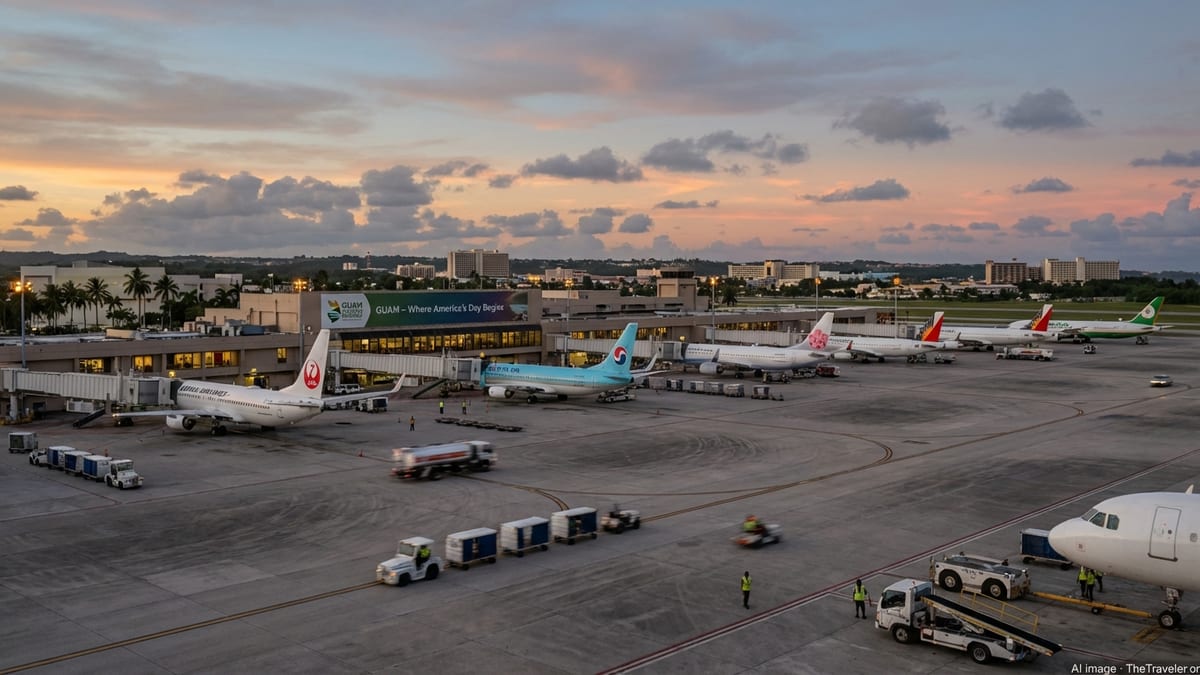
Oversight Hearings Put Airline Incentives Under the Microscope
In recent oversight hearings at the Guam Congress Building, senators from the Committee on Transportation, Tourism, Customs, Utilities and Federal and Foreign Affairs pressed Guam Visitors Bureau executives to justify an expanded package of incentives aimed at airlines serving the island. Lawmakers tied their questions directly to the 10 million dollars earmarked in the government’s fiscal 2026 budget for airline support, insisting that the bureau demonstrate concrete returns for every public dollar spent.
Committee members acknowledged that tourism remains central to Guam’s economy but warned that patience is wearing thin. While visitor numbers have improved compared with the darkest days of the pandemic and last year’s typhoon disruptions, total arrivals in 2025 are still below 2019 benchmarks. Senators have repeatedly said the industry is “fighting for its life” and argue that in such a climate, subsidy programs must show measurable, timely impact on seat capacity, jobs and tax revenues.
The hearings also drew attention to the slow release of appropriated funds and the complexity of coordinating incentives between the Guam Visitors Bureau and the Guam International Airport Authority. Lawmakers questioned whether bureaucratic delays, competing priorities and opaque performance metrics are blunting the effectiveness of a program that is supposed to help Guam compete quickly for scarce aircraft and regional routes.
Some senators voiced concern that the island is becoming overly reliant on incentive deals with individual carriers, warning that the government must balance short term route development with longer term investments in destination appeal, workforce development and tourism infrastructure.
GVB Defends Program as Essential to Tourism Recovery
Guam Visitors Bureau President and Chief Executive Regine Biscoe Lee has defended the airline incentives as a critical tool in the island’s recovery playbook, describing them as performance based agreements rather than open ended subsidies. Under the framework approved by the bureau’s board, airlines become eligible for support only when they add or sustain seat capacity, meet agreed load factors, or commit to operating routes for a specified duration.
GVB argues that the strategy is already paying dividends. Officials point to double digit year over year growth in visitor arrivals in the latter half of 2025, driven largely by expanded service from South Korea and signs of renewed demand from Japan. Korean carriers have upgraded to larger aircraft on key routes, while new and restored connections from Taipei and Cebu are expected to bring in additional passengers in the year ahead.
According to GVB estimates presented to senators, a fully funded incentive package could support hundreds of thousands of additional annual arrivals, translating into hundreds of millions of dollars in visitor spending, thousands of jobs and a significant boost to tax collections. Bureau leaders frame the incentives as a way to stabilize air service in a period of global aircraft shortages and intense competition among destinations in Asia and the Pacific.
The bureau has also emphasized that incentives are time limited and tied to transparent benchmarks, saying the program can be adjusted or wound down if market conditions improve or if certain routes fail to perform. Industry representatives, from hotel operators to tour companies, have rallied behind the initiative during budget deliberations, arguing that without aggressive support for airlift, any broader marketing campaign will struggle to gain traction.
Political Tensions Over Funding and Control
Behind the policy debate lies a deeper political struggle over who should control Guam’s air service strategy. While 10 million dollars in fiscal 2026 funds have been set aside for incentives, some lawmakers have questioned whether those resources should flow through the Guam Visitors Bureau or be directed to the Guam International Airport Authority instead.
Supporters of channeling funds through GVB contend that the bureau is best positioned to align airline agreements with tourism marketing priorities in core source markets such as South Korea, Japan and Taiwan. They argue that incentives must be integrated with destination branding, promotions and on island events in order to convert new seats into sustained visitor demand.
Critics, however, say the airport authority is more experienced in negotiating with airlines on route economics and operational support. Several senators have floated the idea of shifting at least part of the incentive budget to the airport or establishing a joint management framework. That proposal has drawn pushback from some tourism advocates, who warn that fragmenting the program between agencies could dilute accountability and slow decision making at a time when regional competitors are moving quickly.
The dispute has occasionally turned sharp, with legislators accusing one another of being either too timid or too reckless about public spending on private carriers. At the same time, there is broad agreement that Guam must present a coherent front when courting airlines, and that prolonged institutional turf battles could undermine the island’s credibility in negotiations.
Uneven Recovery Highlights Structural Challenges
The argument over airline incentives is unfolding against a backdrop of an uneven tourism rebound. While recovery has accelerated from mid 2025, arrivals earlier in the year were significantly down compared with the previous year, and overall visitor totals remain below one million annually. Korean travelers now account for nearly half of all visitors, reflecting both strong demand and successful capacity negotiations, but dependence on a single market leaves Guam vulnerable to currency swings, economic slowdowns and geopolitical tensions.
Japan, once Guam’s dominant source of tourists, is showing promising but fragile growth. Industry officials say that restoring more frequent, reliable service from major Japanese cities is essential for diversifying risk and increasing higher spending segments. New or returning routes from Taiwan and the Philippines, while welcome, currently account for a modest share of arrivals and will take time to mature.
The island also faces headwinds beyond airline capacity. Hoteliers and tour operators report rising operating costs, staffing shortages and pressure to upgrade aging facilities. Environmental concerns, coastal erosion and infrastructure strains in core tourism districts like Tumon add to the list of challenges. Lawmakers skeptical of the incentive program argue that unless these issues are addressed in parallel, additional flights may not translate into the robust, sustainable growth that GVB projects.
For now, however, few dispute that air connectivity is the immediate bottleneck. With aircraft supply constrained globally and neighboring destinations from Vietnam to Thailand deploying their own incentive schemes, Guam’s leaders are weighing how aggressively the island must bid for capacity without locking itself into expensive commitments that could outlast demand.
What Is at Stake for Guam’s Economy
The outcome of the current debate will have significant implications for Guam’s broader economic trajectory. Tourism still supports tens of thousands of jobs directly and indirectly, from hotel workers and tour guides to restaurant staff, retailers and transportation providers. After several difficult years marked by border restrictions, severe weather and global inflation, many of those businesses are operating on thin margins.
Proponents of the incentive program contend that failing to invest decisively now could allow competitors in the region to capture long term market share, making it harder and more expensive for Guam to re enter airline networks later. They frame the 10 million dollar allocation, and any potential supplemental funds, as a hedge against being left behind in a reordering of Asia Pacific travel patterns.
Opponents counter that public finances are not limitless and stress the need to weigh airline subsidies against other priorities such as healthcare, education and infrastructure. They are pressing GVB and the airport authority for clearer, independently verifiable targets on arrivals, spending and tax receipts, along with contingency plans if the global travel outlook weakens.
As the Legislature prepares for further hearings and potential adjustments to the fiscal 2026 budget, Guam’s tourism sector is watching closely. For hoteliers, tour operators and small businesses across the island, the question is not whether air service matters, but whether the current mix of incentives, oversight and long term planning will be enough to turn a fragile rebound into durable growth.